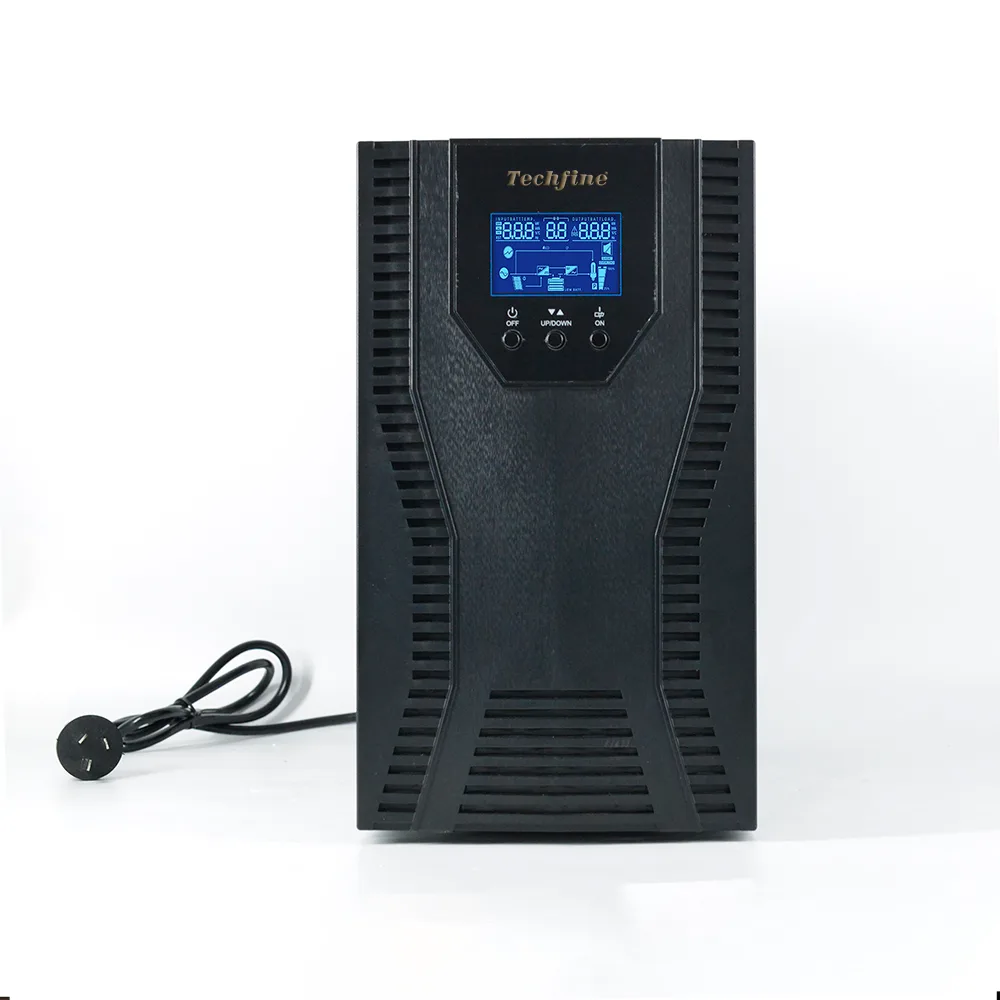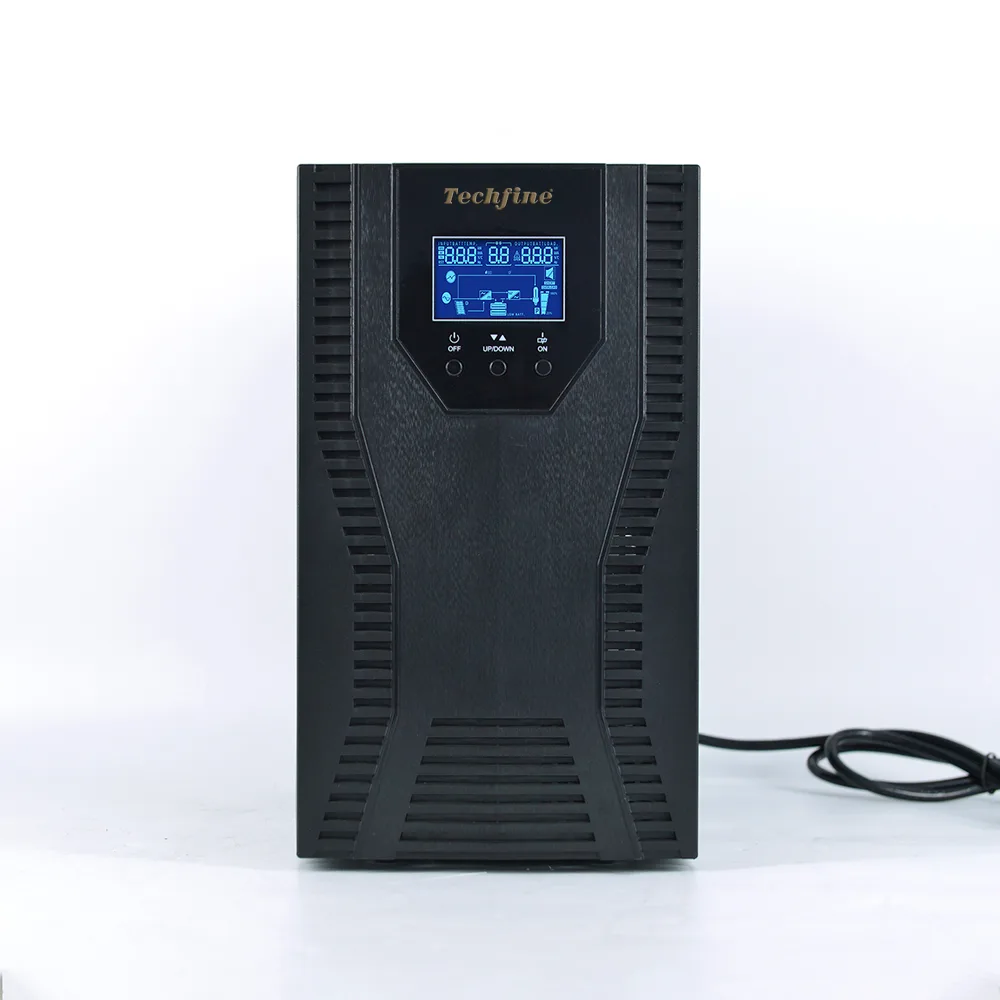
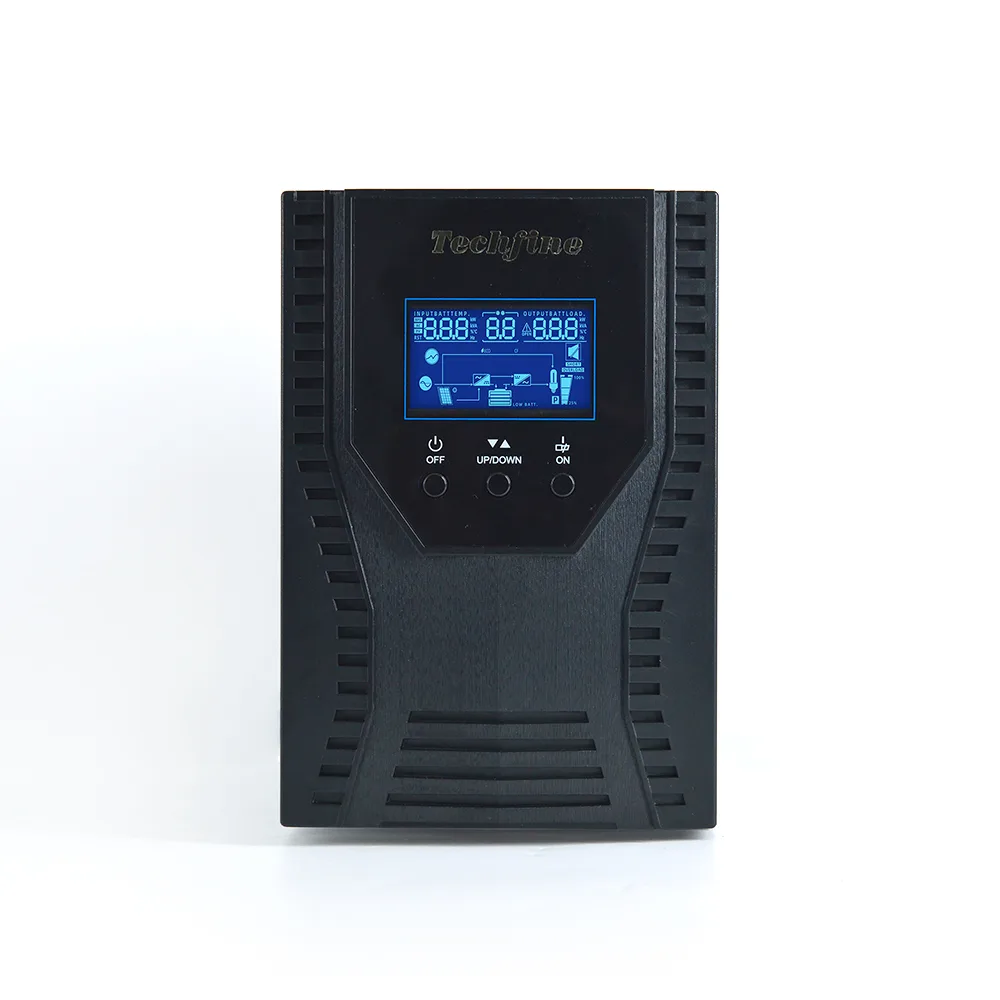
 Line Interactive UPS
Line Interactive UPS 800w 1KVA with Battery Backup Power Supply System
Tips:
Higher Efficiency
View DetailsOpen the exact 1, 2 or 3 kVA table, resolve any title/table mismatch, then confirm topology, load, transfer, battery/runtime, controls, files, warranty and supply.
The three pages share many feature lines, but rating, battery arrangement, charger and source consistency still need model-level review.
The displayed table states 1000 VA/800 W, up to 8 ms transfer and a 24 V standard battery route using two 12 V/7 Ah units; confirm the full suffix, included batteries, outlets and current manual.
The source table states 2000 VA/1600 W and shows alternative standard battery quantities/DC voltages plus a long-run route. Freeze the exact battery configuration and charger before quoting runtime.
The parameter table states 3000 VA/2400 W with six standard 12 V/7 Ah batteries, while the page title says 6 kVA/4800 W. Request a corrected model sheet and nameplate evidence.
Standard and long-run descriptions use different battery quantities, DC buses and charging currents; RS-232/USB and SNMP wording also varies between standard and optional scope.
A useful comparison starts with the protected load and required continuity, then fixes one exact UPS and battery configuration.
List continuous W/VA, power factor, nonlinear crest demand, motor or compressor starts, medical/IT sensitivity, acceptable interruption and required autonomy at normal and peak load.
Confirm the exact line-interactive operating path, AVR/bypass behavior, transfer test conditions, pure-sine-wave output, voltage/frequency regulation and THD for the actual linear or nonlinear load.
Confirm input range, output voltage/frequency, plug/outlet or terminal type, neutral/grounding, generator source characteristics, protection coordination and destination electrical evidence.
Fix standard or long-run suffix, battery chemistry/model, series quantity, DC voltage, Ah, charger current, cutoff, cabinet/cables and runtime curve at the stated W load and temperature.
Confirm display, audible alarms, RS-232/USB, optional SNMP, shutdown software/OS support, dry contacts if needed, bypass mode/rating and behavior after battery or internal failure.
Request corrected datasheet/nameplate, manual, safety/EMC and surge evidence, battery files, warranty, included accessories and software; confirm quantity, sample, lead time and substitution control.
Continuity depends on exact rating, load waveform, battery configuration, temperature, transfer path, protection and maintenance.
Do not quote the third page from its headline alone. Its current table identifies CYE3K(S), 3000 VA/2400 W. Require a corrected, signed model document and matching nameplate.
An 0.8 W/VA ratio or 3:1 surge line does not approve every motor, transformer, PSU or medical load. Confirm crest factor, start current, duration, waveform and overload curve.
Runtime changes with load, battery Ah/chemistry/age, DC losses, cutoff, charger, temperature and reserve. Quote autonomy only from an exact configuration and documented runtime basis.
Lightning protection, generator compatibility, low leakage or B-ultrasound wording does not establish destination compliance or equipment compatibility without exact tests, installation and responsible approval.
Use the backup solution to define protected circuits and the sizing guide to document load and battery assumptions.
Use its critical-load method to separate essential IT, communications, refrigeration or service loads from equipment that need not sit behind the UPS.
Review load priorities
Document continuous and peak loads, usable energy, reserve, temperature and inverter limits before presenting an autonomy figure.
Review runtime inputs
These answers organize procurement; final load compatibility, runtime and continuity remain exact-model and installation questions.
The displayed title says 6 kVA/4800 W, but its current parameter table says CYE3K(S), 3000 VA/2400 W. Treat the rating as unresolved until a corrected datasheet and matching nameplate are supplied.
No. Runtime requires an exact W load, battery chemistry, series quantity, DC voltage/Ah, cutoff, charger, temperature, age and reserve. Request a configuration-specific runtime table or calculation.
Do not assume so. Confirm continuous W/VA, power factor, crest and start demand, waveform/THD, transfer tolerance, leakage/EMC needs, grounding and the load manufacturer's requirements.
Include exact model/suffix, destination AC and outlets, protected loads and start demand, required transfer/autonomy, battery and charger, bypass/communications, evidence, quantity, sample and delivery target.
Compare three displayed CYE source pages whose current parameter tables describe 1000 VA/800 W, 2000 VA/1600 W and 3000 VA/2400 W single-phase routes. The third page title says 6 kVA/4800 W while its table says CYE3K(S), 3000 VA/2400 W; treat that as an unresolved source conflict, not a specification. Preserve the exact model and standard or long-run suffix, then confirm topology, continuous W and VA, load type and crest/start demand, input/output, transfer and bypass behavior, waveform/THD, battery quantity and DC bus, charger, autonomy calculation, communications, options, safety/EMC evidence, warranty and current supply terms.
Send the exact CYE route, destination AC, protected loads, transfer and autonomy target, battery/charger, outlets, controls, documents, quantity and schedule.