
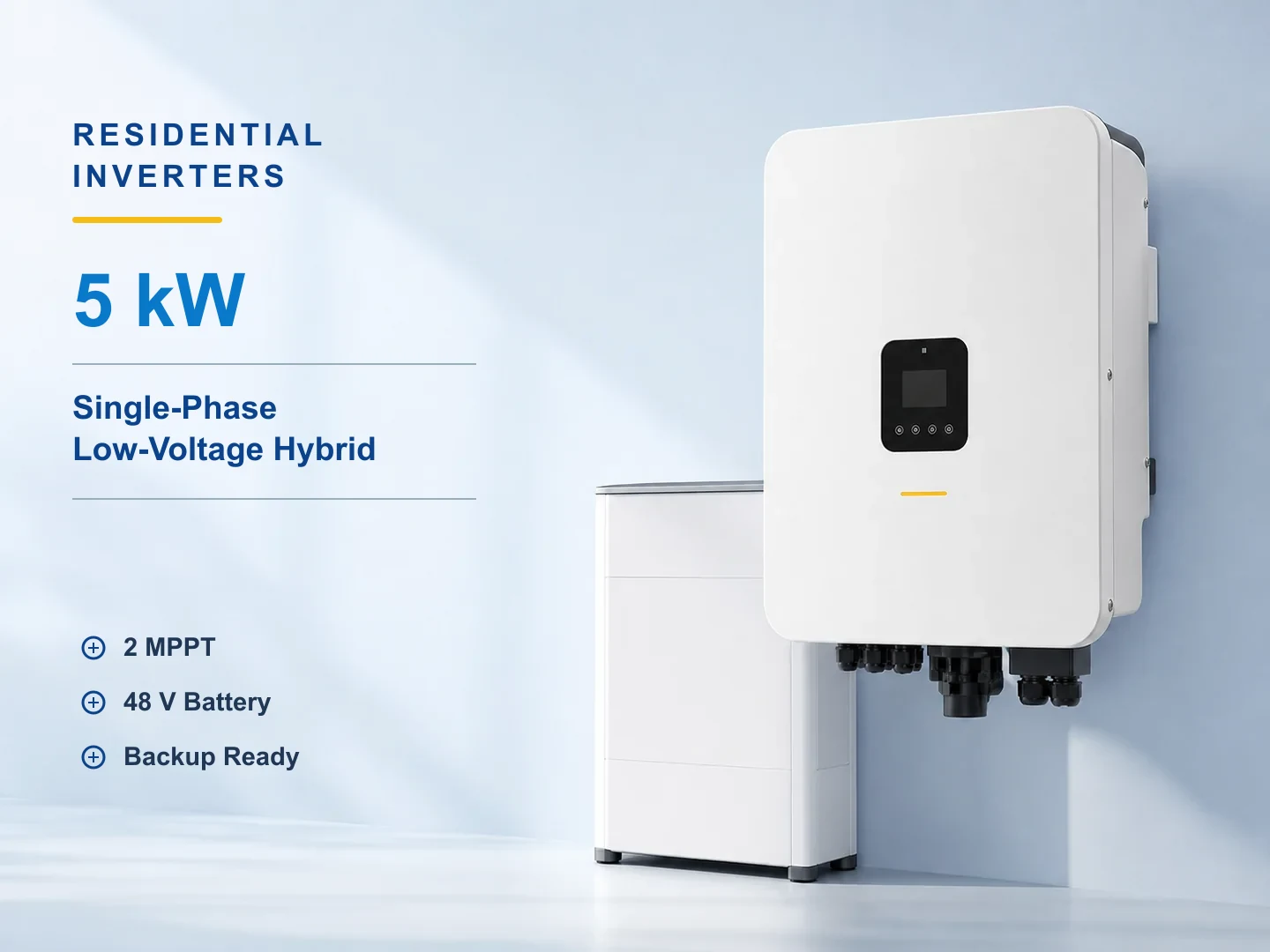
5kW Single-Phase Low-Voltage Hybrid Inverter
5 kW single-phase hybrid for solar-plus-storage homes and small villas.
Single-phase hybrid2 MPPT
View DetailsSingle-phase and three-phase on-grid, hybrid, and off-grid options for homes and small properties. Compare the exact model by AC connection, PV input, MPPT layout, battery protocol, backup behavior, grid settings, and required documents.
5 kW single-phase hybrid for solar-plus-storage homes and small villas.
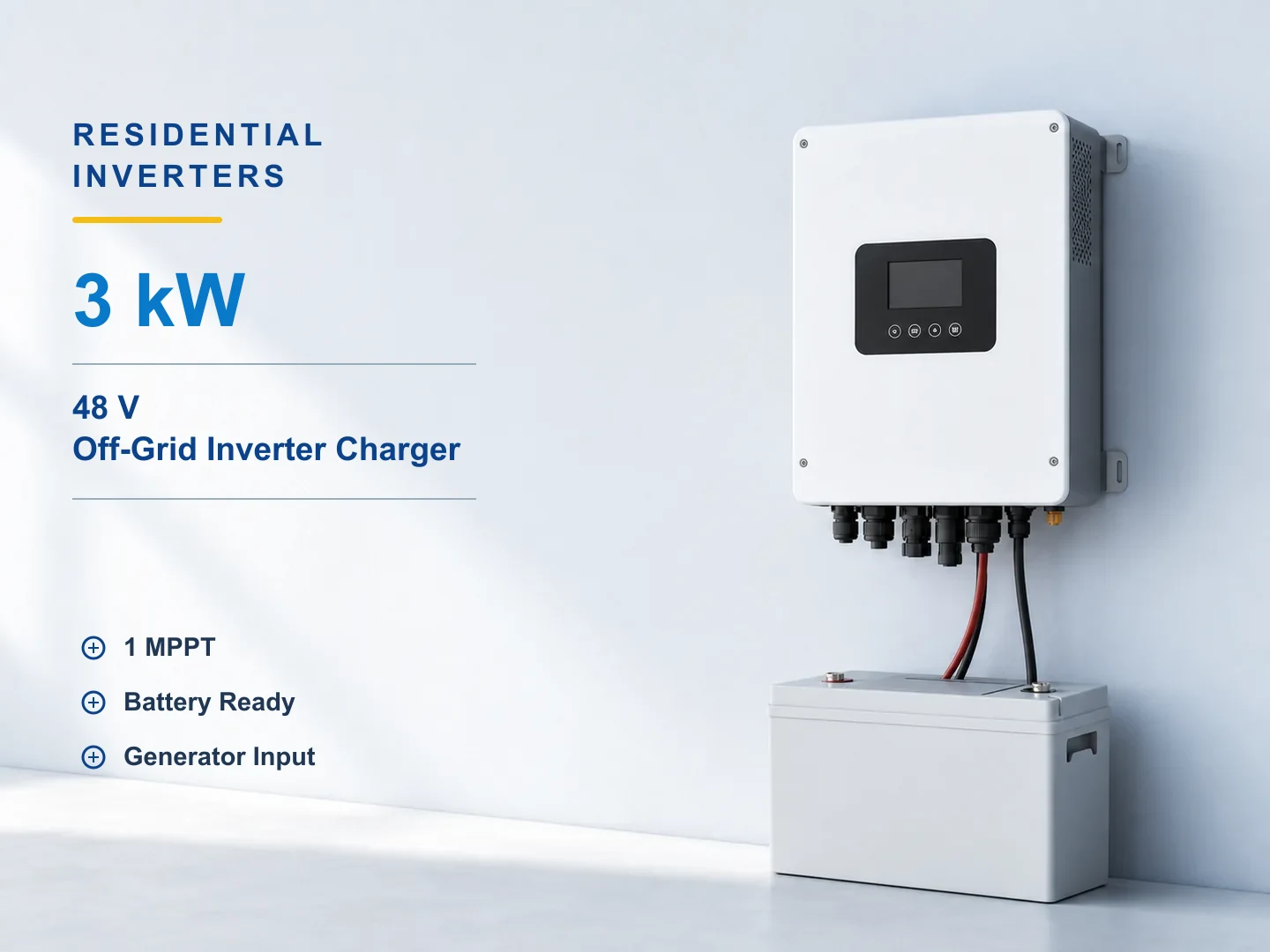
3 kW off-grid inverter charger for remote homes, cabins and weak-grid sites.
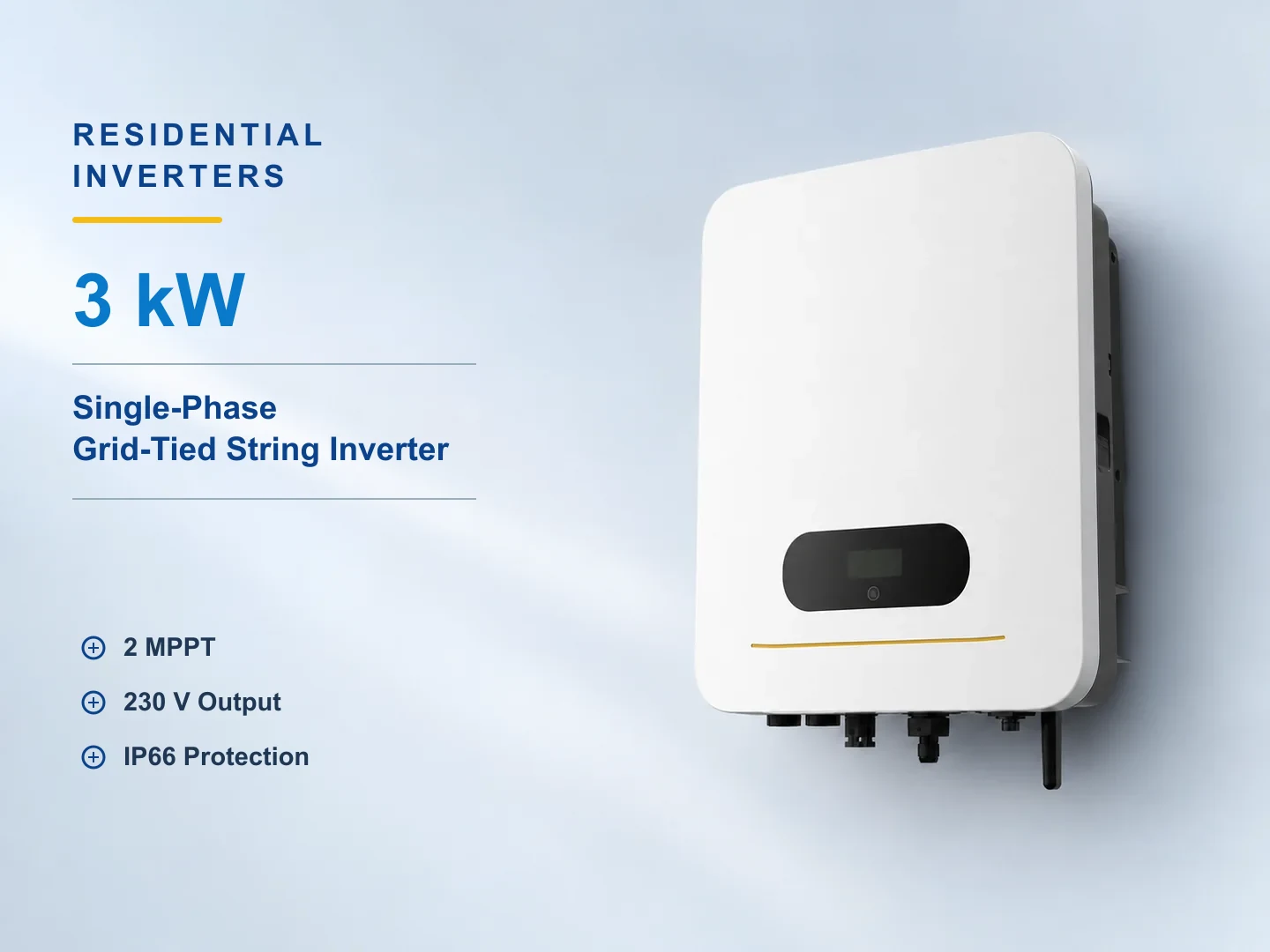
3 kW single-phase on-grid for apartment and small-home rooftop systems.
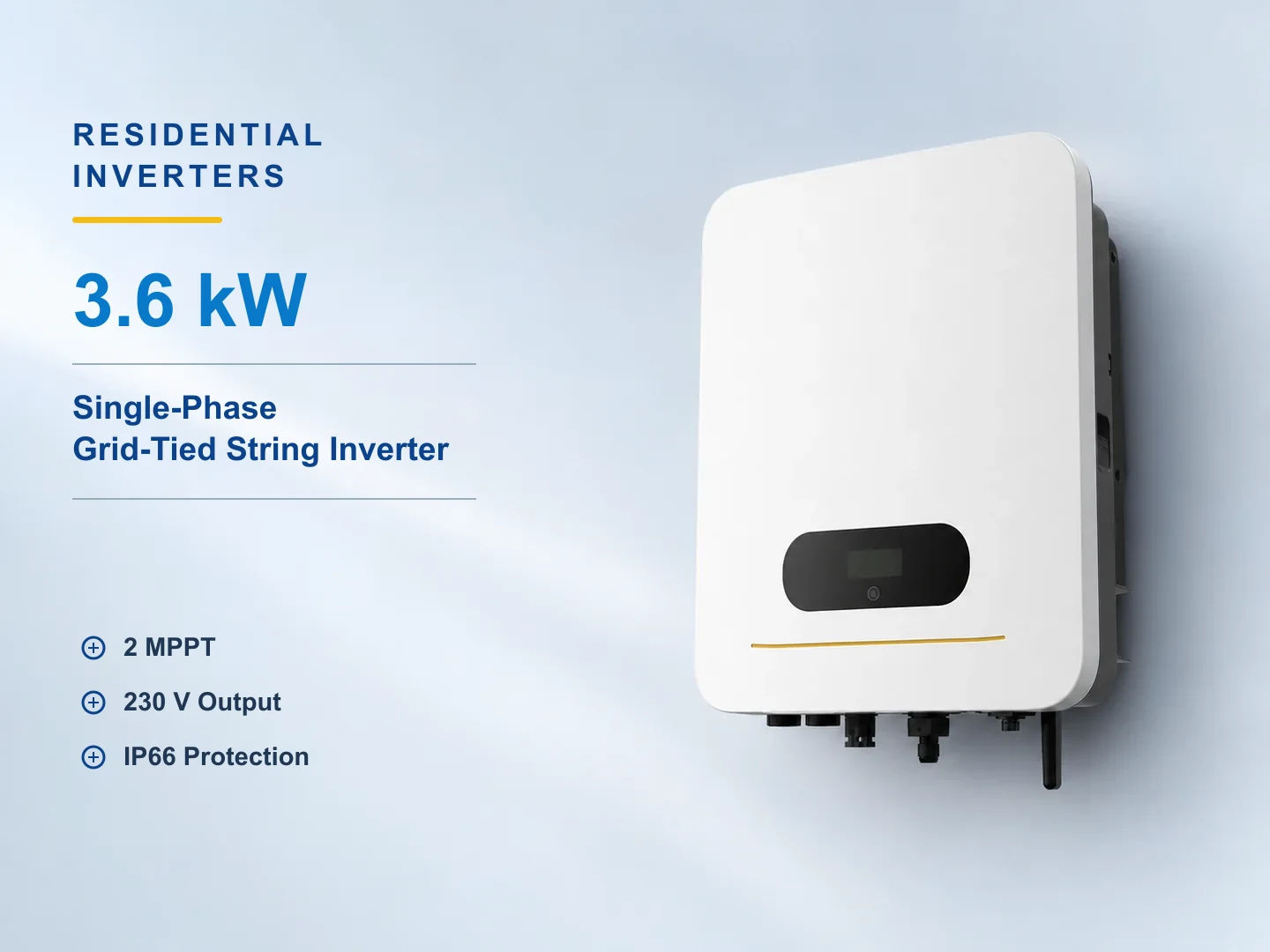
3.6 kW single-phase on-grid for standard residential rooftops.
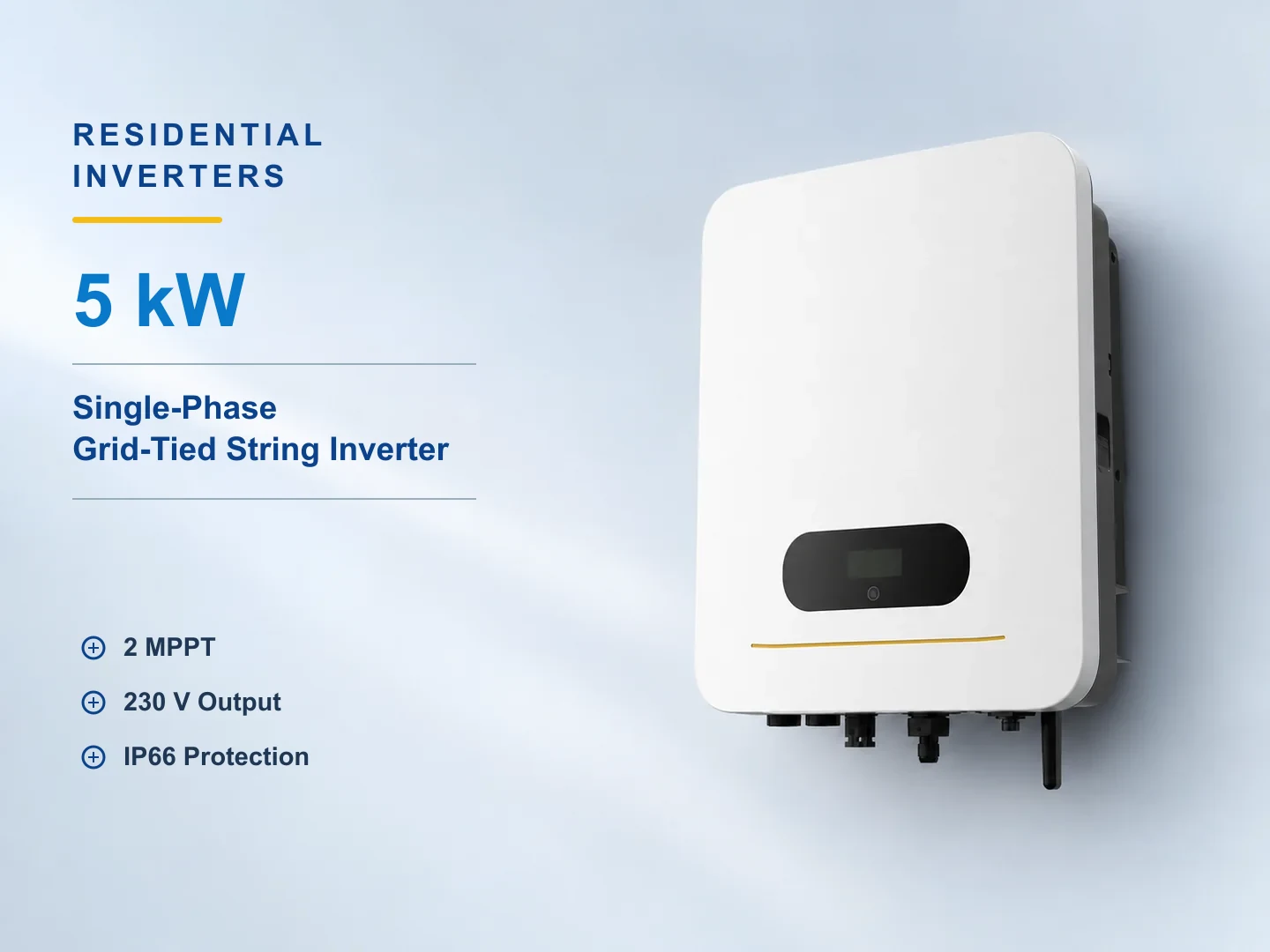
5 kW single-phase on-grid for larger homes and high-consumption households.
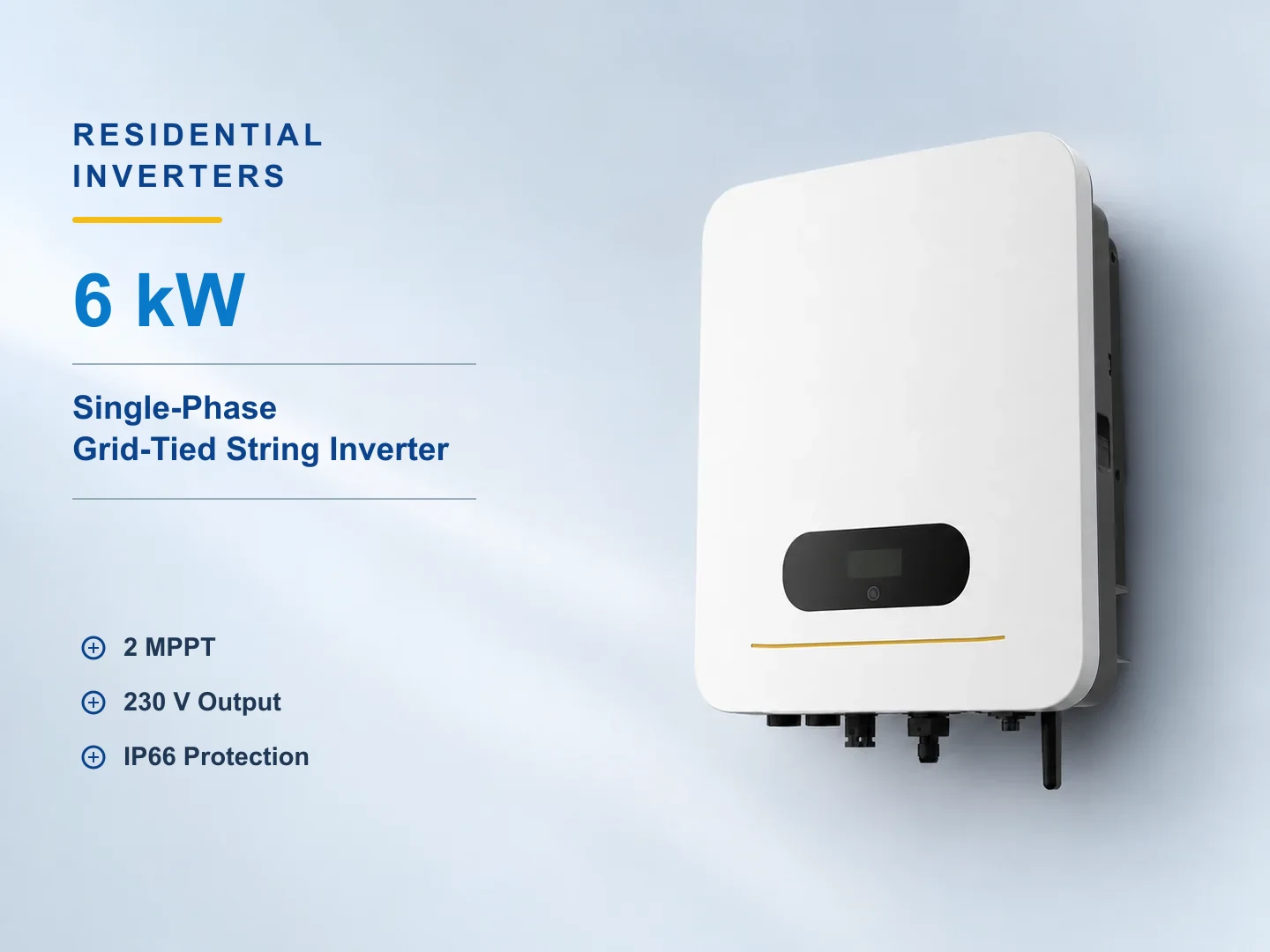
6 kW single-phase on-grid for high-load single-phase homes and small villas.
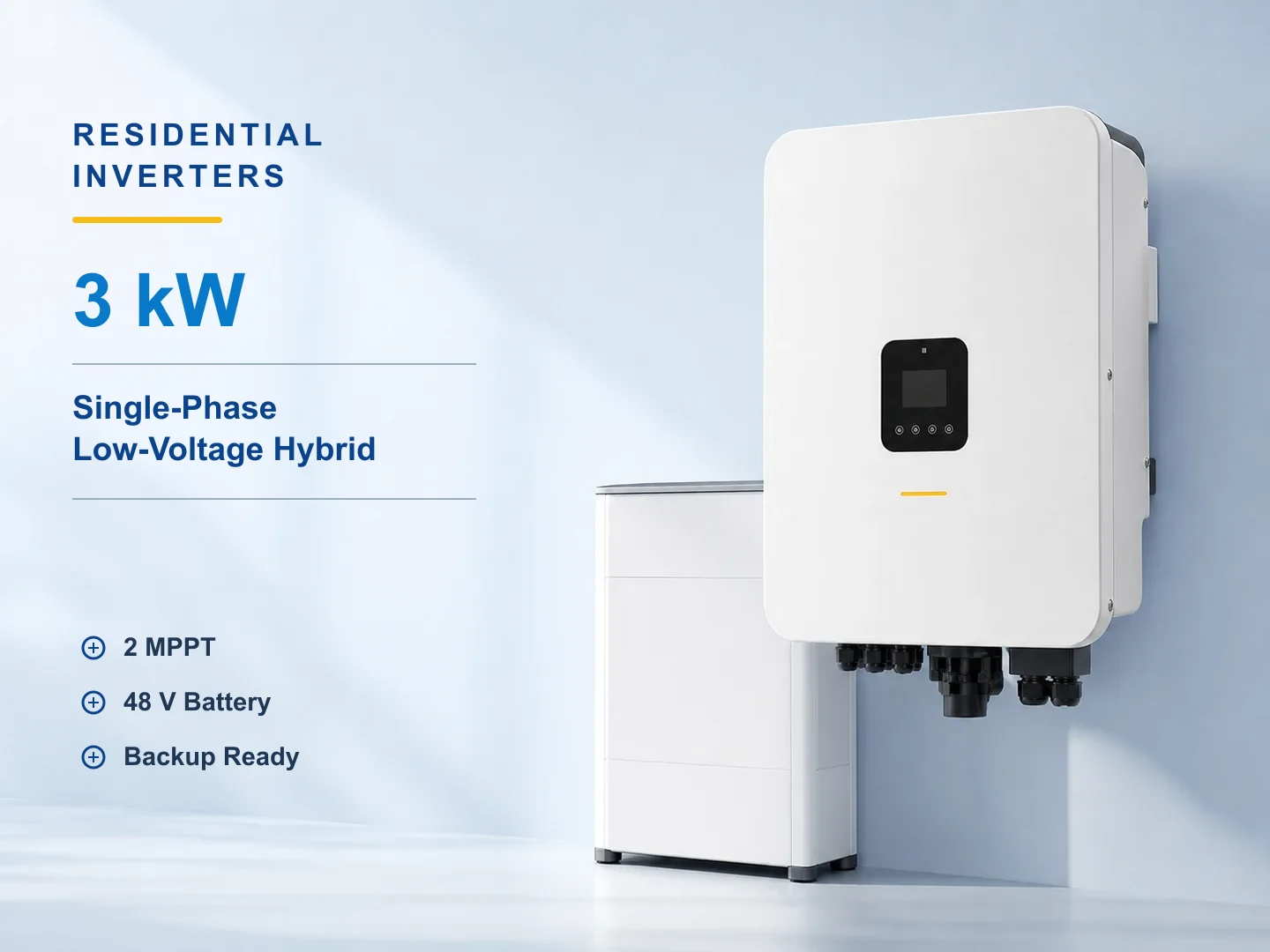
3 kW single-phase hybrid for battery-ready homes and essential-load backup.
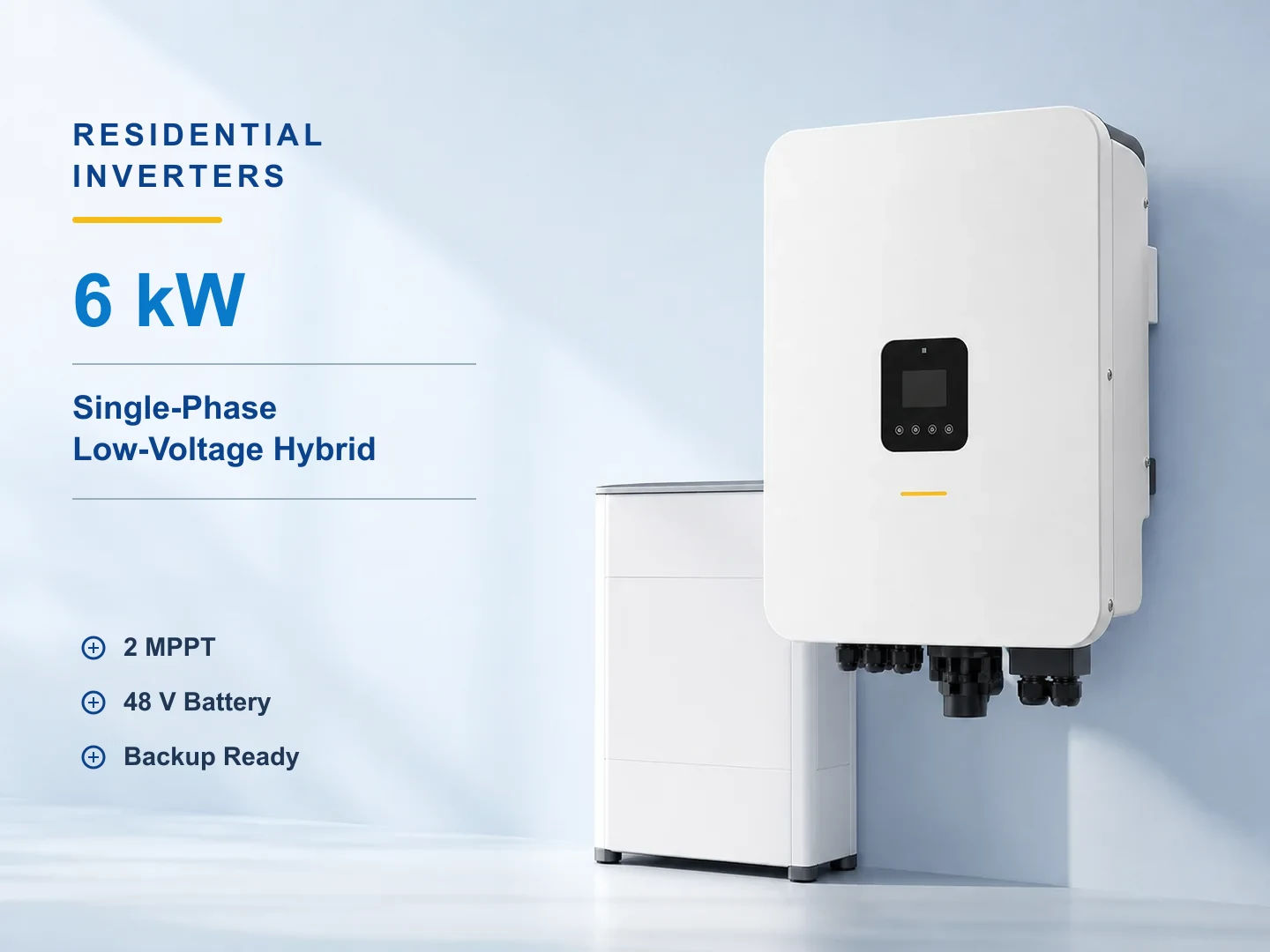
6 kW single-phase hybrid for high-consumption homes requiring storage and backup.
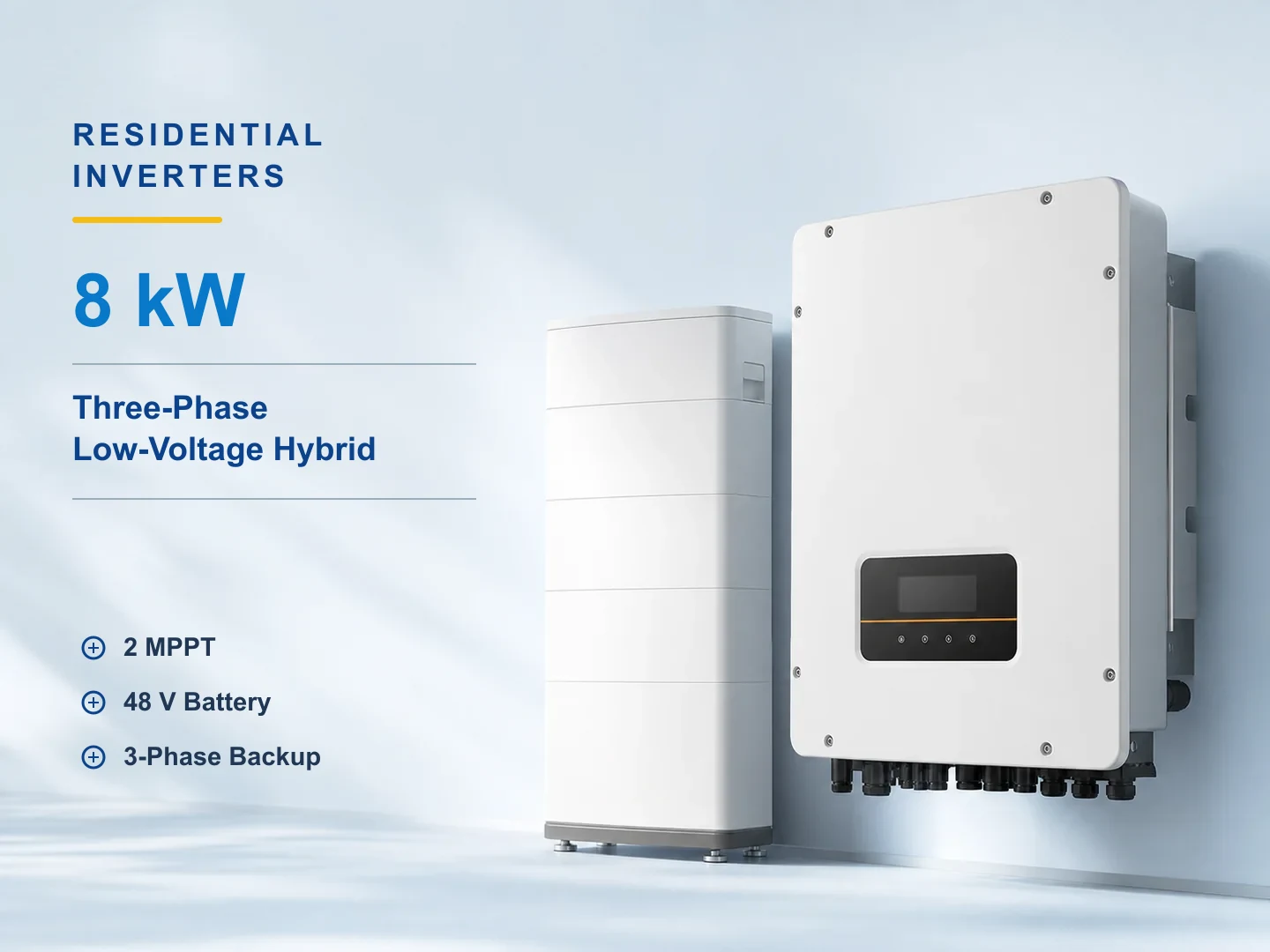
8 kW three-phase hybrid for three-phase homes, villas and small mixed-use properties.
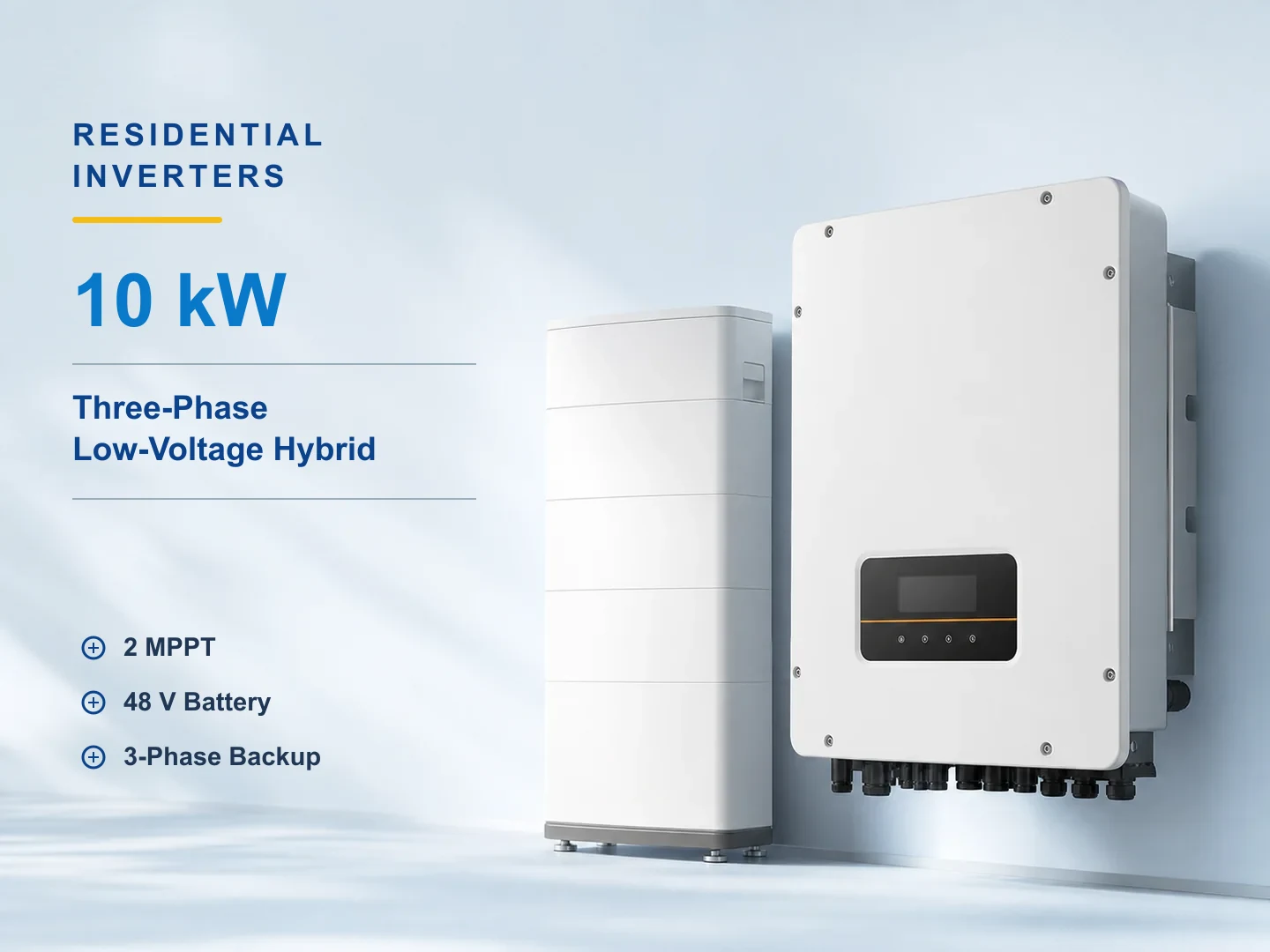
10 kW three-phase hybrid for large homes, villas and small residential compounds.
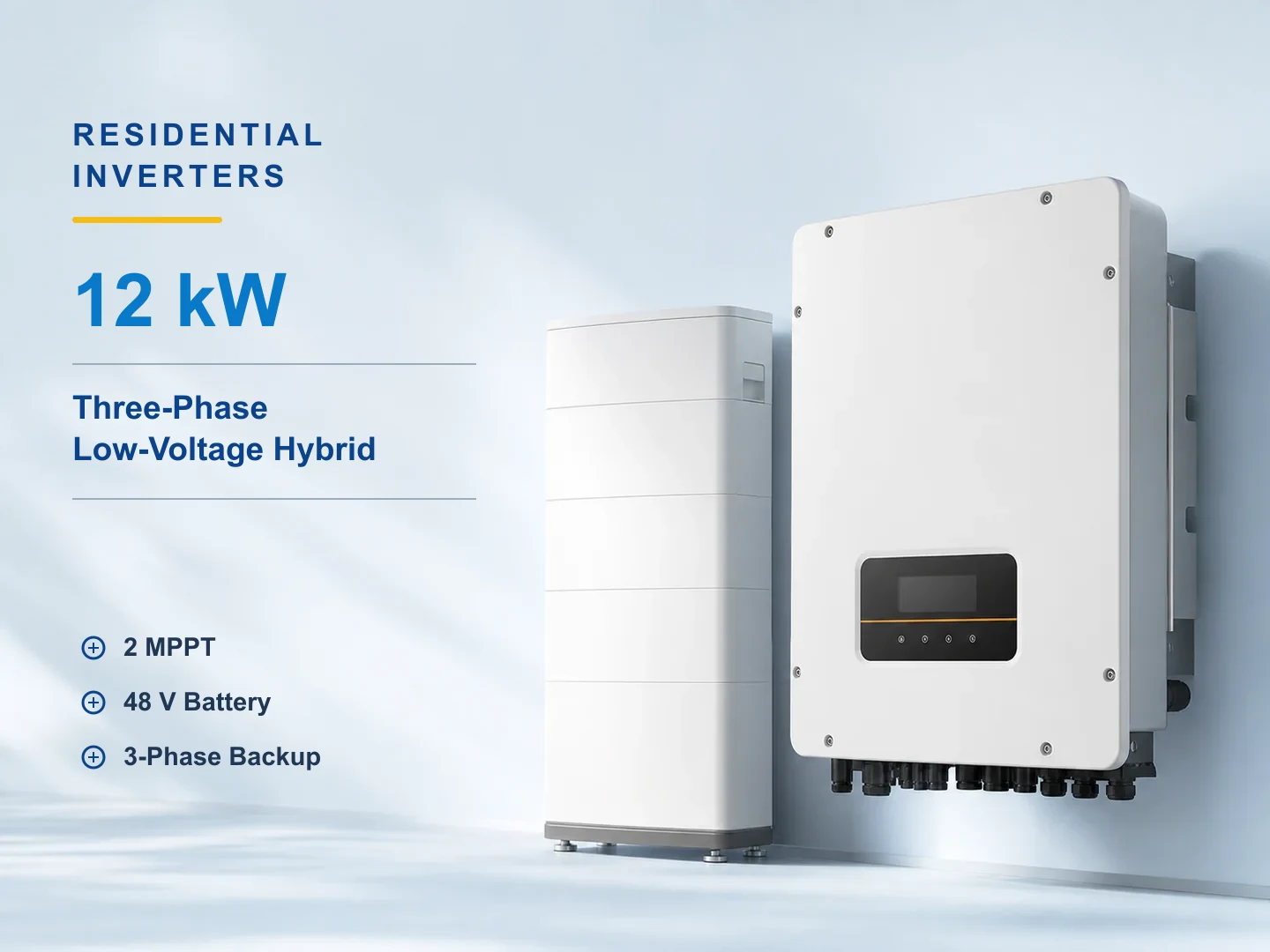
12 kW three-phase hybrid for large villas and residential systems with significant three-phase loads.
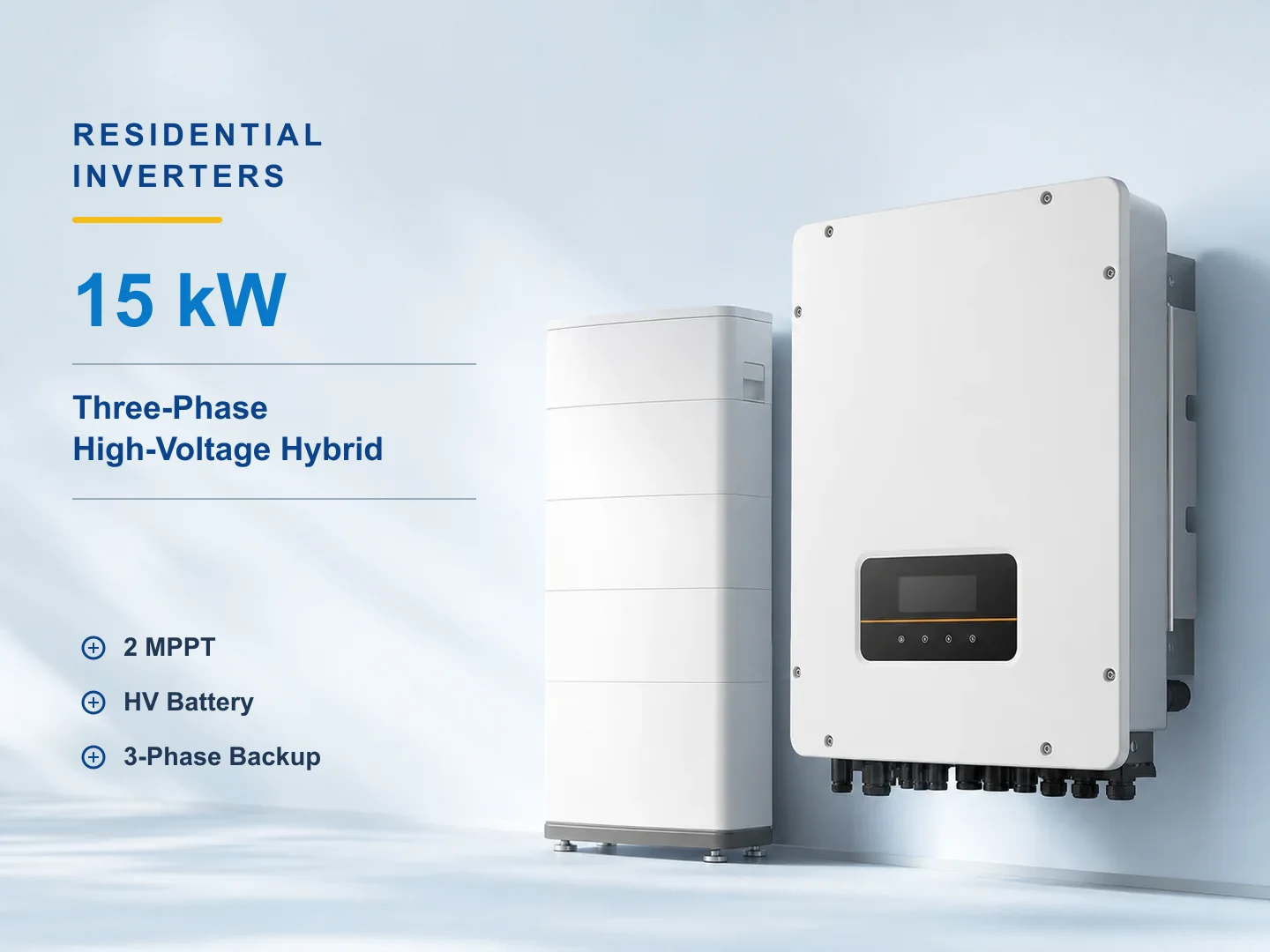
15 kW three-phase hybrid for large villas, multi-meter homes and premium residential storage.
Three-phase string and high-voltage hybrid inverter options for commercial rooftops and C&I systems. Confirm voltage, MPPT and string-current limits, transformer or switchgear interfaces, export control, monitoring, protection, and model-specific files.
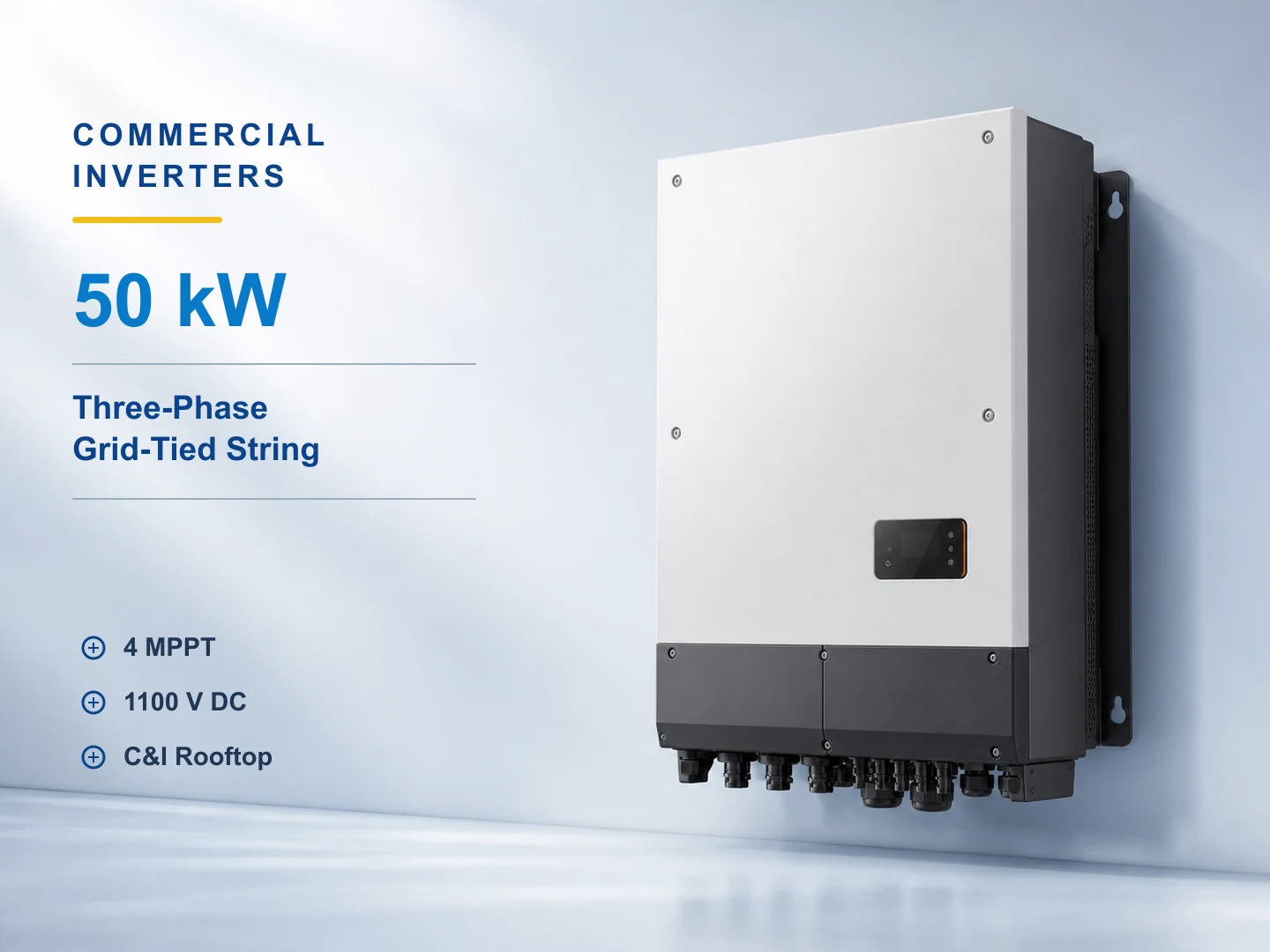
50 kW three-phase grid-tied string inverter for factory roofs, logistics centers and large commercial solar sites.
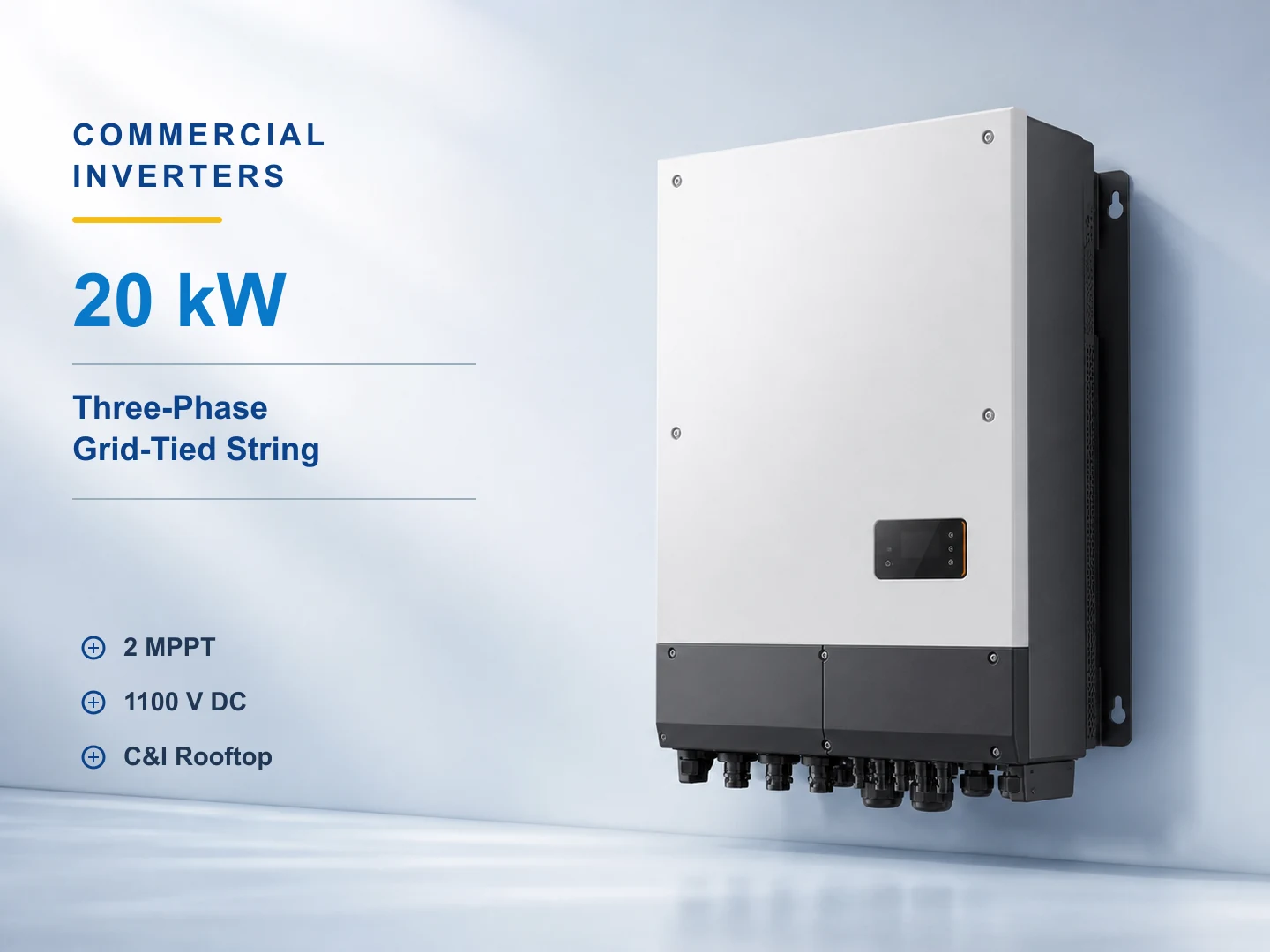
20 kW three-phase grid-tied string inverter for shops, warehouses, carports and small factory rooftops.
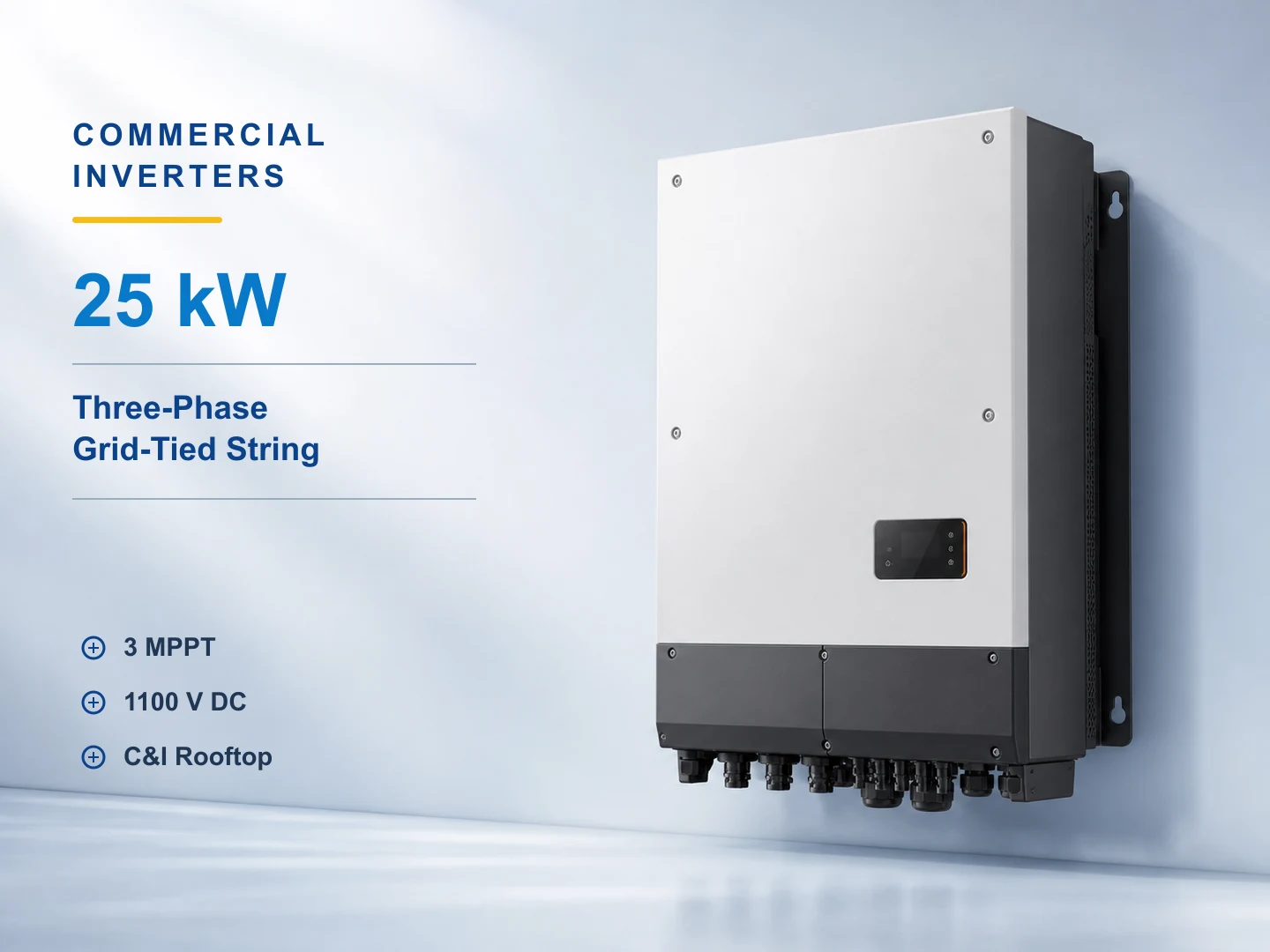
25 kW three-phase grid-tied string inverter for retail sites, schools and medium commercial rooftops.
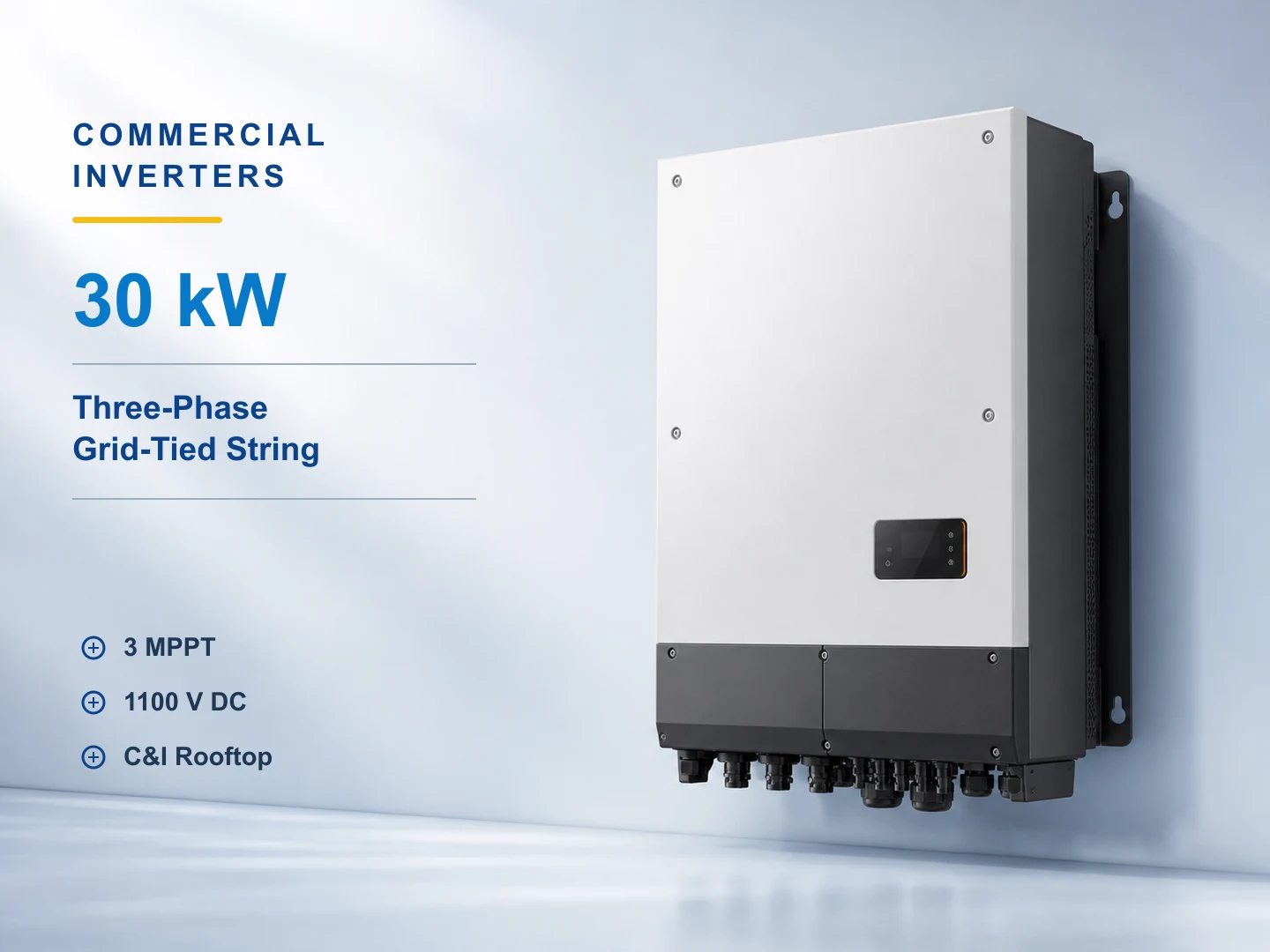
30 kW three-phase grid-tied string inverter for commercial rooftops, workshops and multi-building solar projects.
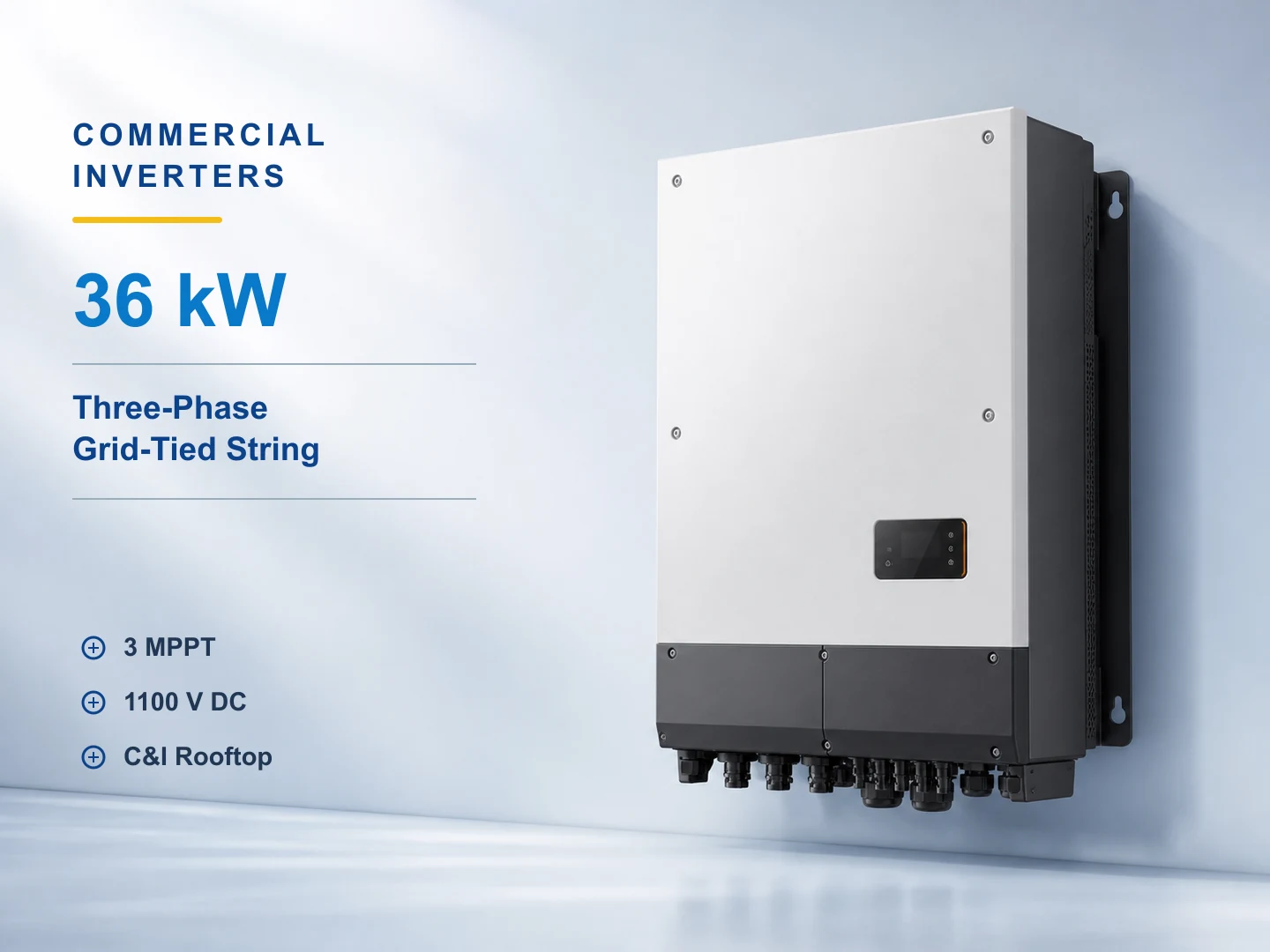
36 kW three-phase grid-tied string inverter for large retail rooftops, cold storage and light-industrial facilities.
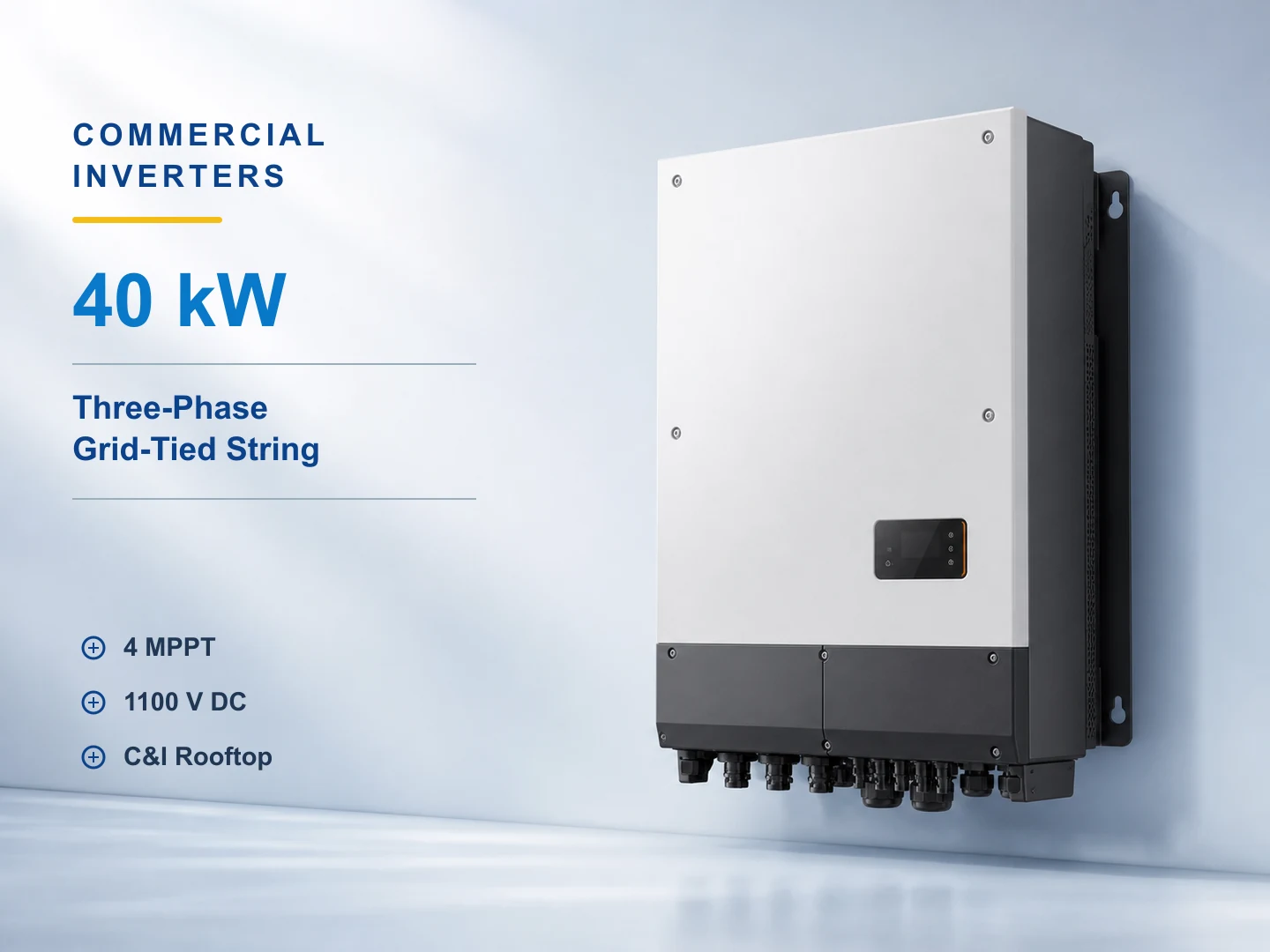
40 kW three-phase grid-tied string inverter for factories, warehouses and multi-orientation C&I rooftop systems.
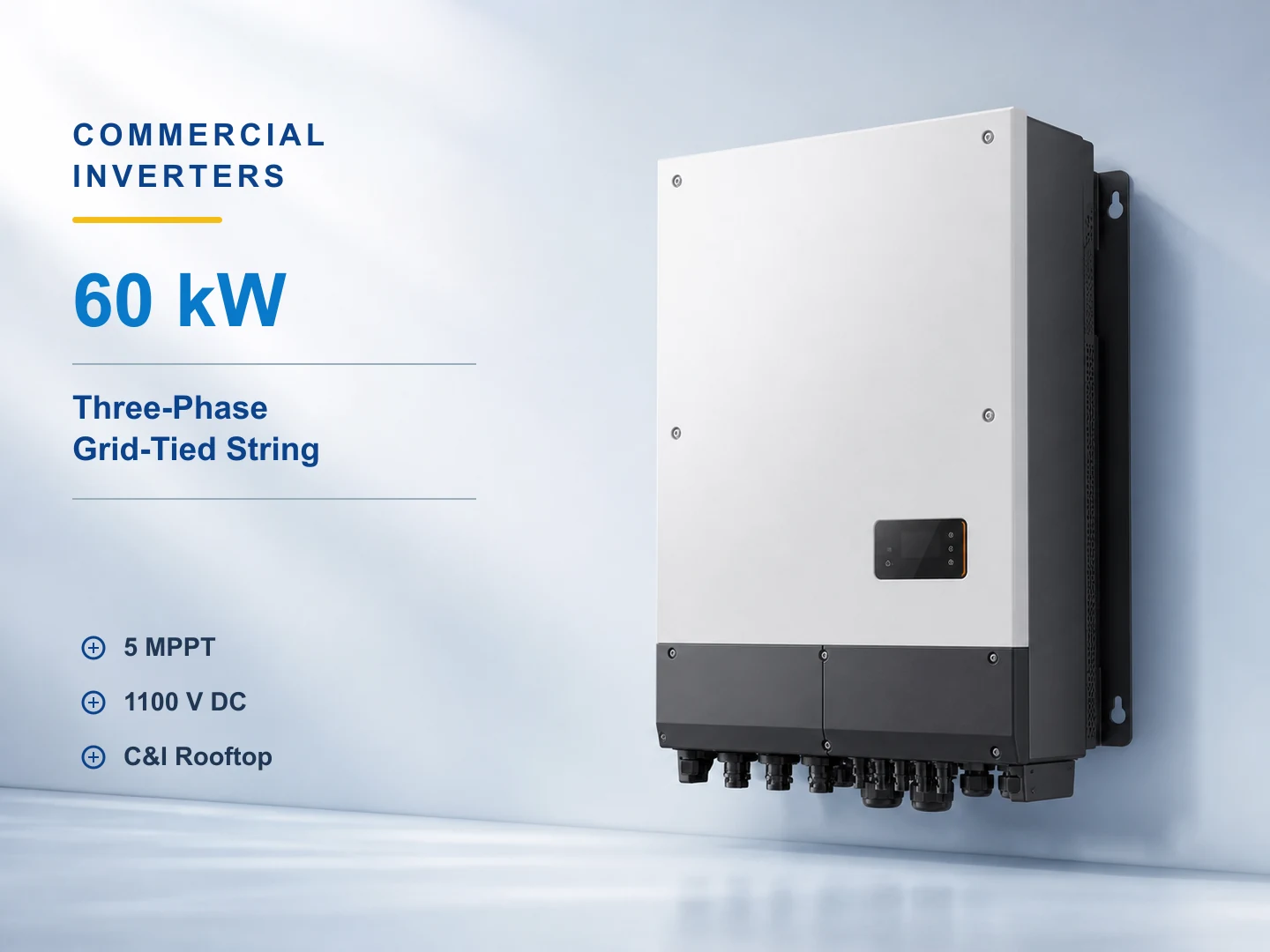
60 kW three-phase grid-tied string inverter for large factory rooftops, commercial parks and agricultural processing sites.
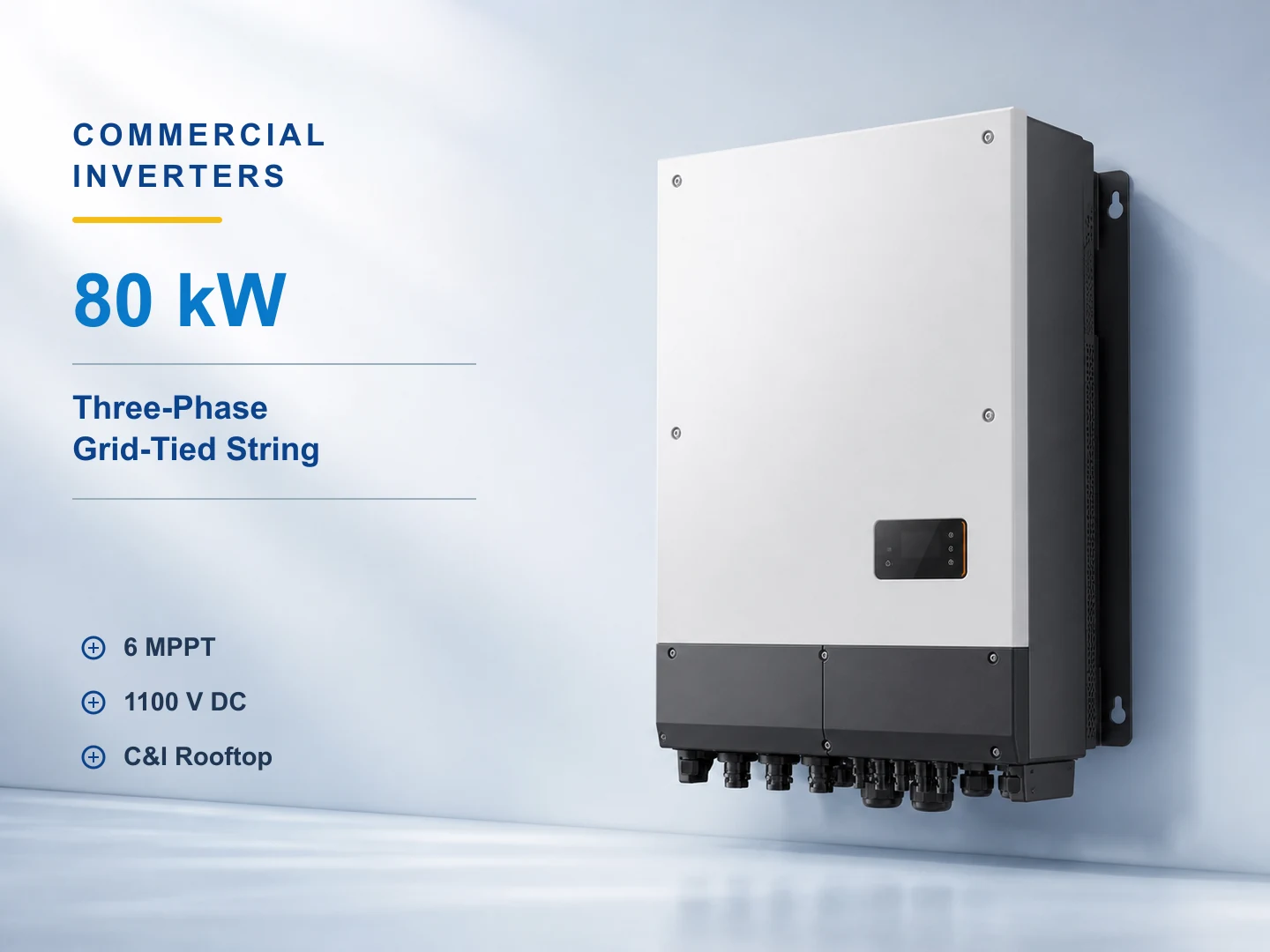
80 kW three-phase grid-tied string inverter for large industrial roofs, commercial parks and distributed ground-mount projects.
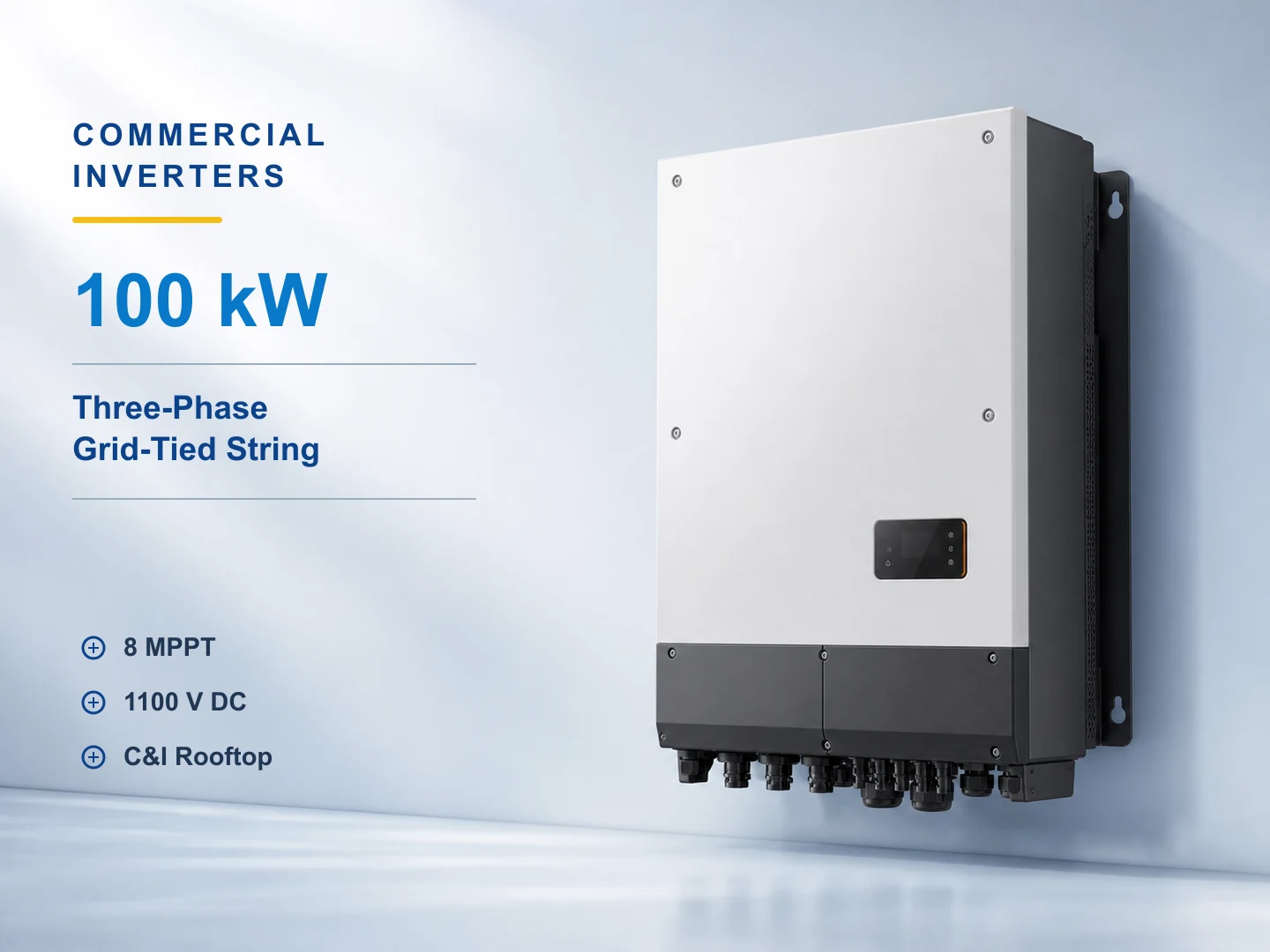
100 kW three-phase grid-tied string inverter for large commercial rooftops, industrial facilities and distributed solar plants.
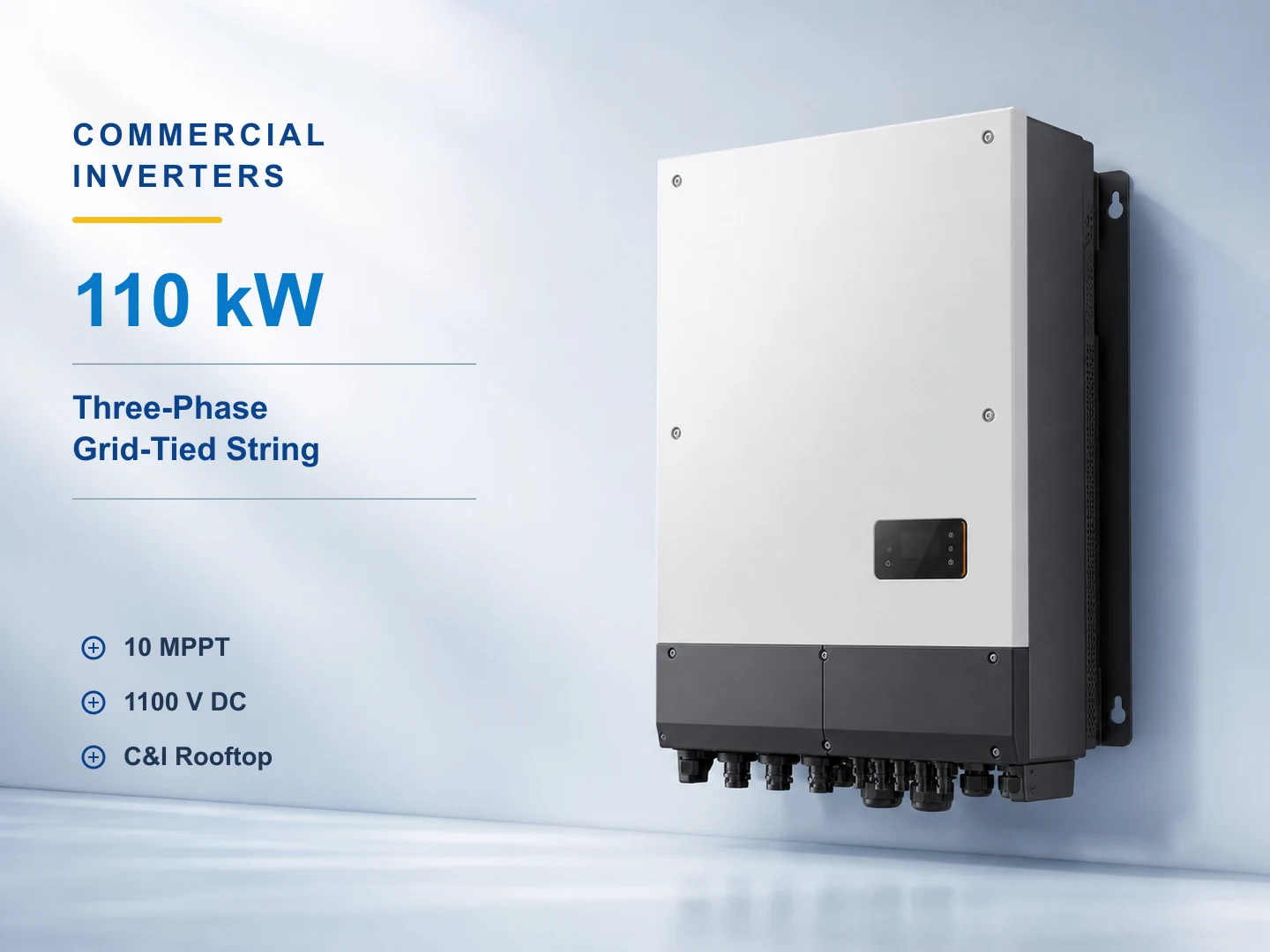
110 kW three-phase grid-tied string inverter for large factories, logistics sites and commercial solar portfolios.
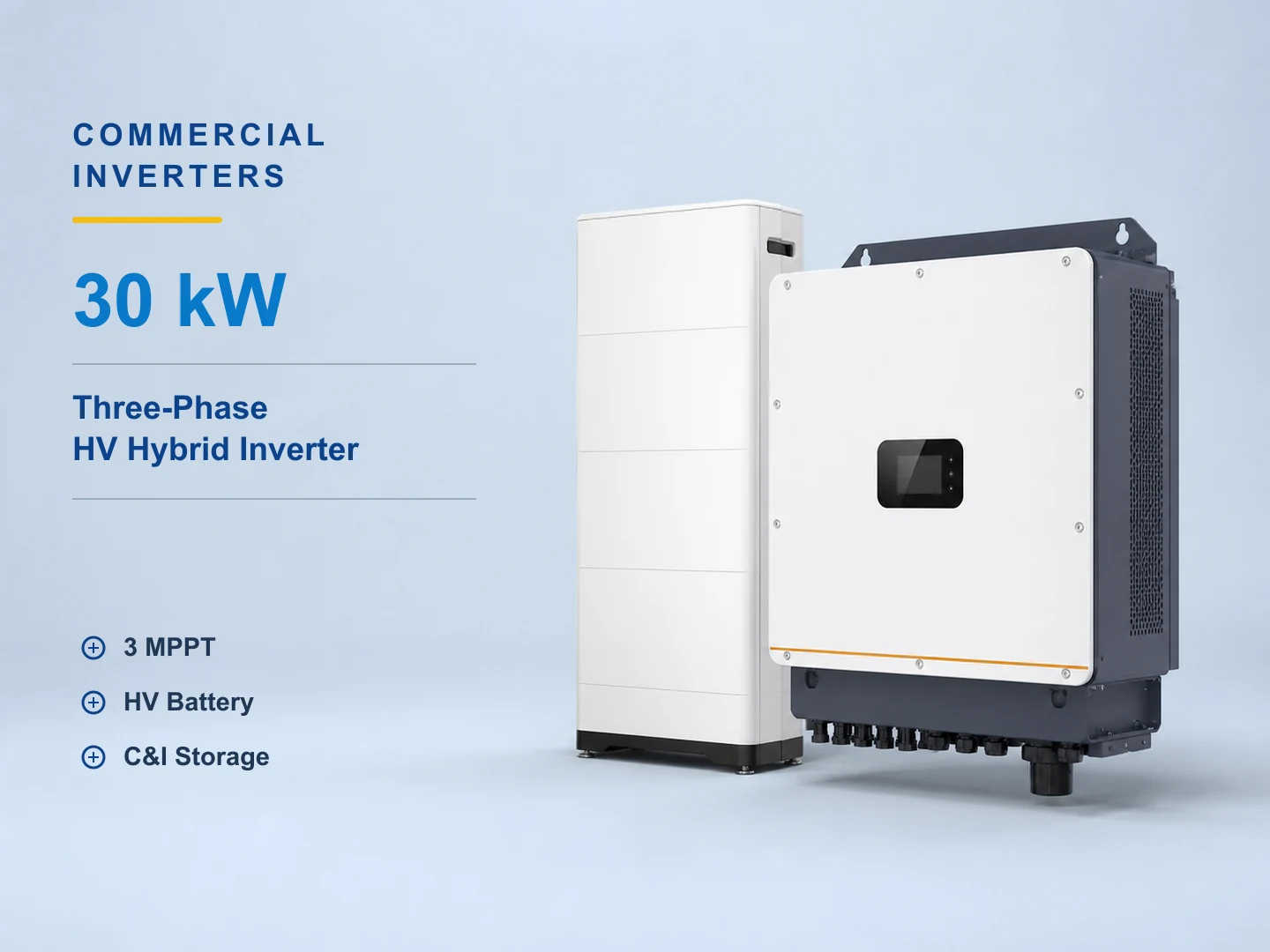
30 kW three-phase high-voltage hybrid inverter for commercial self-consumption, peak shaving and essential-load backup.
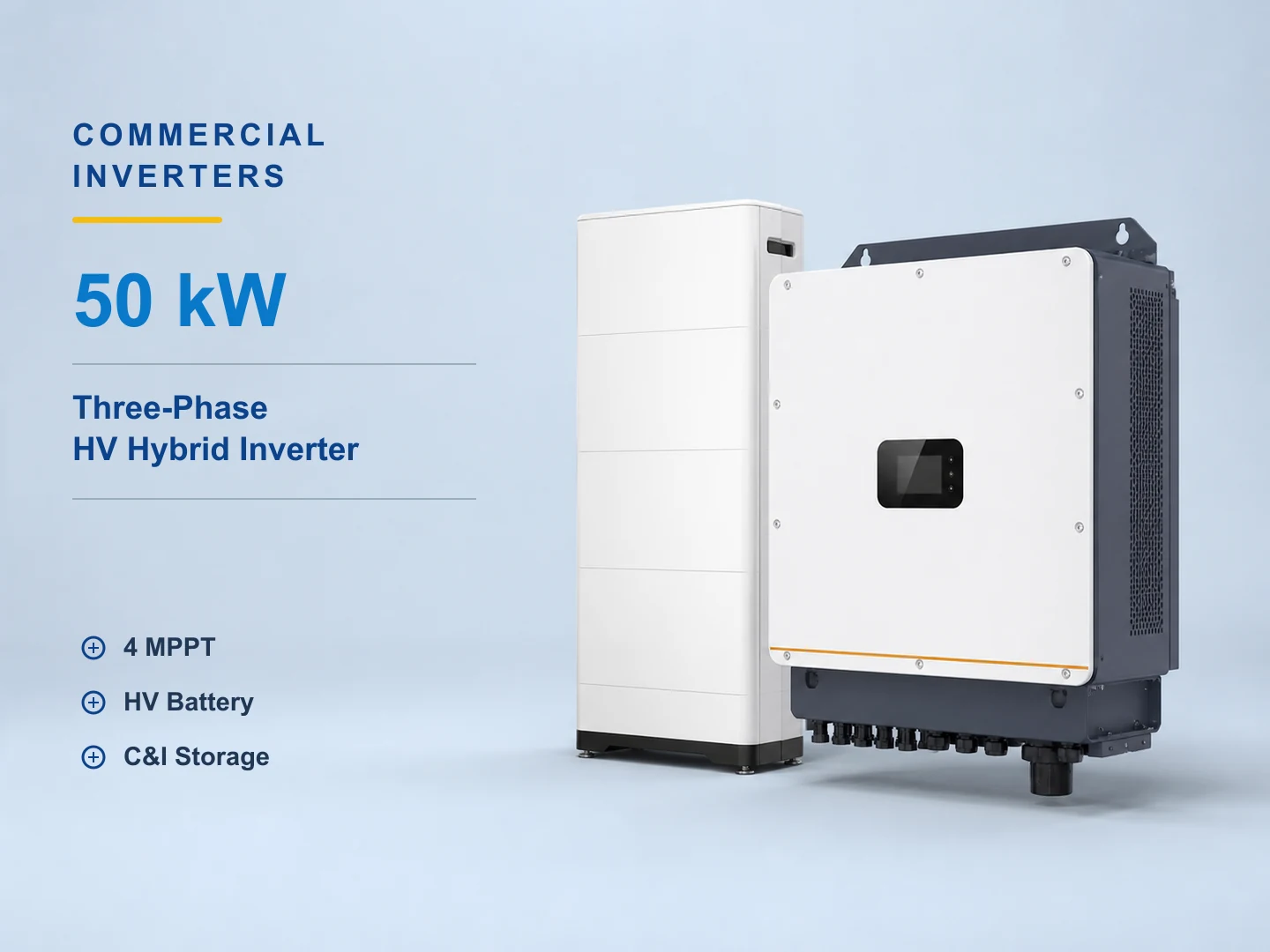
50 kW three-phase high-voltage hybrid inverter for factories, retail facilities and C&I storage projects with PV retrofit needs.
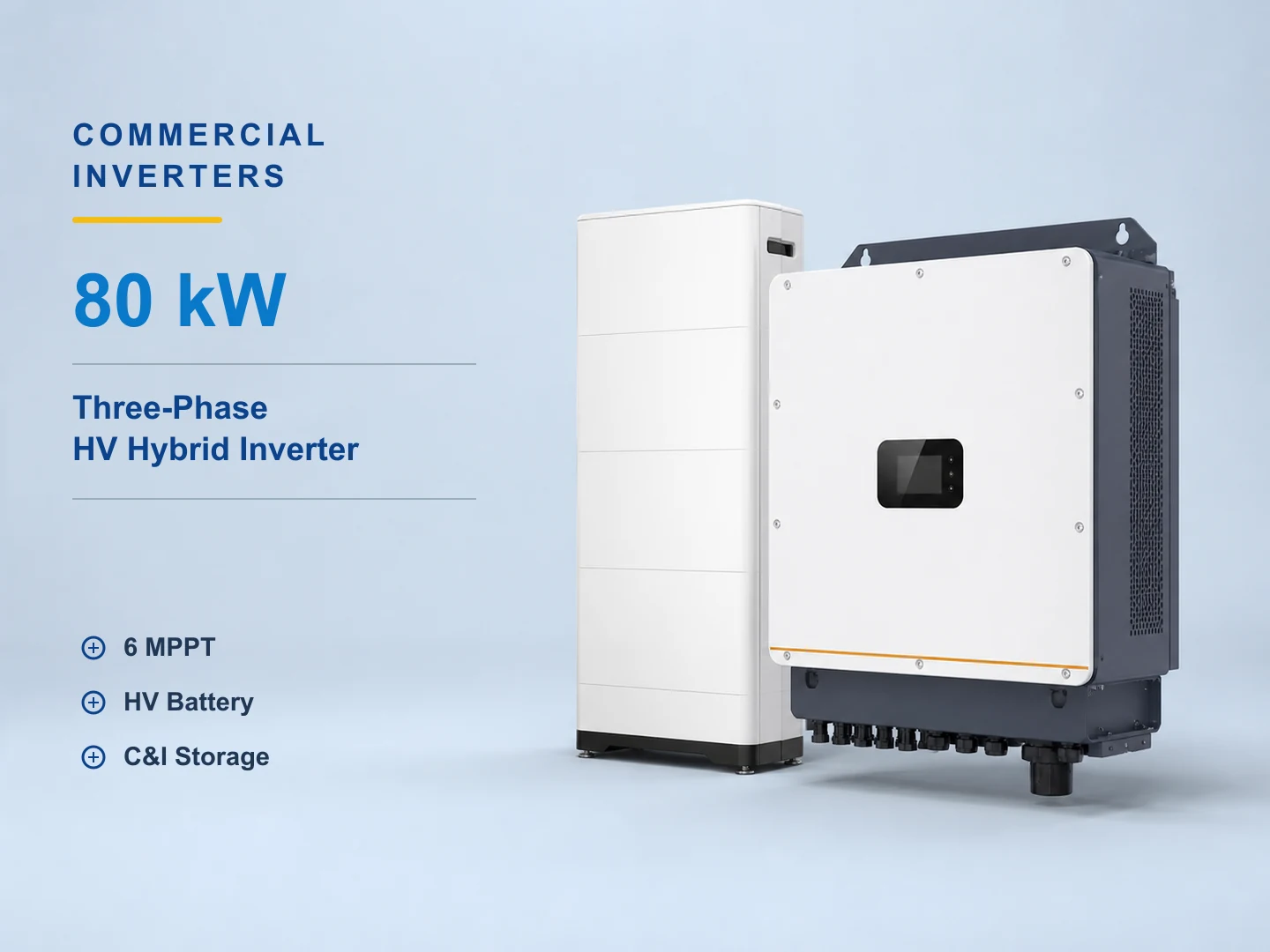
80 kW three-phase high-voltage hybrid inverter for large commercial storage, demand-charge management and microgrid-ready projects.
High-power string inverter and medium-voltage station platforms for ground-mount and large PV plants. DC architecture, collection voltage, transformer, protection, plant controls, grid support, and documents require project-specific engineering confirmation.
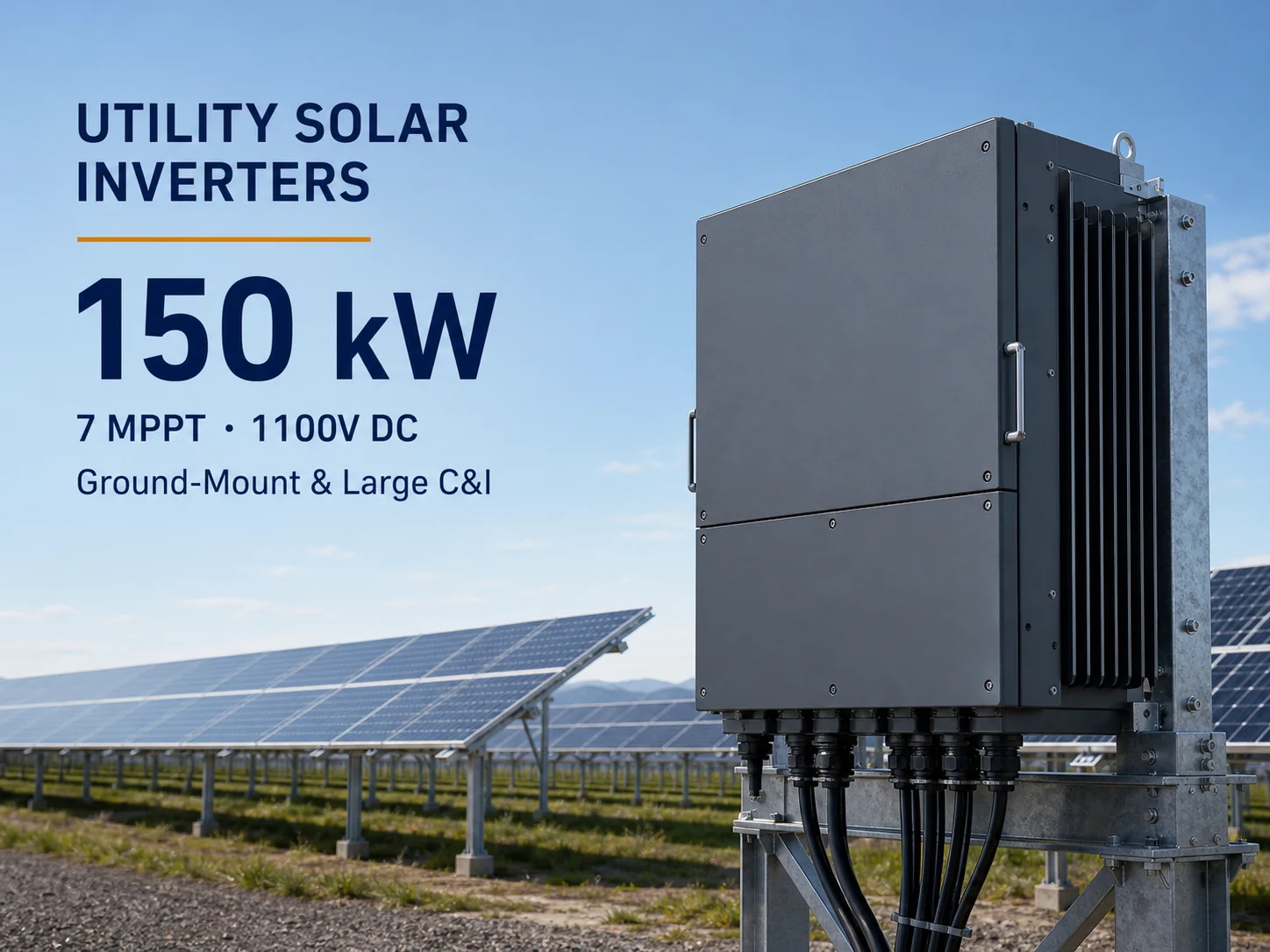
150 kW platform for ground-mount and large c&i pv plants on 1000/1100 v dc systems.
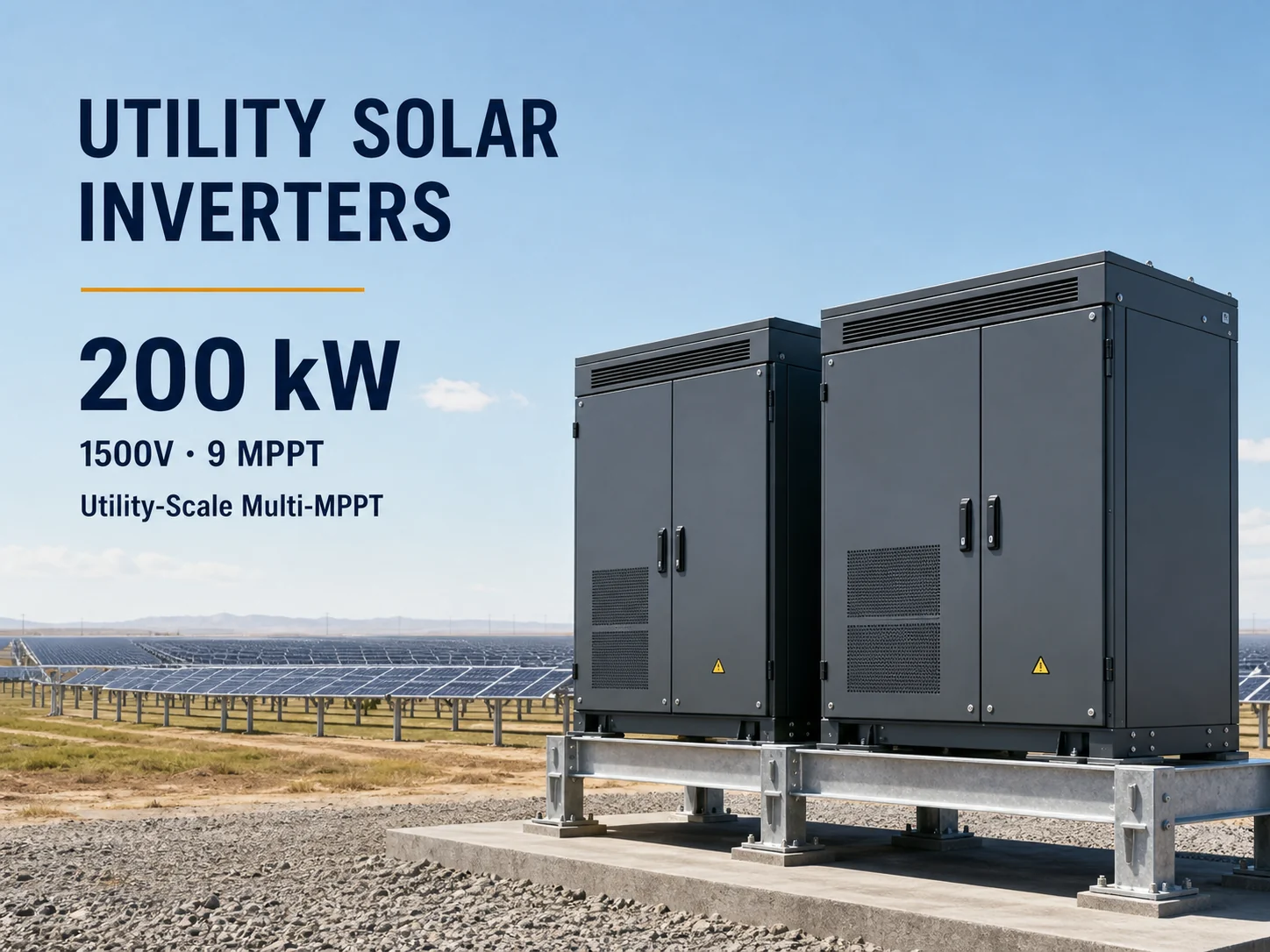
200 kW rated / 215 kVA maximum platform for 1500 v ground-mount pv plants and high-capacity tracker blocks.
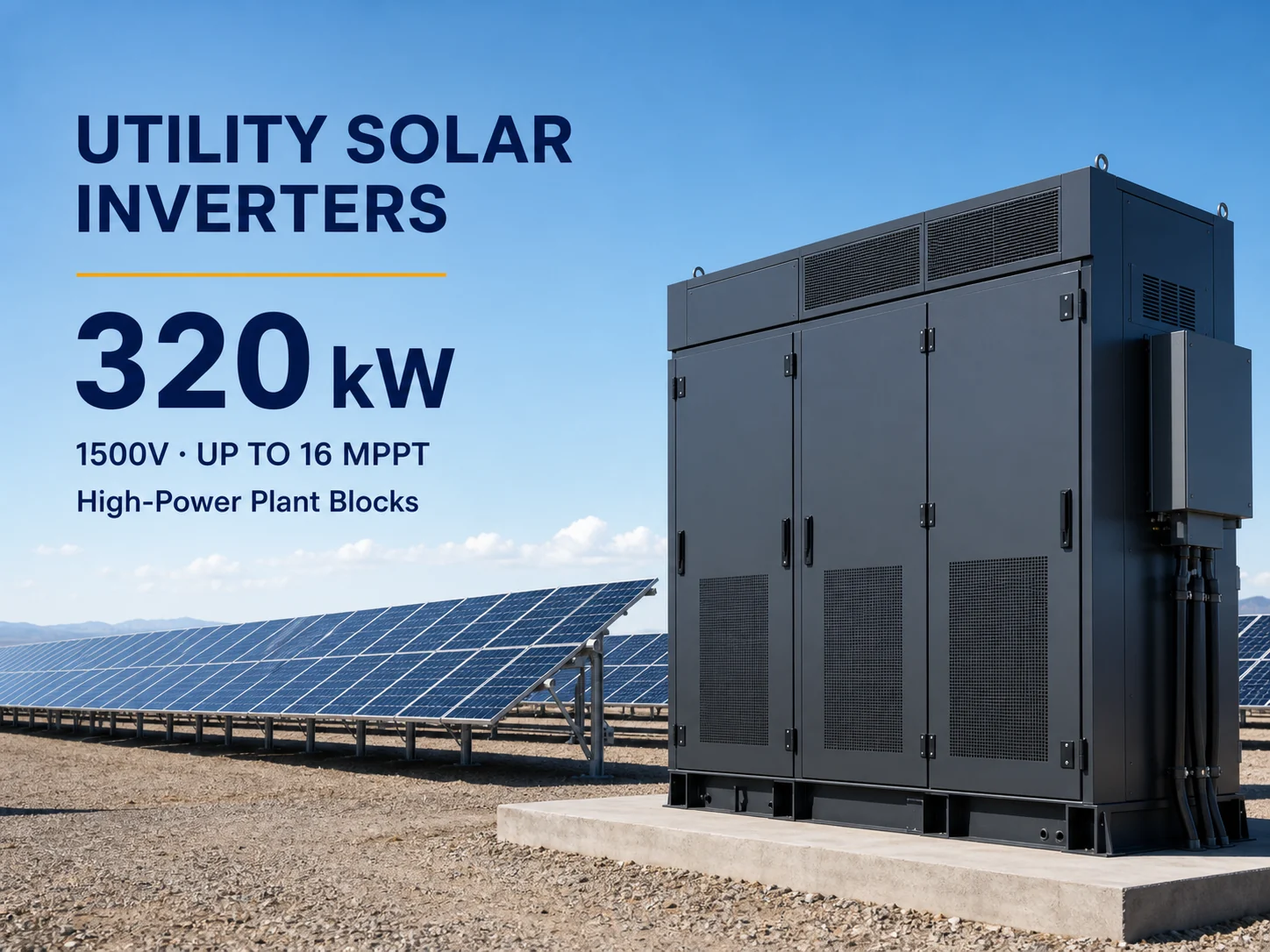
320 kW platform for large utility pv plants requiring high-power decentralized inverter blocks.
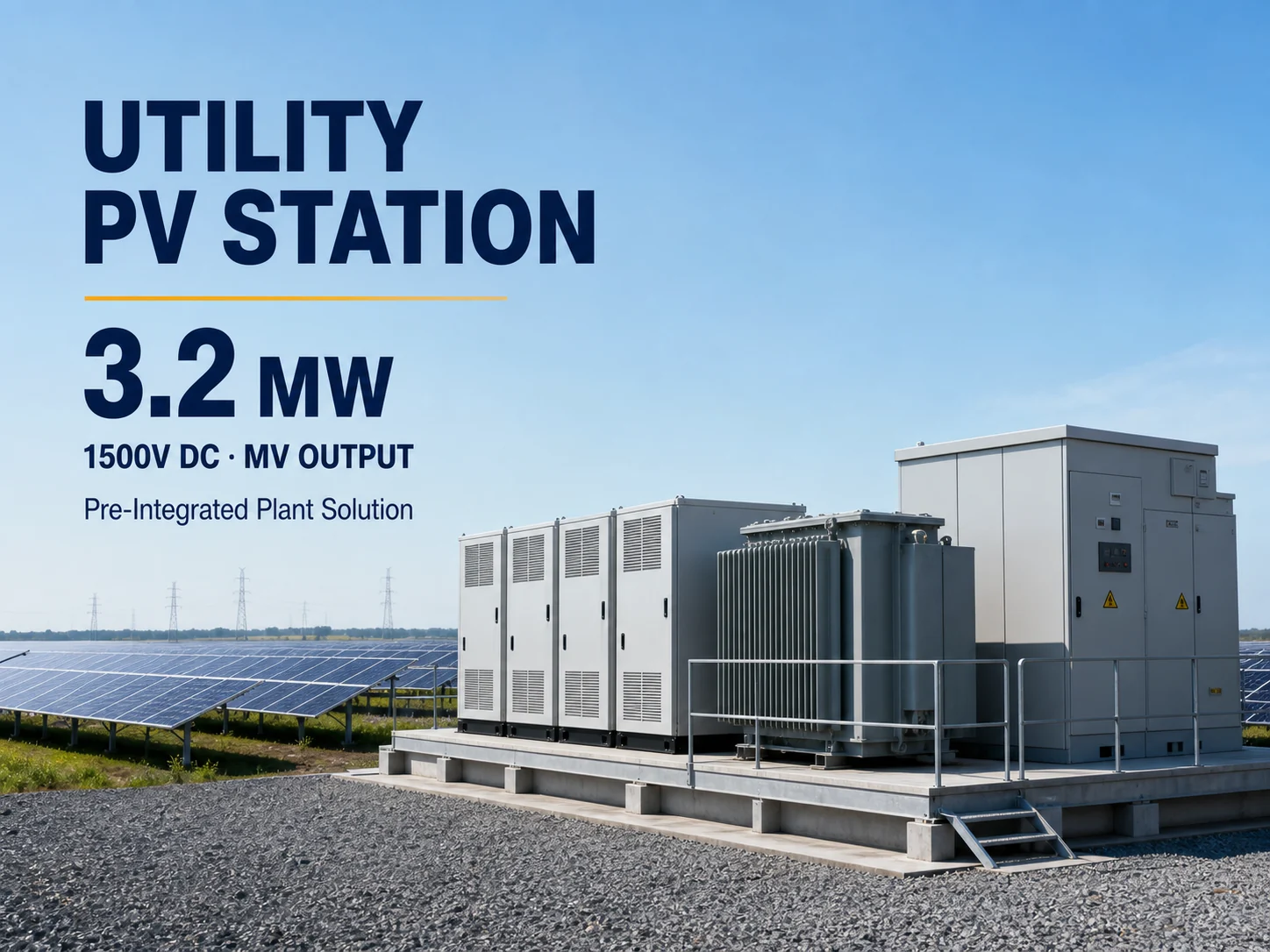
Approx. 3.2 MW AC platform for utility-scale ground-mount pv plants requiring a pre-integrated inverter and mv transformation solution.
Power alone does not define the right inverter. The electrical architecture, connection voltage, operating role, site loads, and local interconnection process determine which model family is relevant.
Review single-phase and three-phase on-grid, hybrid, and off-grid options for homes and small properties. Confirm PV inputs, battery protocol, backup behavior, grid settings, and the exact model before selection.
Review three-phase string and high-voltage hybrid options for rooftops and C&I sites. Match voltage, MPPT and string current, transformer or switchgear interfaces, export control, monitoring, and protection requirements.
Review high-power string and medium-voltage station platforms for large PV plants. DC architecture, collection voltage, transformer, protection, plant controls, grid support, and documentation require project engineering.
Use these labels to narrow the catalogue, not as proof of compatibility. Final operating modes, ports, ratings, accessories, firmware, and approvals are model- and market-specific.
Converts PV DC to grid-synchronized AC for self-consumption or export under the configured grid rules. A standard on-grid inverter does not provide backup power during an outage unless a documented system architecture says otherwise.
Coordinates PV, grid, and a compatible battery for selected operating modes. Battery voltage, BMS protocol, charge and discharge current, backup output, transfer arrangement, and approved accessories must match the exact model.
Supplies standalone or weak-grid loads from PV, battery, and optional AC or generator input. It is not automatically suitable for grid export; generator control, BMS support, and parallel operation depend on the confirmed configuration.
A quote-ready request connects the inverter to the PV array, AC system, battery or backup design, local interconnection process, and required documents.
State single-phase or three-phase, nominal voltage and frequency, target AC power, and any transformer or switchgear interface. Similar power ratings can use different electrical platforms.
Provide module data, string length, string count, site temperature range, and array layout. Check maximum DC voltage, MPPT window, input current, short-circuit current, and strings per tracker against the exact model.
Define self-consumption, export, zero-export, retrofit, or plant-control needs. Grid-code settings, meters, controllers, utility studies, and approval remain destination- and project-specific.
For hybrid systems, confirm battery chemistry, voltage window, current, capacity, BMS protocol, firmware, approved battery list, and required cables or accessories. Nominal voltage alone does not prove compatibility.
List essential loads, continuous and starting power, phase balance, transfer requirements, neutral and earthing arrangement, and generator needs. Backup output and overload behavior are not the same as the inverter nameplate rating.
Specify enclosure and site conditions, communications, monitoring, protective functions, manuals, model-matched certificates, warranty terms, and commissioning files. Published features or standards require exact-model confirmation.
These answers define a responsible shortlist. Final electrical design, grid approval, battery integration, protection, installation, and commissioning remain with the qualified project parties.
An on-grid inverter synchronizes PV generation with the utility supply and normally stops during an outage. A hybrid inverter adds a compatible battery interface and selected energy-management or backup functions. An off-grid inverter charger is designed around standalone loads, batteries, and optional generator or AC input. Exact functions depend on the confirmed model and system design.
Include the application, target power, phase, AC voltage and frequency, PV module and string design, battery details where relevant, backup loads, destination, grid or export-control needs, communications, requested documents, quantity, and delivery target. State the exact model when already selected.
No. The voltage range, maximum current, BMS communication protocol, firmware, approved battery list, cables, protection, and commissioning settings must match. A shared nominal voltage or connector is not enough to establish compatibility.
No. Documents apply to stated models, revisions, standards, issuers, and scopes. The local designer, installer, importer, utility, authority, or other responsible party must confirm the applicable grid code, protection settings, registration, and project approval requirements.
Compare on-grid, hybrid, and off-grid inverter options for distributor, EPC, installer, and project RFQs. Start with the system role and project scale, then use the exact model page to review AC connection, PV input, MPPT layout, battery or backup interface, communications, protection, and destination-market document needs.
Send the application, target power, phase and voltage, PV string inputs, battery or backup requirements, destination, requested files, quantity, and delivery target. If a model is fixed, include the complete model code.