
Compare the three displayed Deye micro hybrid ESS pages
Open the exact SUN-BK page for source-derived fields, then confirm suffix, PV/MPPT, AC and load boundary, usable storage, included accessories, files, market status and order terms.
Displayed all-in-one routes
Separate energy size, AC power and MPPT architecture
The three source pages combine inverter and battery functions, but their PV inputs, AC ratings, enclosure suffixes and installation scope are not interchangeable.
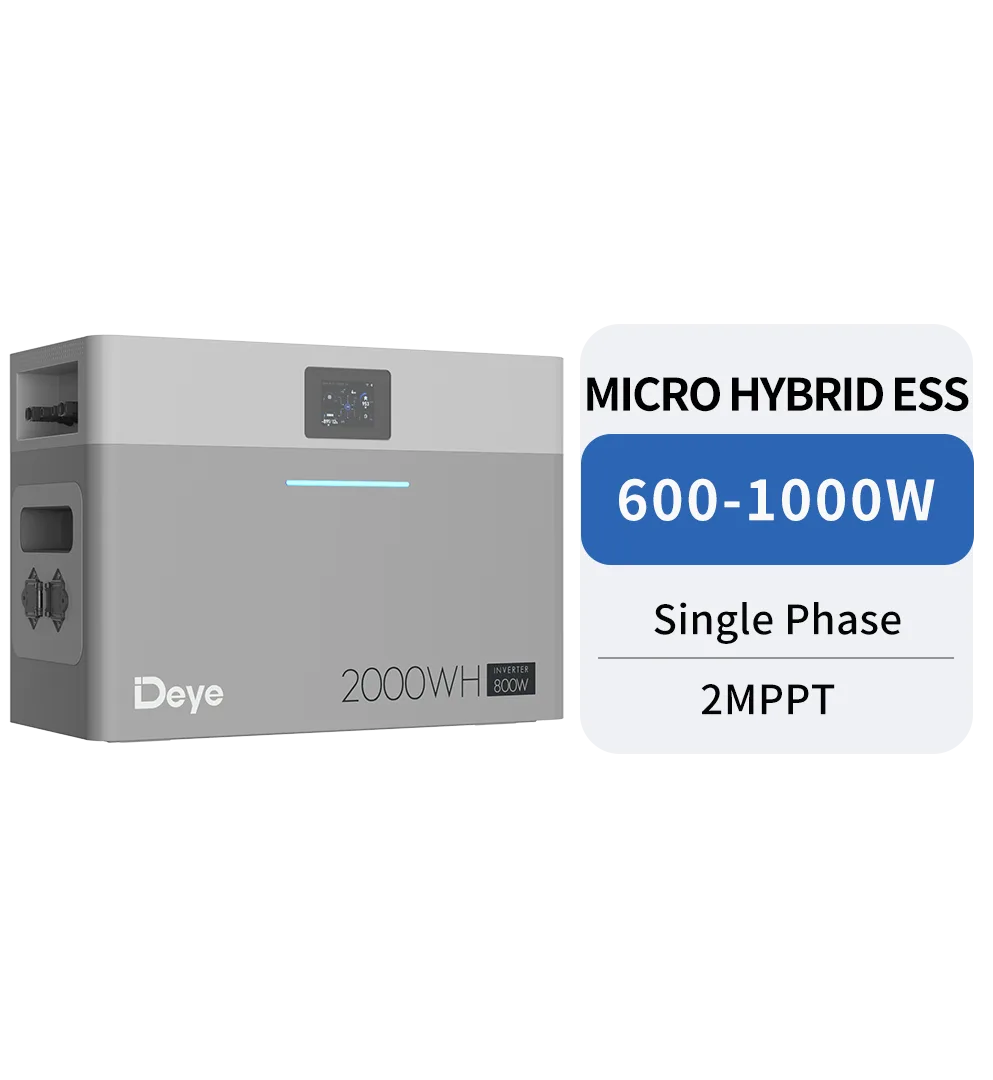
2.0 kWh AM2 family
Displayed source tables cover 600/800/1000 W family ratings, two MPPT inputs and 2.0 kWh nominal LFP storage. Confirm exact AC, PV current, battery, enclosure and suffix data.
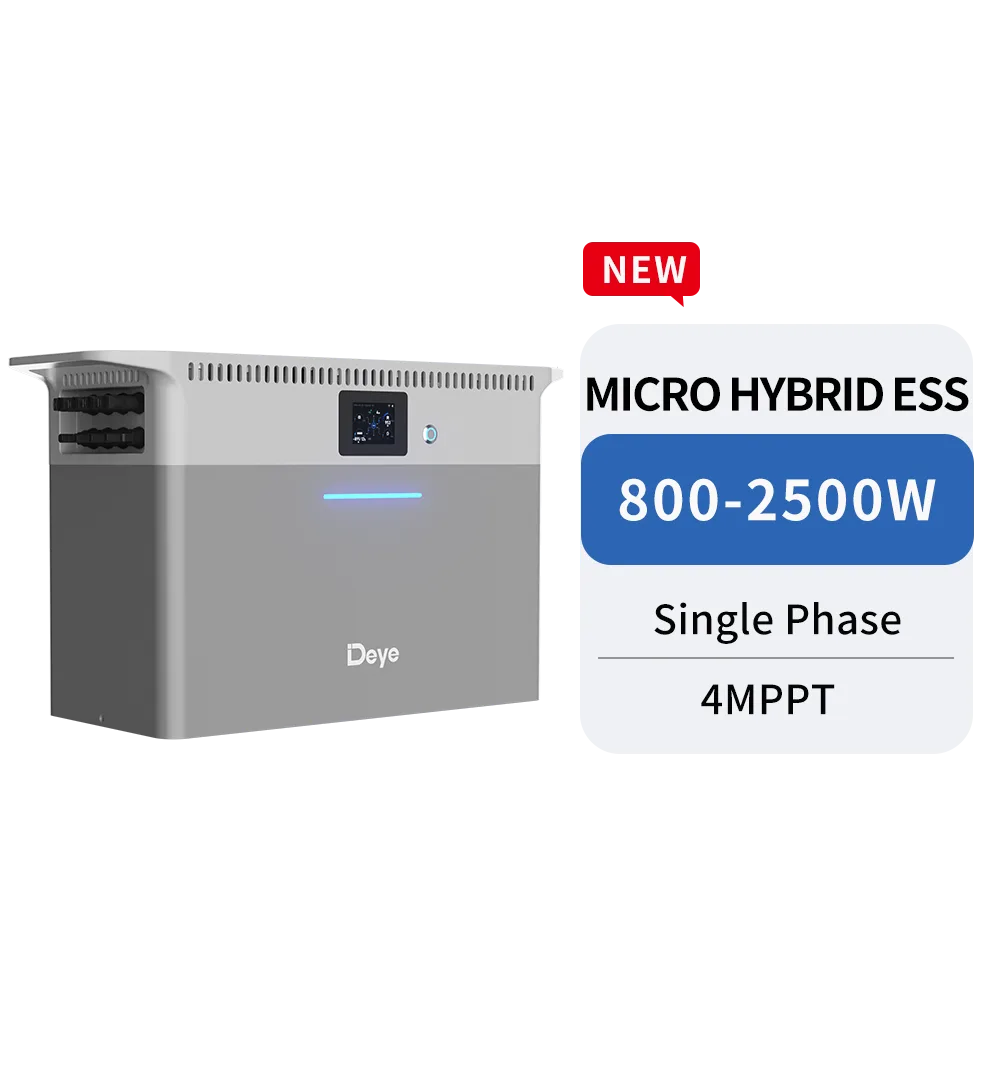
2.56 kWh AM4 family
Displayed 800–2500 W family ratings use a four-MPPT source route with 2.56 kWh nominal storage and 18L/32L suffixes. Verify input mapping, current, enclosure and included parts by model.
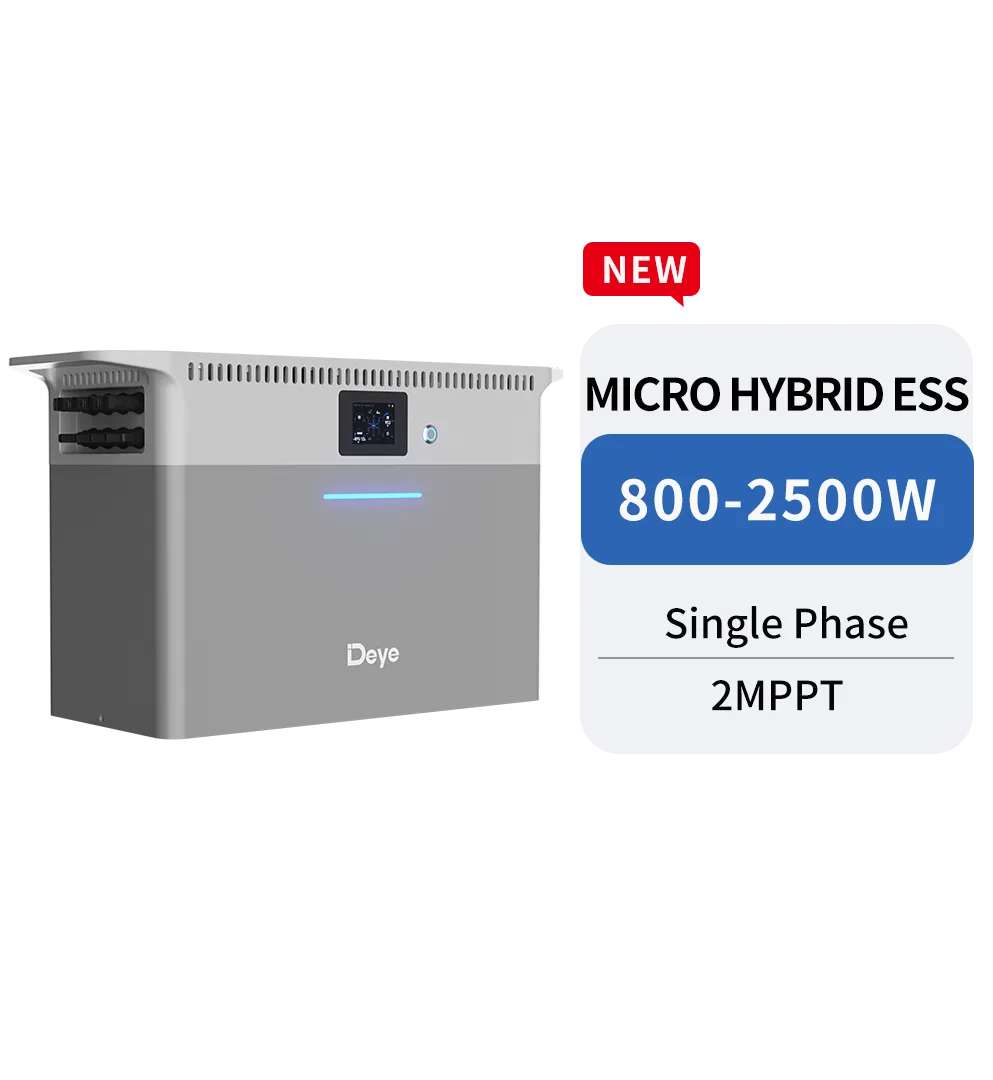
2.56 kWh AM2 family
Displayed 800–2500 W source ratings use a two-MPPT route with 32L suffix. Do not transfer PV input current, string allocation or accessory assumptions from the AM4 family.
Grid, backup and portable contexts
Treat each operating label as a design starting point. AC connection, critical-load output, transfer behavior, earthing, socket/plug rules, weather exposure and authority requirements still need confirmation.
Small ESS selection checks
Six checks before shortlisting a Deye micro hybrid ESS
A useful RFQ connects the exact integrated unit to modules, AC connection, supported loads, runtime expectations and local installation rules.
Use case and connection mode
State balcony PV, fixed small backup, portable use, self-consumption or AC-coupled retrofit; identify indoor/outdoor location, grid connection, plug/socket or fixed wiring and responsible installer.
Loads and outage behavior
List continuous and peak loads, motor starts, critical circuits, expected transfer, simultaneous operation and required runtime. Separate backed-up loads from normal grid-connected loads.
PV modules and MPPT inputs
Provide exact module Voc/Vmp/Isc/Imp, temperature data, quantity, orientation and connectors; verify voltage/current, two/four-MPPT mapping and permitted module arrangement.
Battery energy and operating limits
Confirm nominal and usable energy, voltage/current, charge/discharge limits, temperature, reserve, degradation, cycle/warranty basis and whether storage is fixed or expandable for the exact suffix.
AC branch, protection and accessories
Confirm 220/230 V single-phase branch, conductor/current, breaker/RCD, isolation, earthing, meter/CT or smart switch, cable/connectors and which accessories are included or separate.
Files, market and supply status
Request exact datasheet/manual/certificate references, grid and safety scope, firmware/settings, warranty, labels, serial/app requirements, availability, quantity, delivery and substitution control.
Runtime and installation boundaries
All-in-one and plug-and-play labels do not remove system responsibilities
The unit integrates functions, but runtime, grid connection, backup safety and installation still depend on loads, wiring, settings, environment and local rules.
Nominal kWh is not guaranteed runtime
Usable energy, reserve, conversion losses, temperature, aging, load profile and operating limits affect duration. State the load assumption behind any runtime estimate.
Plug-and-play is not universal permission
Socket, plug-in generation, export, RCD, isolation, earthing, balcony/fire and installer requirements vary by country and building. Confirm the destination rules.
On-grid/off-grid labels need exact circuits
Grid input/output, pass-through, backup output, switching, neutral/earth and load segregation must come from the exact manual and approved electrical design.
Integrated does not mean every item is included
PV modules, mounting, cables, meter/CT, smart switch, protection, distribution, app/gateway and installation may be separate. Mark every line included, optional or supplied by others.
Continue the storage review
Connect micro ESS selection to backup and compatibility guidance
Use the residential solution to define loads and wiring, then verify inverter-battery and accessory compatibility before ordering.
Residential solar backup solution
Review how PV, storage, critical-load distribution, protection and local installation responsibilities form one small backup system.
Review solution context
Battery and inverter compatibility guide
Use voltage, current, BMS, firmware, protection, settings and written model-pairing checks before fixing the system BOM.
Read the buyer guide
Deye micro hybrid ESS FAQ
Questions to close before selecting a compact all-in-one system
These answers support procurement; final electrical design, grid permission, load support, runtime and installation remain exact-model and project decisions.
How long will a 2.0 or 2.56 kWh Deye micro hybrid ESS run my loads?
Runtime depends on usable rather than nominal energy, reserve, conversion losses, temperature, aging and the actual load profile. Divide a documented usable-energy assumption by average load only as an initial estimate, then check peak loads and model operating limits.
Can a Deye micro hybrid ESS be plugged into any household socket?
Do not assume so. Confirm the exact model/manual, country rules for plug-in generation and storage, branch rating, socket and cable, RCD, isolation, earthing, export limits, landlord/building requirements and qualified installation route.
Are the two-MPPT and four-MPPT SUN-BK models interchangeable?
No. Confirm the exact number and mapping of inputs, PV voltage/current limits, module count and orientation, AC rating, battery energy, enclosure suffix, accessories, firmware and documents. Similar storage capacity does not prove the same PV architecture.
What should a Deye micro hybrid ESS RFQ include?
Include destination and use, exact model or target AC/kWh, module/input plan, grid or portable connection, critical loads and runtime, protection/earthing, meter/CT/switch accessories, required files, quantity and delivery target.
Deye micro hybrid ESS procurement
Deye Micro Hybrid ESS for Balcony, Portable and Small Backup Uses
Compare three displayed SUN-BK source pages covering 600–2500 W family ratings, 2.0 or 2.56 kWh nominal LFP storage, two- or four-MPPT source configurations and 220/230 V single-phase AC. Source labels include on-grid, off-grid and portable use, but installation mode, grid connection, backup circuit, battery runtime and plug/socket permissions remain project- and market-specific. Confirm the complete model suffix, PV inputs, AC branch, loads, battery limits, accessories, documents and order scope.
Prepare a Deye micro hybrid ESS RFQ by load and connection
Send the use and destination, PV modules/input map, grid or portable connection, backed-up loads and runtime, exact model/AC/kWh, protection, accessories, documents, quantity and delivery target.