Roof or ground-mount solar in a snowy area: how to choose
A steep roof may shed snow and shorten the cable run. A ground array is easier to reach but may use valuable land or sit in tree shade. Compare the whole site before choosing.
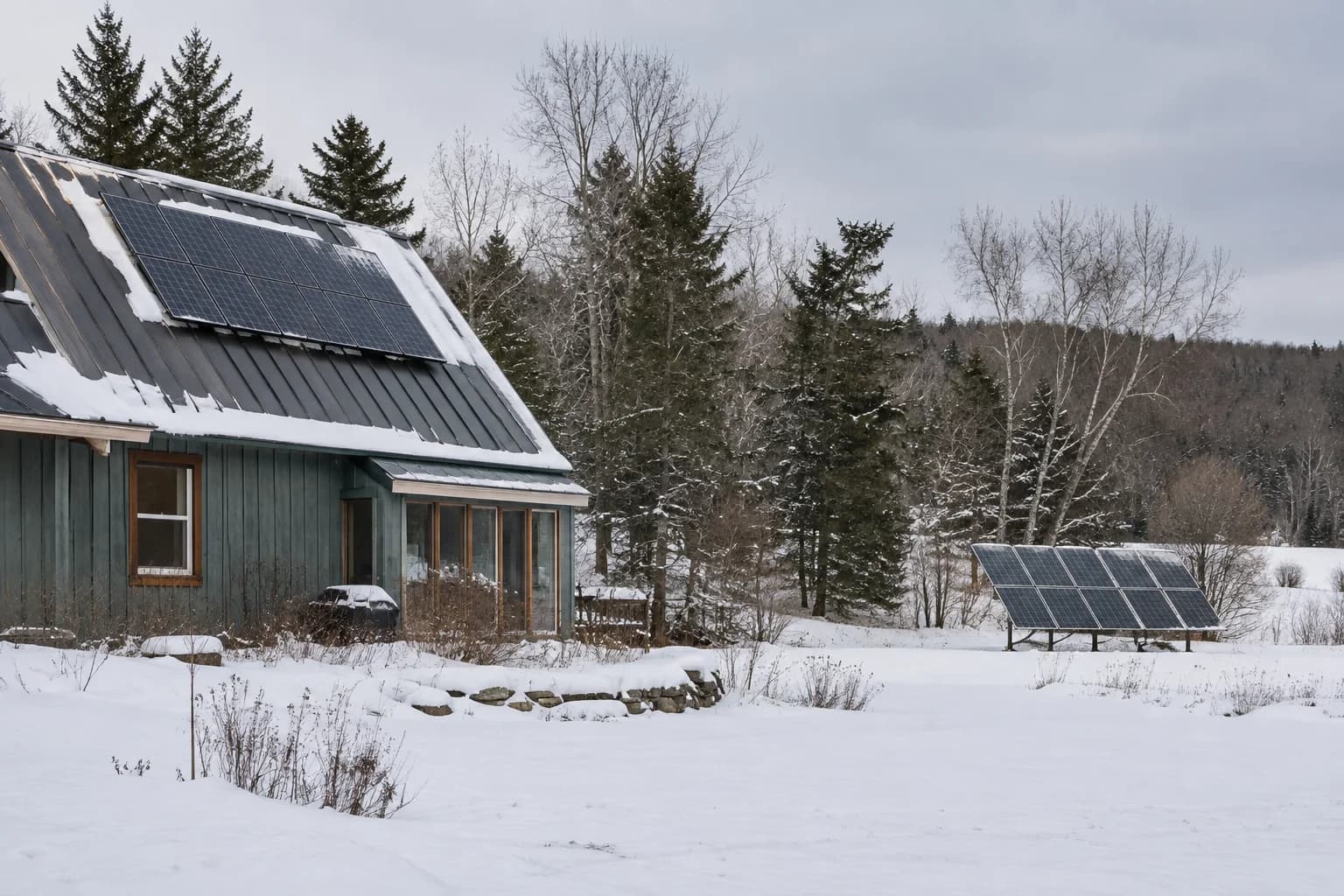
Snow makes the choice look simple. Put the panels on the ground, and they will be easier to reach. Then the trees, the cable route and the amount of usable land enter the picture. A clear, steep roof may get better winter sun, while a ground array may need to sit farther away or on a taller structure to escape shade.
There is no general winner in a roof-versus-ground-mount comparison. The right answer comes from the property: where the winter sun reaches, what can be built safely, how the equipment will be serviced and what the complete installation costs.
This guide gives homeowners a practical way to compare those points. It does not replace a shade study, structural review, electrical design or local approval. The photographs are illustrative editorial scenes, not customer projects.
Begin with winter sunlight, not the mounting hardware
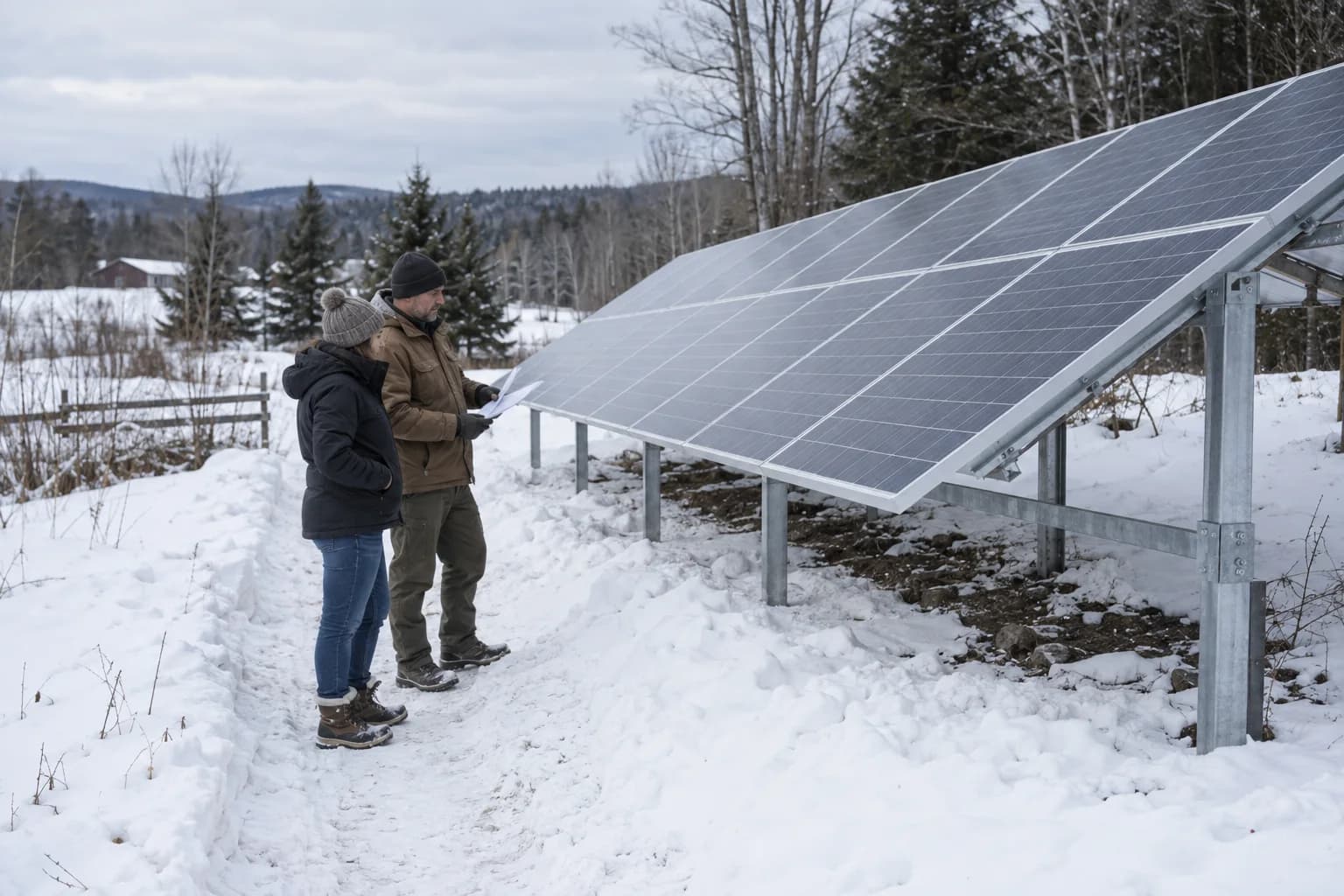
Walk the property when the sun is low, or ask for a shade study that models the difficult months. A spot that looks open in summer can spend much of a winter day behind a tree line, hill or nearby building. The roof may sit high enough to see over those obstacles. In another property, the roof may face the wrong way while a clear patch of ground has a much better view of the sky.
Compare the two locations with the same proposed array size and the same production assumptions. Otherwise, a larger ground array can appear to beat a smaller roof array even when the location itself is not better. Ask to see monthly production rather than one attractive annual total; winter output matters most when snow and short days are part of the concern.
Shade can also change over time. Young trees grow, evergreens keep their needles in winter and a neighbour's land may not stay open forever. That does not mean every tree should come down. It means the solar plan should show what is casting the shade and how sensitive the estimate is to it.
Roof and ground mounts solve different problems
The easiest way to avoid a one-sided decision is to put both options on the same page. A roof uses space that already exists and often keeps the cable route short. A ground array offers easier access and more freedom to choose direction and tilt. Each advantage brings a condition that has to be checked.
- Question
- Where is the better sun?
- Roof mount
- Higher position may clear nearby obstacles, but roof direction and slope are fixed
- Ground mount
- Direction and tilt can be chosen, provided the site is not shaded by trees or terrain
- Question
- How will it be reached?
- Roof mount
- Inspection and repair need a safe professional roof-access plan
- Ground mount
- Usually easier to inspect from the ground, with room around the rack
- Question
- What else is being used?
- Roof mount
- Uses roof area and can affect future roofing work
- Ground mount
- Uses land and may affect mowing, access, views or another future use
- Question
- What sits between panels and equipment?
- Roof mount
- Often a shorter route to equipment inside the building
- Ground mount
- May need a longer cable route, trench and site restoration
- Question
- What must support it?
- Roof mount
- Existing roof structure, roof covering and approved attachment system
- Ground mount
- Foundations, steelwork, drainage and soil suited to the site
| Question | Roof mount | Ground mount |
|---|---|---|
| Where is the better sun? | Higher position may clear nearby obstacles, but roof direction and slope are fixed | Direction and tilt can be chosen, provided the site is not shaded by trees or terrain |
| How will it be reached? | Inspection and repair need a safe professional roof-access plan | Usually easier to inspect from the ground, with room around the rack |
| What else is being used? | Uses roof area and can affect future roofing work | Uses land and may affect mowing, access, views or another future use |
| What sits between panels and equipment? | Often a shorter route to equipment inside the building | May need a longer cable route, trench and site restoration |
| What must support it? | Existing roof structure, roof covering and approved attachment system | Foundations, steelwork, drainage and soil suited to the site |
These are planning differences, not a scorecard. One serious shade, structural or access problem can outweigh several smaller advantages.
A steep roof can help snow move, but it cannot promise a clear array
Panels on a steep roof may shed snow sooner than panels mounted at a shallow angle. That is useful, but it is not an automatic snow-removal system. Wet snow, dry powder, ice, temperature, module frames, roof edges and the mounting layout all affect what stays and what slides.
That is why a believable production estimate needs a snow-loss assumption rather than the sentence “the pitch will take care of it.” Ask what weather data and snow model were used. Look at the monthly result and find out whether the estimate assumes the panels will be cleared by a person. Regular roof clearing is a poor plan when safe access has not been designed from the beginning.
Snow that leaves a steep roof also needs somewhere safe to land. Doors, paths, vehicles, heat pumps and service areas should not sit in the likely slide zone. This is easy to miss when everyone is looking only at annual solar output. A qualified local designer can account for roof loads, mounting loads and falling-snow risk without asking a homeowner to climb onto an icy roof.
A newer metal roof may strengthen the roof option
A sound metal roof with useful life ahead of it can make rooftop solar more attractive. Some standing-seam roofs accept clamp systems that attach to the seams without making the same type of roof penetration used by other mounts. That possibility depends on the exact roof profile, seam, clamp and engineering approval. “Metal roof” alone is not enough information.
Before accepting a roof proposal, record the roof material, age, condition, slope and exact panel-support area. Ask who checks the framing and the combined wind and snow loads. Confirm how the attachment works, whether it follows the roof and mounting manufacturers' instructions, and how the work affects the roof warranty.
Think one repair cycle ahead as well. If the roof is likely to need replacement during the solar system's life, include panel removal and reinstallation in the decision. A new roof can avoid that near-term conflict. It still needs a safe installation and service plan, especially on a steep surface.
Ground mounting is easier to reach, not always easier to build
Easy access is the clearest ground-mount advantage. A technician can usually inspect modules, racking and the area around them without working high above the ground. There is also more freedom to leave service space and allow future expansion.
The hidden work is below and around the array. Foundations have to suit the soil, frost conditions and structural loads. Water needs somewhere to drain. The lower edge needs enough clearance for the site's expected snow accumulation and drifting. Vegetation, mowing, animals, vehicles and security all become part of normal ownership.
A tall rack built to see over nearby trees is a different structure from a simple low ground mount. More exposed height can change wind loads, foundations, cost and access. It should be treated as an engineered structure, not as a quick way to rescue a shaded location.
Distance matters too. A remote array may require trenching, underground cable work and restoration across the property. The cheapest rack price may not produce the cheapest finished system once that route is included. If the sunny location is well away from the building, compare the complete power path before choosing the inverter and other equipment.
Do not let bifacial panels or adjustable racks choose the site for you
Bifacial panels can collect some light from the rear, but the rear side needs a useful view of reflected light. A module installed close to an opaque roof does not have the same rear exposure as a raised ground array. Bright snow around a well-spaced ground mount may help at certain times, yet it does not guarantee a particular gain or keep the front surface clear.
An adjustable ground rack can change the panel angle through the year. In a snowy region, a steeper winter position may help with both low sun and snow movement. The trade-off is more structure, moving parts and an operating task that someone must actually perform. The chosen position still has to meet the rack manufacturer's limits and the site's structural design.
These features can improve a good site. They rarely repair a poor one. First settle shade, access, foundations and the cable route. Then compare the added cost with a documented production estimate for the exact layout.
Ask for two comparable site concepts
A roof quote and a ground quote are easy to misread when they include different equipment or leave out different work. Give both bidders the same target: the same required energy or array capacity, the same important loads, the same equipment boundary and the same difficult-season assumptions.
Each concept should show the array location, winter shade, monthly production estimate, equipment location and cable route. The installed scope should make roof attachments or ground foundations visible, along with trenching, drainage, access and site restoration where relevant. You should also be able to see who handles structural review, electrical design, permits and final approval.
Do not force a choice if both first locations are weak. A detached shed, carport or another existing structure can sometimes place panels in better sun while giving the equipment a practical home. That third route has its own structure and cost, so it belongs in the same comparison rather than being treated as free space.
- 1
The roof is clearly sunnier
Keep the roof option if its condition, structure, attachment method, slide zone and safe service access can all be confirmed.
- 2
The ground gets similar sun
Price the full ground route, including foundations, snow clearance, drainage, trenching, land use and routine access.
- 3
Both locations have a serious drawback
Test another structure or site before spending money to make a shaded ground rack taller or a poor roof layout more complicated.
Bring this short list to the site review
A useful site visit should leave you with evidence, not just a preference for one style of rack. The following items are enough to start a fair comparison without pretending the final engineering is already done.
- Winter shade information for the roof and every realistic ground location.
- Roof material, profile, age, condition, slope, framing information and warranty questions.
- Ground slope, soil, drainage, snow accumulation, access and current use of the land.
- A realistic route from each array location to the proposed equipment area.
- A safe plan for inspection, service and falling snow throughout the system's life.
- Two estimates using the same system target, monthly weather assumptions and complete installed scope.
Do solar panels on a steep roof clear snow by themselves?
They may shed snow sooner than a shallow array, especially when conditions allow the snow layer to slide. It is not guaranteed. Ice, snow type, temperature, panel frames and the mounting layout all change the result, so the production estimate should include a stated snow-loss assumption.
Are ground-mounted solar panels always better in snowy areas?
No. They are usually easier to reach and can use a chosen tilt, but a shaded ground location, difficult foundations, deep drifts or a long trench can remove that advantage. Compare winter sun and the complete installation, not access alone.
Should a homeowner plan to remove snow from roof-mounted panels?
Do not make hazardous roof work part of the normal energy plan. Ask the installer how snow loss is handled in the estimate and how the system can be inspected safely. Any access or maintenance method should follow the equipment instructions and local professional guidance.
Related Articles

Can a solar lease cost more than grid power? Check the real numbers
A solar lease can lower one part of the electricity bill and still cost more overall. Put the lease payment, remaining grid bill and export credits on the same page.
Read Article→
What is the hardest part of off-grid solar? Getting through the worst week
A system that works on normal days can still run short after several dull days. The useful question is how the home will reduce the deficit and recover afterward.
Read Article→
How much should you budget for home solar and battery backup?
Your electricity bill is useful, but it cannot price a solar and battery system by itself. Build the budget around the job, the loads and the complete installed scope.
Read Article→