
How much should you budget for home solar and battery backup?
Your electricity bill is useful, but it cannot price a solar and battery system by itself. Build the budget around the job, the loads and the complete installed scope.

“How much should I budget for solar?” sounds like a price question. It is usually three questions hiding in one sentence.
The homeowner wants a lower electricity bill. They want the refrigerator, lights and internet to keep working during an outage. They may also hope to run air conditioning and bring the bill close to zero. Those goals share some equipment, but they do not create the same system or the same budget.
A monthly bill is a useful starting point. It does not show how much power the home needs at one moment, how much energy is used after sunset or which appliances matter during a blackout. This guide explains how to turn that first question into a budget that installers and suppliers can answer. It does not publish a universal installed price because equipment, labour, roof work, approvals, shipping and local electricity rules vary. The examples are for teaching, not household averages or quotations. Both photographs are illustrative editorial scenes rather than customer projects.

Start with the kWh on the bill, not the amount paid
Two homes can pay the same amount and need very different solar systems. One may use most of its electricity while the sun is out. The other may use little during the day and run cooling, cooking and water heating in the evening. Their bills can look similar while solar serves them differently.
Collect 12 months of bills if possible. Look for the line showing electricity used in kilowatt-hours, written as kWh. Record each month rather than choosing the lowest or highest bill. The pattern shows whether demand changes with hot weather, heating, school holidays, business activity or other seasonal routines.
The amount paid still matters, but keep it beside the energy data. Electricity prices may include fixed charges, different time periods, taxes or export credits. A large bill does not always mean the home used an equally large amount of energy, and a solar system cannot remove every charge printed on the account.
Hourly or half-hourly meter data is even more useful when it is available. It shows what share of the load occurs during solar hours and what remains for the evening. If detailed data is unavailable, write down when the main appliances normally run. A good first budget can start with honest estimates and improve when better evidence arrives.
Choose the job before asking for a price
A quotation becomes expensive or disappointing when the phrase “home solar system” is left undefined. Decide what the first version of the system must do.
Solar-only and solar-with-backup are different jobs. An ordinary grid-connected solar system usually stops supplying the home during a grid outage. Backup needs a compatible inverter, battery, safe separation from the grid and a defined group of supported circuits. Adding a battery name to the quotation does not settle those details.
Start with one of the routes below. It is fine to request more than one so the cost of each additional goal stays visible.
- Main goal
- Reduce daytime electricity purchases
- What the quotation needs to solve
- Solar production that lines up with the home's daytime use and local export arrangement
- Question to answer first
- How much electricity is used while the sun is available?
- Main goal
- Keep essentials running in an outage
- What the quotation needs to solve
- A supported backup output, selected circuits and enough battery energy for the intended hours
- Question to answer first
- Which refrigerator, lights, communications and security loads must stay on?
- Main goal
- Back up air conditioning and other large loads
- What the quotation needs to solve
- Higher simultaneous power, starting headroom and substantially more stored energy
- Question to answer first
- Which exact units must run, for how long and alongside what else?
| Main goal | What the quotation needs to solve | Question to answer first |
|---|---|---|
| Reduce daytime electricity purchases | Solar production that lines up with the home's daytime use and local export arrangement | How much electricity is used while the sun is available? |
| Keep essentials running in an outage | A supported backup output, selected circuits and enough battery energy for the intended hours | Which refrigerator, lights, communications and security loads must stay on? |
| Back up air conditioning and other large loads | Higher simultaneous power, starting headroom and substantially more stored energy | Which exact units must run, for how long and alongside what else? |
A wider backup scope can change the inverter, battery, protected circuits and installation work. It is more than adding another appliance to a list.
Backup hours are what turn a load list into a battery budget
Battery capacity is normally described in kWh. It helps answer how long a stated group of appliances can run. Battery and inverter power, shown in kW, helps answer how much can run at the same time. A quotation needs both.
Here is a simple teaching example. Suppose the selected refrigerator, freezer, lights, Wi-Fi and security equipment average 450W while they are being supported. Running that average for eight hours uses 3.6kWh: 0.45kW multiplied by eight hours. The battery would need more usable energy than 3.6kWh after reserve, conversion losses, temperature and ageing are considered. The exact equipment and design set those allowances.
Now imagine adding an air conditioner that averages 1.2kW for six hours. That appliance alone accounts for 7.2kWh in the same simplified calculation. Real air conditioners cycle and their consumption varies with weather, room size, settings and efficiency, so the label alone is not a runtime forecast. The example simply shows why “backup with air conditioning” can move the battery budget much more than a few lights do.
Motors and compressors can also ask for extra power when they start. The responsible designer should check the exact appliances, inverter output and battery discharge limits. For the homeowner, the useful step is easier: photograph the appliance labels, note the normal operating hours and say which items may run together.
A zero electricity bill is not a useful system specification
A home can buy much less electricity from the grid after adding solar. Promising a zero bill is different.
Solar output changes with weather, season, roof direction, shade and system losses. Household use changes too. A busy evening, several cloudy days or a new appliance can increase grid imports. The account may also retain fixed charges even when imported energy is very low.
Unused daytime solar has a value only under the actual local arrangement. It may offset consumption at another time, receive a smaller export credit or have limited value once an export cap is reached. A salesperson's simple “monthly use divided by panel production” calculation can miss all of this.
Use a location-based model such as NREL's PVWatts to estimate solar production, then compare it with the home's monthly and time-of-day use. Keep the weather, roof, loss and tariff assumptions visible. The result is a planning range, not a guaranteed bill.
The complete budget has more lines than panels, inverter and battery
Hardware is only part of an installed solar and battery project. A short quotation may appear cheaper because important work has not been priced yet.
The solar side includes modules, mounting, inverter equipment and the parts needed to bring power safely into the building. The storage side can include the battery, battery controls, communications and backup switching or a separate protected-load section. The site may need roof repairs, structural review, a new equipment location, cable routes or changes around the existing electrical service.
Then come design, installation, testing, monitoring, commissioning and handover. Permits, inspections, metering or grid applications vary by destination. Shipping, lifting access and disposal or removal of old equipment may sit outside the first total. Warranty length also says little unless the quotation explains who handles diagnosis, labour, transport and replacement.
NREL's residential storage cost models separate the battery pack from the inverter, balance-of-system equipment, labour, engineering, permitting, commissioning and other business costs. The figures in those models are not a price list for another location. Their useful lesson is that the battery box is only one part of the delivered system.
Ask for three scopes instead of one vague total
The clearest way to understand the budget is to price the goals separately. Give each provider the same electricity history, roof information and appliance list, then request three scopes where they make sense.
The first can focus on bill reduction without battery backup. The second can add backup for a short essential-load list. The third can show what changes when air conditioning, pumps, cooking equipment or a wider part of the home must remain available.
Each option should name the proposed solar capacity, inverter output, battery usable energy and battery power. It should also state the circuits supported during an outage, the production assumptions, the main installation work, local responsibilities and exclusions. Exact model numbers make warranties and compatibility possible to check.
This approach does more than produce three totals. It shows which part of the budget belongs to solar generation, which belongs to resilience and which belongs to running high-power appliances as usual. The homeowner can then remove or postpone a goal without accidentally removing a part needed for safe operation.
- 1
Bill reduction is the main goal
Compare solar production with daytime use before paying for storage that may not solve a clear timing or backup need.
- 2
Short outages are the main concern
Keep the backup list small and specific, then price the hours required rather than asking for an undefined whole-home battery.
- 3
Cooling or other large loads must continue
Request a separate wider-backup option so its inverter, battery and installation impact stays visible.
Use this checklist to compare the quotations
A useful solar budget is not the lowest number received by email. It is a price attached to a clear result, supported equipment and a defined installation scope. Check the following items before deciding that two offers are comparable.
- Twelve months of electricity use in kWh, plus time-of-day data or a plain description of daytime and evening use.
- The exact appliances required during an outage, their operating hours and which large loads may run together.
- Solar capacity in kWp, inverter continuous output in kW, and the assumptions behind expected monthly production.
- Battery nominal and usable energy in kWh, supported charge and discharge power, reserve assumption and exact compatibility route.
- Named backup circuits or outputs instead of an unexplained promise of whole-home backup.
- Exact model codes, quantities, monitoring, warranty documents, installation work, commissioning and handover documents.
- Roof, structural, electrical, metering, permit, shipping and after-sales responsibilities, including everything excluded from the total.
Can a monthly electricity bill tell me what size solar system I need?
Not by itself. Use the bill's kWh history to understand total energy, then add the timing of use, roof conditions and local export rules. Backup sizing also needs a separate appliance list, simultaneous power and target outage hours.
Do I need a battery to reduce my electricity bill?
Not always. Solar without a battery may reduce grid purchases when the home uses electricity during daylight. A battery can move available energy into later hours and support outages when the system is designed for backup. Its value depends on the load pattern, export arrangement, tariff and installed cost.
Will solar and batteries make my electricity bill zero?
No supplier should guarantee that from a system size alone. Weather, seasonal production, household use, fixed charges, export rules, battery reserve and system limits all affect the final bill. Ask for the assumptions and a range of expected outcomes.
Related Articles
More solar panels or a better angle? Flat vs tilted solar for a campervan
A smaller array pointed at the sun can work harder per panel, but it first has to recover the watts lost from the roof. Here is a practical way to compare both layouts.
Read Article→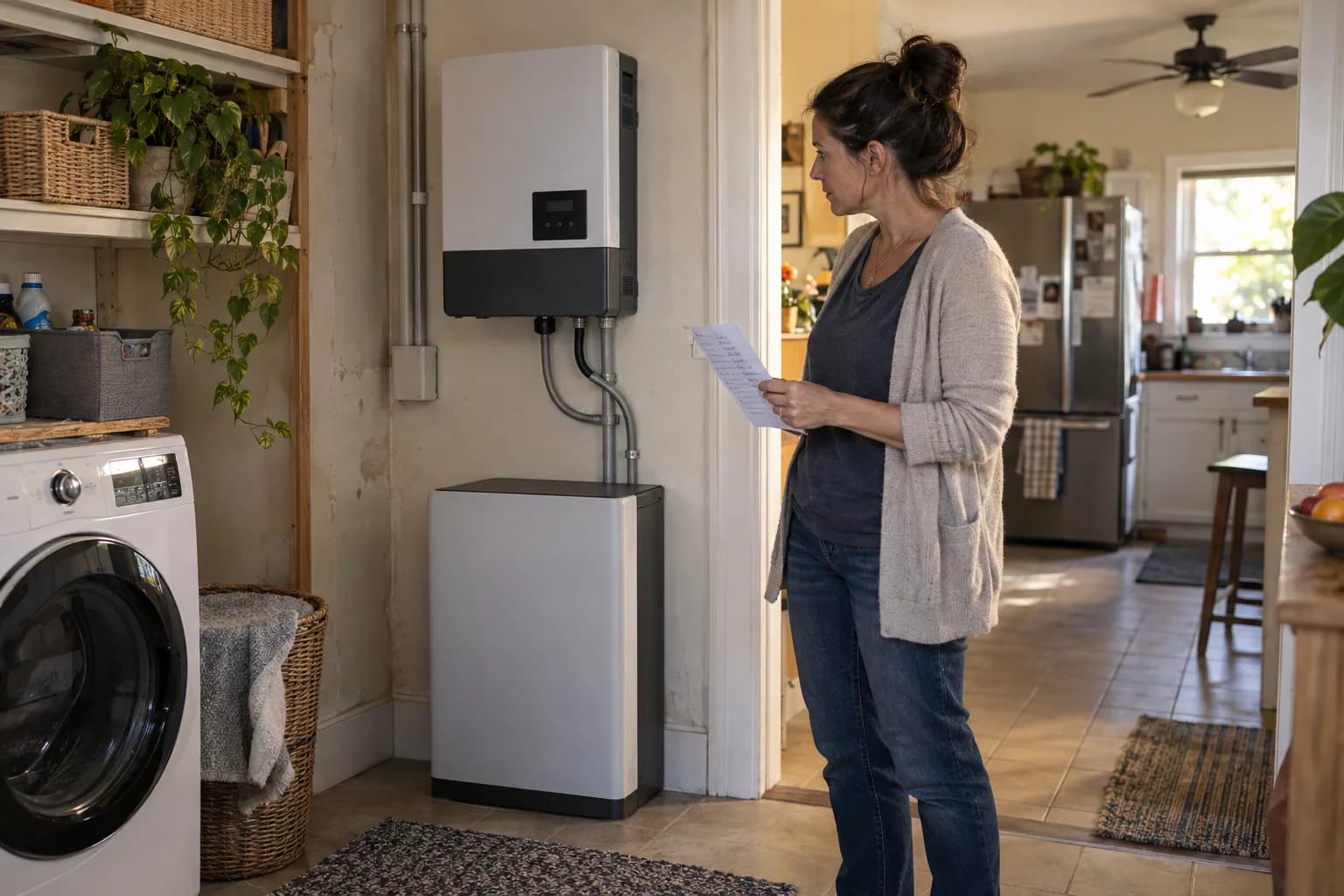
Can a 3kW inverter work with a 24V 150Ah lithium battery?
The voltage can match while the system still falls short. Check the inverter's real output, battery current limit and expected runtime before buying.
Read Article→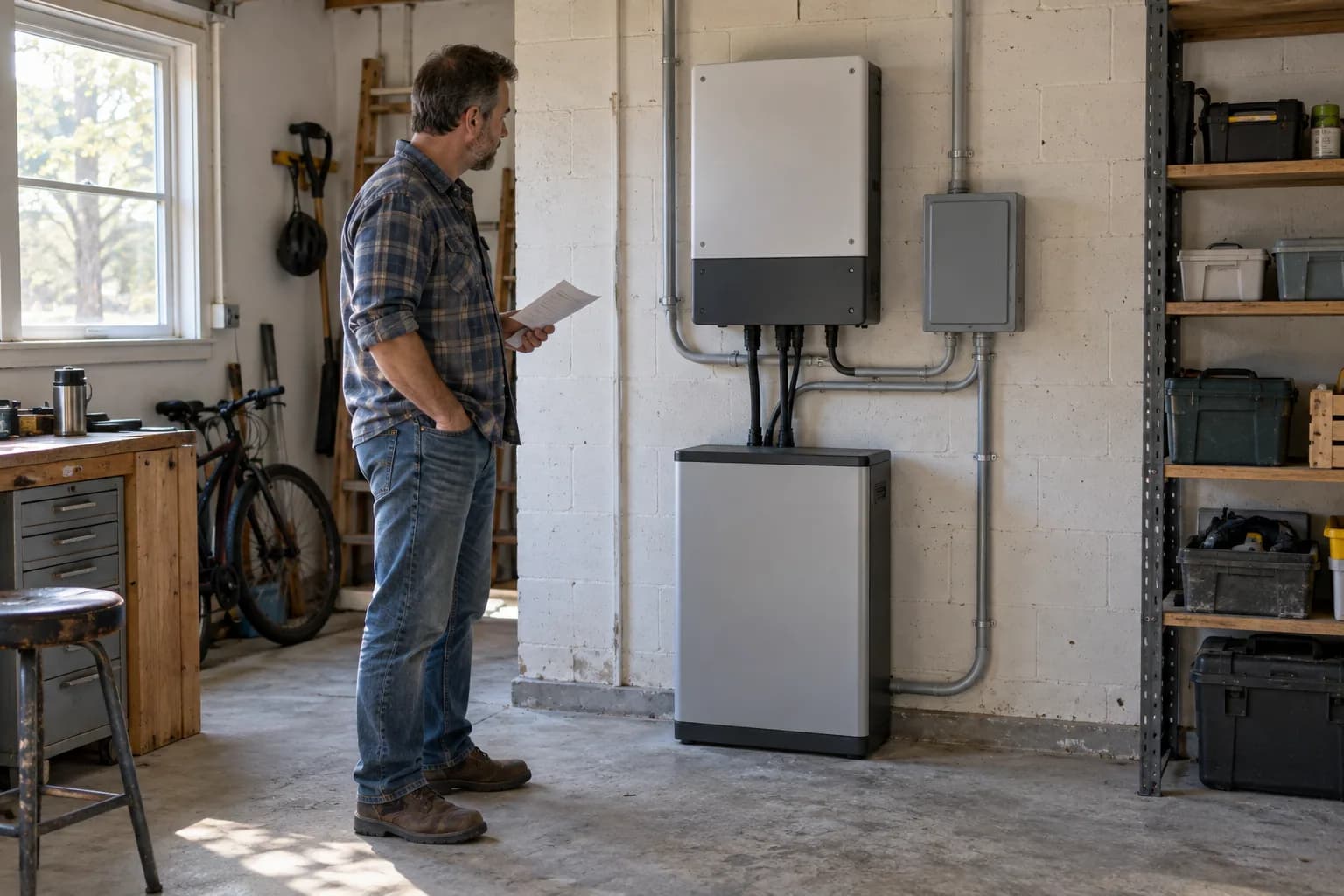
Is there a middle ground between a portable power station and a full DIY solar system?
You can get more choice than a portable power station without building a wall of separate equipment. The catch is knowing what the middle option still requires.
Read Article→