
Is a 5kWh solar battery enough for evening use?
A 5kWh label is not a runtime promise. Start with the evening load window, then check usable energy, reserve, output power and the next solar recharge.
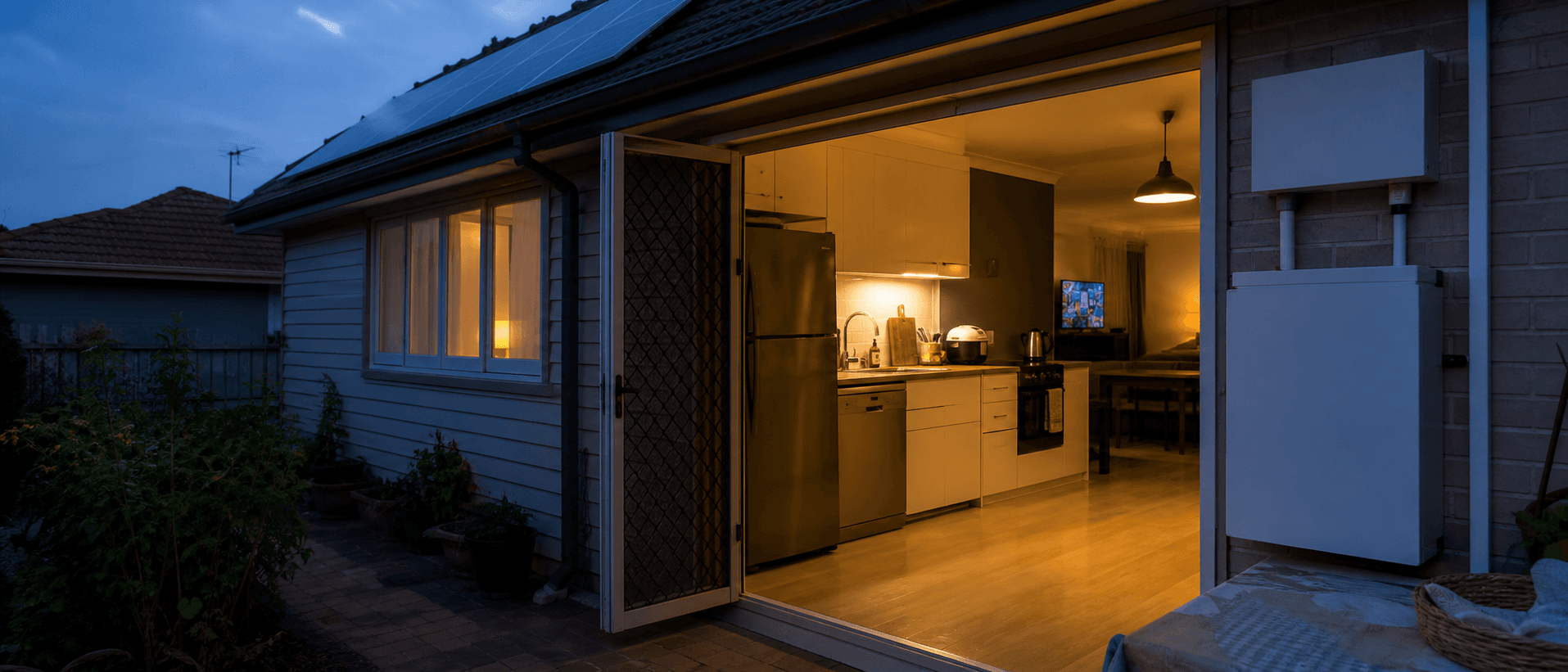
A quotation for one 5kWh home battery looks specific, but it does not tell you whether the lights, refrigerator, cooking equipment and air-conditioning will run until bedtime. In a low-load home it may cover the intended evening window. In another home it may reach its reserve before dinner is over.
The answer comes from the home's timing, not its headcount. Annual electricity use can help estimate the overall solar requirement, yet it hides the hours that matter to a battery. Panel quantity has the same limitation: it says little about late-afternoon production until the module power, roof direction, shading, season and daytime household demand are known.
This guide shows how to test a 5kWh proposal without pretending there is one universal battery size. The worked numbers are teaching examples, not household averages or Rongkai project data. Final equipment selection, backup design, installation and local compliance need the exact models, site information and appropriately qualified local parties. Both photographs are illustrative editorial images rather than customer-project records.

First decide what “enough for the evening” means
One buyer may want to avoid grid imports during a high-price period from late afternoon to 9 p.m. Another may mean sunset to midnight. A backup-focused household may want the refrigerator, internet and selected lights to continue until morning while keeping energy in reserve for an outage. Those are three different jobs.
Write down the target window and the loads that belong inside it. Smart-meter or energy-monitoring data in 15-minute or hourly intervals is more useful than a monthly bill because it shows cooking peaks, air-conditioning cycles and the quiet hours between them. Where rooftop solar is already installed, compare household consumption with PV production over the same time intervals. Solar may still carry part of the load before sunset, so the battery should be assessed against the remaining demand rather than the clock alone.
Keep bill shifting and outage backup separate in the brief. A battery configured to stop normal discharge at a chosen reserve can appear “empty” for daily use while still holding energy for a grid failure. Removing that reserve may extend the normal evening window, but it changes the backup objective. It should be an explicit operating decision, not a hidden assumption in a sales estimate.
- The exact start and end time the battery is expected to cover.
- Interval consumption during that window, including weekday and weekend differences.
- PV production that may still serve the home before sunset.
- Loads required during normal bill shifting and the smaller set, if any, required during an outage.
- The reserve the owner wants retained for backup or another operating rule.
Does a six-person household automatically need more than 5kWh?
No fixed capacity follows from household size. More occupants may increase demand, but measured load timing, appliance use, reserve and the intended operating window are the evidence needed for a useful comparison.
Compare net evening demand with energy available to the loads
The first comparison is straightforward: how much energy remains to be supplied after any late-day solar contribution? Then compare that figure with what the proposed battery system can actually deliver before reaching its selected reserve. Do not assume the number printed in the product name is the answer.
Consider a deliberately simplified example. A home uses 5.4kWh between 4 p.m. and 11 p.m., while the PV system directly supplies 1.1kWh of that load before sunset. The evening energy left for the battery and grid is therefore about 4.3kWh. Suppose the exact proposed battery states 5.0kWh of usable energy, and the operating plan retains 0.9kWh for backup. That leaves 4.1kWh before conversion and operating losses are considered. On those assumptions, the battery should not be presented as covering the full window.
Change any input and the answer changes. A cooler evening, a shifted dishwasher cycle or more late-day PV can reduce the requirement. Air-conditioning, electric cooking or a longer target window can raise it. This is why a supplier's calculation should show the interval data, solar contribution, reserve and loss assumptions rather than returning only “one battery” or “two batteries.”
- Energy consumed inside the selected evening window.
- PV energy used directly by the home during that same window.
- Manufacturer-stated usable battery energy for the exact model and configuration.
- Energy retained as reserve, plus the conversion and operating-loss basis used in the estimate.
- The expected shortfall or remaining margin under ordinary and higher-load evenings.
How long will a 5kWh battery run a house?
There is no single runtime. If 5kWh were fully available, a constant 500W load would equal a theoretical 10 hours, while a constant 2kW load would equal 2.5 hours. Real runtime is shorter or otherwise constrained by usable capacity, reserve, conversion losses, temperature, battery and inverter limits, and changing household demand.
Check the product behind the 5kWh label
Battery listings do not always use capacity terms in the same way. The headline may describe nominal energy, while a datasheet separately states usable energy or an allowed depth of discharge. The operating system may then retain an additional customer-selected reserve. Those figures should be recorded separately so the same allowance is not deducted twice.
Energy capacity is also different from output power. A 5kWh battery describes an amount of stored energy; it does not prove that the battery and inverter can supply every appliance that may start together. Check continuous battery discharge power, any short-duration limit, inverter output, backup-output limits and temperature-related derating for the exact pairing. A large evening energy allowance cannot make an undersized backup output carry an air-conditioner, cooking load and other appliances at the same moment.
Compatibility matters when a second battery may be added later. Ask whether expansion is permitted, which module generations can be combined, whether firmware or communication accessories are required, and how the extra battery changes usable energy and available power. “Expandable” without those details is not an order-ready statement.
- Full battery and inverter model codes, not family names or catalogue screenshots.
- Nominal energy, manufacturer-stated usable energy and the operating reserve shown as separate values.
- Continuous charge and discharge power for the intended battery quantity.
- Inverter and backup-output ratings under the expected operating conditions.
- Approved expansion combinations, BMS communication, firmware and required accessories.
Does 5kWh mean the battery can supply 5kW?
No. kWh measures energy capacity, while kW measures power at a moment in time. The exact battery, BMS and inverter documents must show how much continuous and short-duration power the proposed system can deliver.
Make sure the solar system can refill the battery
Covering one evening is only half the cycle. The PV system needs enough surplus energy to serve daytime loads and recharge the battery for the next intended discharge. Twelve panels could describe very different arrays because module wattage, roof direction, tilt, shade and system losses vary. Seasonal production can change the result further.
Use a site-based production model alongside measured consumption. NREL's PVWatts calculator can provide an estimate from location and array inputs, but its output still contains assumptions and uncertainty. For an existing system, inverter or monitoring data can show how much energy is normally exported or curtailed and when the battery reaches full charge. Review more than one sunny day; shoulder seasons and lower-production periods are usually more informative than a single ideal result.
Tariffs influence how the available energy is scheduled. Southern California Edison's Solar Billing Plan, for example, places residential customers on TOU-D-PRIME and calculates export credits using hourly export values. A battery control strategy may therefore prioritize particular charging, self-consumption or export periods. The current utility rules, rate plan, interconnection arrangement and software capability must be checked for the actual account. They should not be replaced by a generic savings promise.
- Exact PV module wattage and quantity, roof direction, tilt, shade and expected system losses.
- Daytime household consumption that competes with battery charging.
- Monthly or seasonal production estimates rather than one annual figure alone.
- Battery charge-power limits and the energy-management priority used by the proposed system.
- Current tariff, export-credit and interconnection rules confirmed with the responsible utility or local party.
What a useful 5kWh battery quotation should show
A buyer does not need to design the installation before asking for a quotation. A short evidence pack is enough to improve the discussion: interval-use data, the target evening window, any existing PV details, the desired reserve and the appliances that may run together. If the data is incomplete, the proposal should identify which values are estimates.
Ask each supplier to return the same comparison basis. The quotation should name the battery and inverter models, usable energy, continuous power, supported operating mode, included accessories, expansion route and remaining local-design responsibilities. Any runtime or bill illustration should expose its inputs. That makes it possible to see whether an apparent difference between one and two batteries comes from the load data, reserve, tariff logic or simply a different assumption.
Financing and ownership terms deserve their own review after the technical scope is clear. A monthly payment does not show the underlying equipment price, contract obligations or whether two offers contain equivalent hardware. Rongkai can help organize a model-specific battery and inverter supply quotation from the technical brief; final financial advice, site design, installation and utility approval remain outside that initial supply scope.
- Recent interval-use data or an explicitly labelled estimate, plus the target evening and backup windows.
- Existing or proposed PV and inverter details, including exact models where available.
- Battery nominal and usable energy, reserve assumption, continuous power and permitted expansion.
- A written list of included equipment, communication accessories, documents, exclusions and open compatibility checks.
- Quantity, destination and shipping requirements for a supply quotation, with local installation and approval responsibilities identified separately.
Related Articles

Do solar panels cause roof leaks or damage your roof?
Solar panels do not normally make a sound roof leak. Problems are more often linked to roof condition, unsuitable mounting, damaged materials or poor workmanship.
Read Article→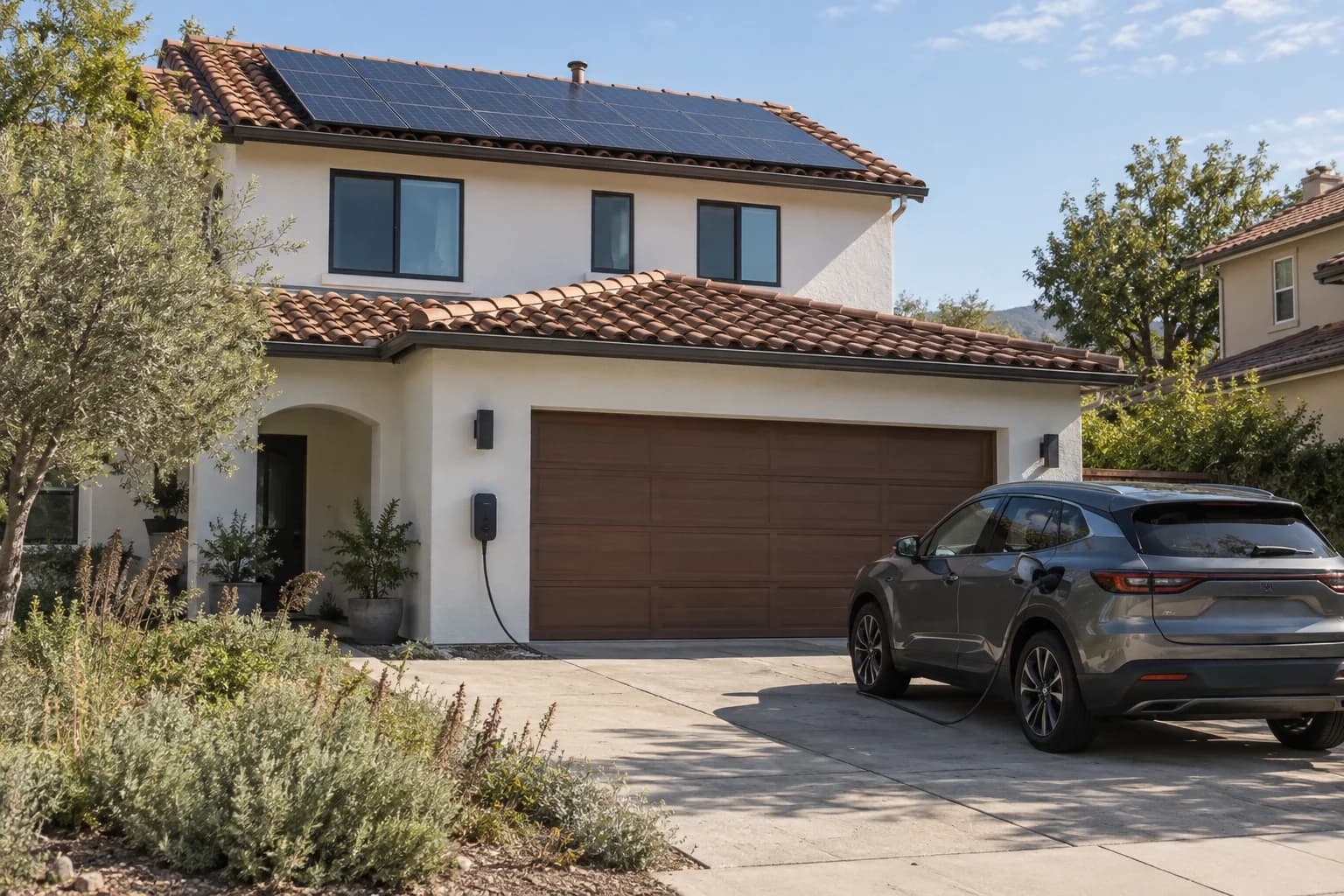
How to size solar panels, a home battery and an EV charger for a villa
Size the panels for energy, the inverter for loads that run together, the battery for evening use and backup, and the charger for the car's daily refill.
Read Article→
Solar only vs solar plus battery: which pays back faster?
Solar alone often pays back sooner on bill savings. A battery can change the calculation, but the extra cost and extra savings need their own line.
Read Article→