
Hybrid vs grid-tied solar inverter: which makes sense for your home?
Both use rooftop solar while the grid is working. If you also want evening battery power or help during an outage, ask what the full system actually includes.
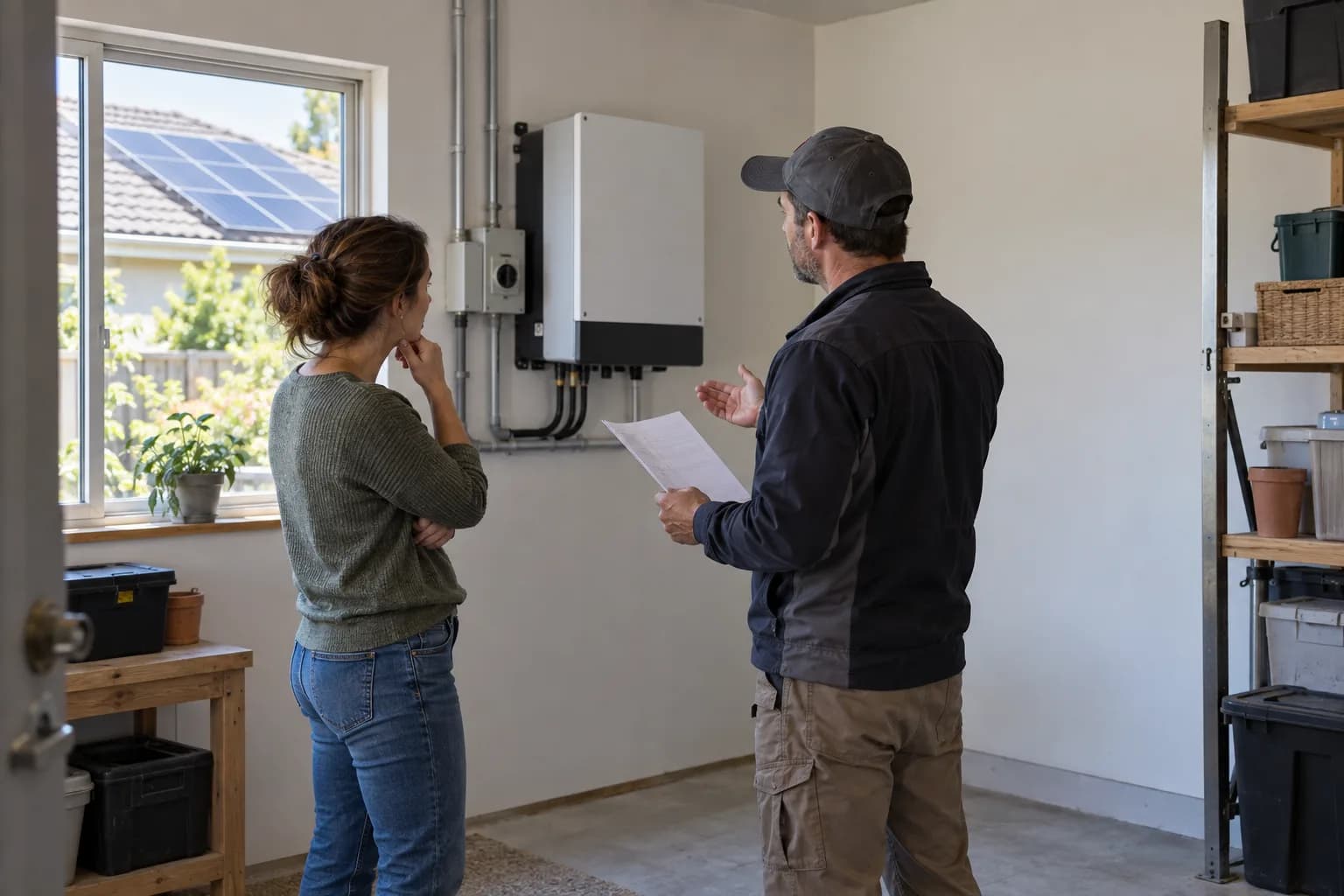
The power goes out again. The fridge is quiet, and the internet drops. You start looking at rooftop solar, but the two quotes on the table give you different inverters. One says “grid-tied.” The other says “hybrid.” Which one would help the next time this happens?
A standard grid-tied inverter turns power from the panels into electricity the home can use while connected to the grid. A hybrid inverter can also work with a supported battery, so solar energy can be stored for later. Both can use solar during the day. To keep the fridge and router running in an outage, ask for a backup design that names the supported appliances, battery if required, and any extra switching equipment.
If you rarely lose power and mainly want solar to reduce daytime grid purchases, the answer may be different. That is why the job you want the system to do matters more than the label on the inverter.
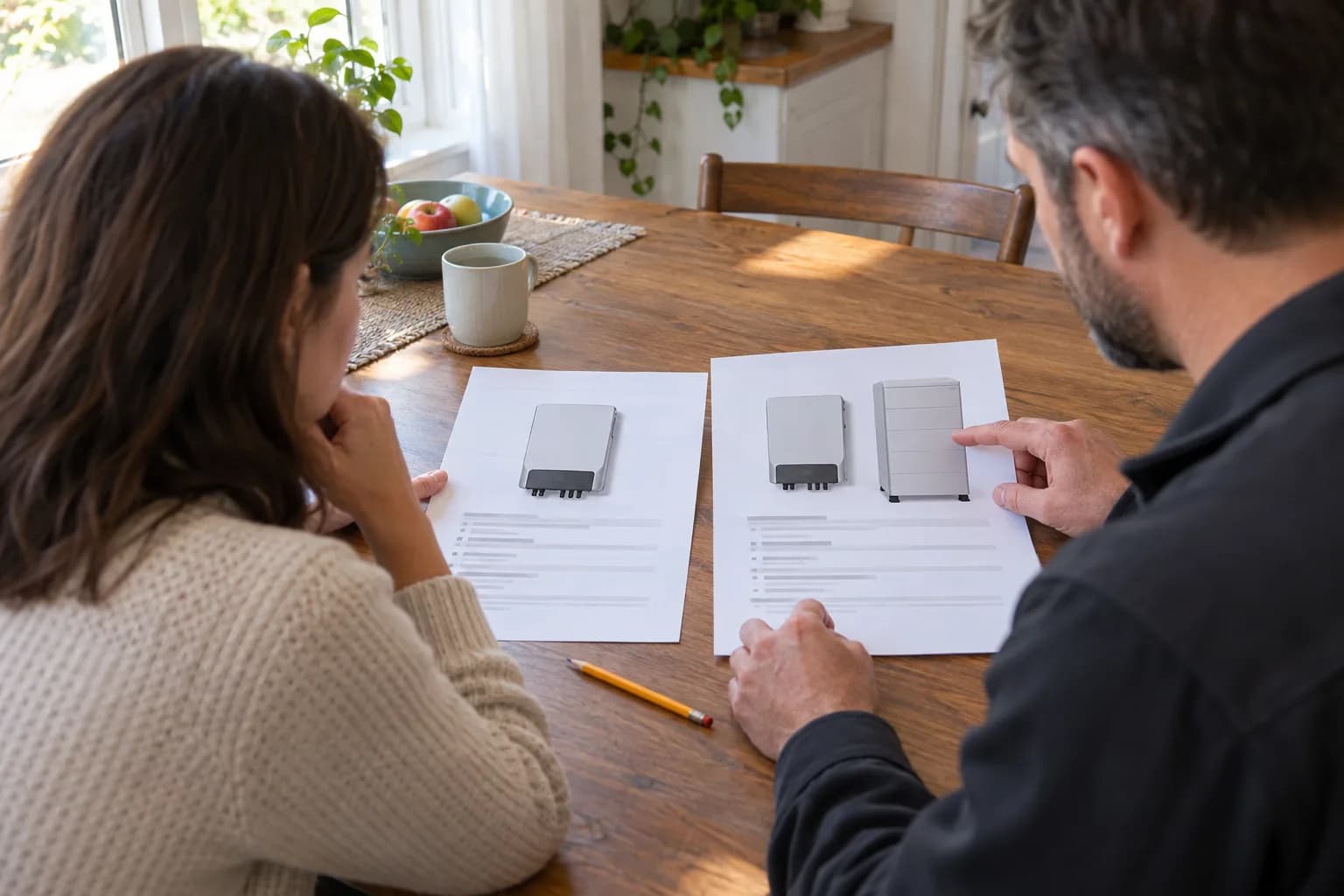
What changes in everyday use?
On a sunny afternoon, both types can help run the house. If the solar output falls short, the home can take the rest from the grid. If the panels make more than the home uses, what happens to the extra electricity depends on the system settings and the local connection arrangement.
The difference becomes clearer in the evening. A standard grid-tied solar inverter has no direct battery connection. Without a separate storage system, the house buys its evening electricity from the grid. A hybrid inverter has a route to a compatible battery, but the battery still has to be selected, installed and included in the quote. An empty space beside the inverter does not store any electricity.
- Question
- Can it use rooftop solar while the grid is working?
- Standard grid-tied inverter
- Yes
- Hybrid inverter
- Yes
- Question
- Can a battery connect through the inverter itself?
- Standard grid-tied inverter
- Usually no; a separate storage system may be added
- Hybrid inverter
- Usually yes, with a battery supported by the exact model
- Question
- Does it keep the home powered when the grid fails?
- Standard grid-tied inverter
- Normally no, unless a separate backup system has been designed
- Hybrid inverter
- Only if the chosen equipment and backup installation support it
| Question | Standard grid-tied inverter | Hybrid inverter |
|---|---|---|
| Can it use rooftop solar while the grid is working? | Yes | Yes |
| Can a battery connect through the inverter itself? | Usually no; a separate storage system may be added | Usually yes, with a battery supported by the exact model |
| Does it keep the home powered when the grid fails? | Normally no, unless a separate backup system has been designed | Only if the chosen equipment and backup installation support it |
These are typical home-system roles. The exact product manual and complete installation decide what each proposed system can do.
What happens when the power goes out?
Imagine the grid goes down at noon. The roof is still in full sun. With an ordinary grid-tied system, the inverter normally stops sending power into the home's electrical system. It must not feed a line that has been disconnected for work or repair. Sunlight alone does not change that safety behavior.
A hybrid system can be designed to keep selected appliances running, such as the refrigerator, a few lights and the internet router. That takes more than a hybrid label on the box. The proposal needs a compatible battery, the required equipment to separate backup loads from the failed grid, and a clear statement of which circuits receive power. The backup output may also have a different limit from the inverter's headline power rating.
Ask a plain question: “If the grid goes down tonight, which things in my house still work, and for how long?” A useful quote answers it with named loads and an assumed battery level. If it only says “backup ready,” the answer is still missing.
Can you start without a battery and add one later?
You may be able to buy a hybrid inverter now and add the battery later. That can make sense if storage is a real near-term plan. Before paying for that option, ask which exact battery models are supported, whether extra controls or switching equipment will be needed, and what part of the installation would have to be revisited. “Battery ready” is a starting question, not a finished expansion plan.
Already have a working grid-tied inverter? Keeping it may be sensible. Some homes can add a separate battery inverter on the AC side, with controls designed for that existing solar system. That route is often called AC coupling. Its backup behavior has to be checked as a complete system, especially if you expect the panels to keep producing during an outage.
Before buying a replacement, write down the model code on the inverter already on the wall. With that one detail, a supplier can check the relevant storage options instead of guessing from the age or appearance of the box.
Which one would I put on the shortlist?
If the aim is simply to use rooftop solar while the grid is working, start by pricing a straightforward grid-tied system. There is little reason to pay for battery features that you do not expect to use.
If power cuts matter, or you already know that evening battery use is part of the plan, ask for a complete hybrid proposal. Include the battery and the backup work in the comparison. A hybrid inverter by itself is not the price of a working backup system.
If solar is already installed, ask the installer to assess an AC-coupled battery option before assuming the existing inverter has to be removed. The better route depends on the condition of the present system, the loads you want to keep on and the supported equipment combinations.
Before choosing, compare these parts of the quote
Give both suppliers the same brief: how much solar you plan to install, whether a battery is needed now or later, and which appliances should work in a power cut. Then compare the whole offer. The sticker price of the inverter will not show the cost of a battery, backup switching, installation changes or future expansion.
- Exact inverter model and whether the quoted model can operate with or without a battery.
- Named compatible battery models and any extra equipment needed to add one later.
- What stays powered in an outage, including the backup output limit and assumed battery reserve.
- What is included in installation, monitoring and handover, and what remains outside the price.
Is a hybrid inverter better than a grid-tied inverter?
It is more useful when a supported battery or a documented backup plan is part of the job. For a home that wants solar only while the grid is working, a standard grid-tied system may meet the need with a simpler initial scope. Compare complete proposals for the same home.
Do all hybrid inverters work during a power cut?
No. The exact inverter, battery, backup equipment and circuit design determine what works. Some products have limited emergency outputs; others need additional equipment. Ask the supplier to name the supported loads and show the relevant product documents.
Can I add a battery to a normal grid-tied solar system?
Often yes, using a supported separate battery inverter, or by replacing the existing inverter with a compatible hybrid model. A qualified installer should review the exact equipment and the intended backup behavior before either option is quoted as suitable.
Related Articles
How do I get solar panels for my house, and what will the full system cost?
Start with a year of electricity use, check the real roof and compare complete installed quotes. A cheap panel price does not tell you what the working system will cost.
Read Article→
Why is my home battery low every morning?
A low morning reading does not prove the battery is too small. First find out how full it was at bedtime and where the energy went overnight.
Read Article→
How to plan a commercial solar and battery storage system
Start with the load curve and electricity bill. They reveal far more about the right commercial battery than the building's monthly kWh.
Read Article→