
How to plan a commercial solar and battery storage system
Start with the load curve and electricity bill. They reveal far more about the right commercial battery than the building's monthly kWh.
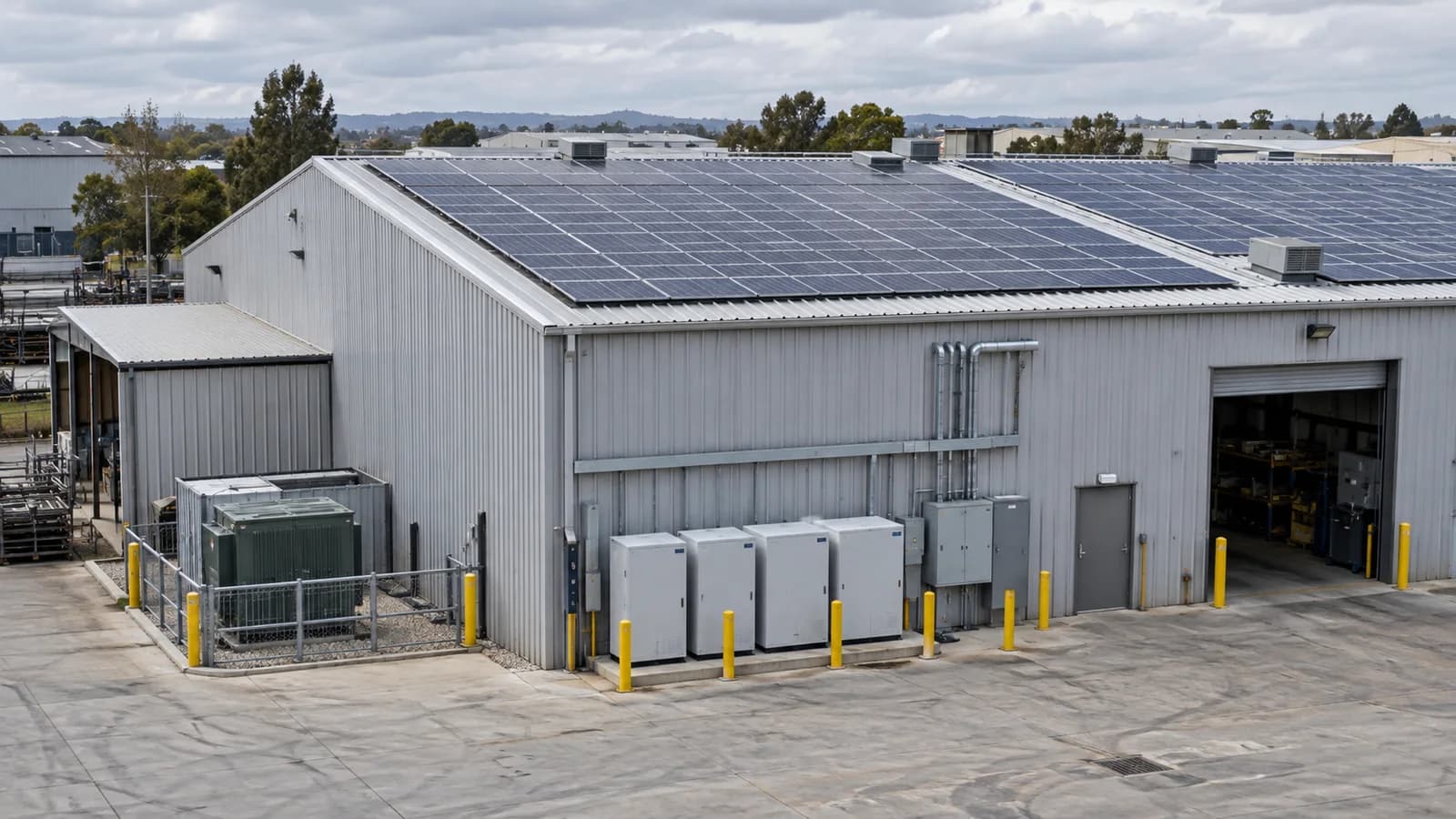
Ask three suppliers for a commercial solar and battery system and you may receive three very different answers. One may size the array from the available roof. Another may choose the battery from the monthly electricity use. A third may focus on keeping the building running during an outage. Each quotation can look complete while solving a different problem.
A proposal becomes useful when the buyer can trace the recommendation back to the site's load, tariff and operating goal. It should keep PV capacity, inverter power, battery power and usable battery energy separate, show what is included in the equipment package and let someone else check the savings calculation. The construction boundary matters too; equipment supply and a finished installation are not the same scope.
There is no standard battery size for a factory, warehouse, hotel or shop. Two buildings can buy the same amount of electricity over a month and still have completely different load curves. The example below uses invented figures and an arbitrary currency called U so the arithmetic is easy to follow. It is not a price guide or a customer case. The site's qualified project team still owns the final electrical, structural, fire, installation and grid decisions.
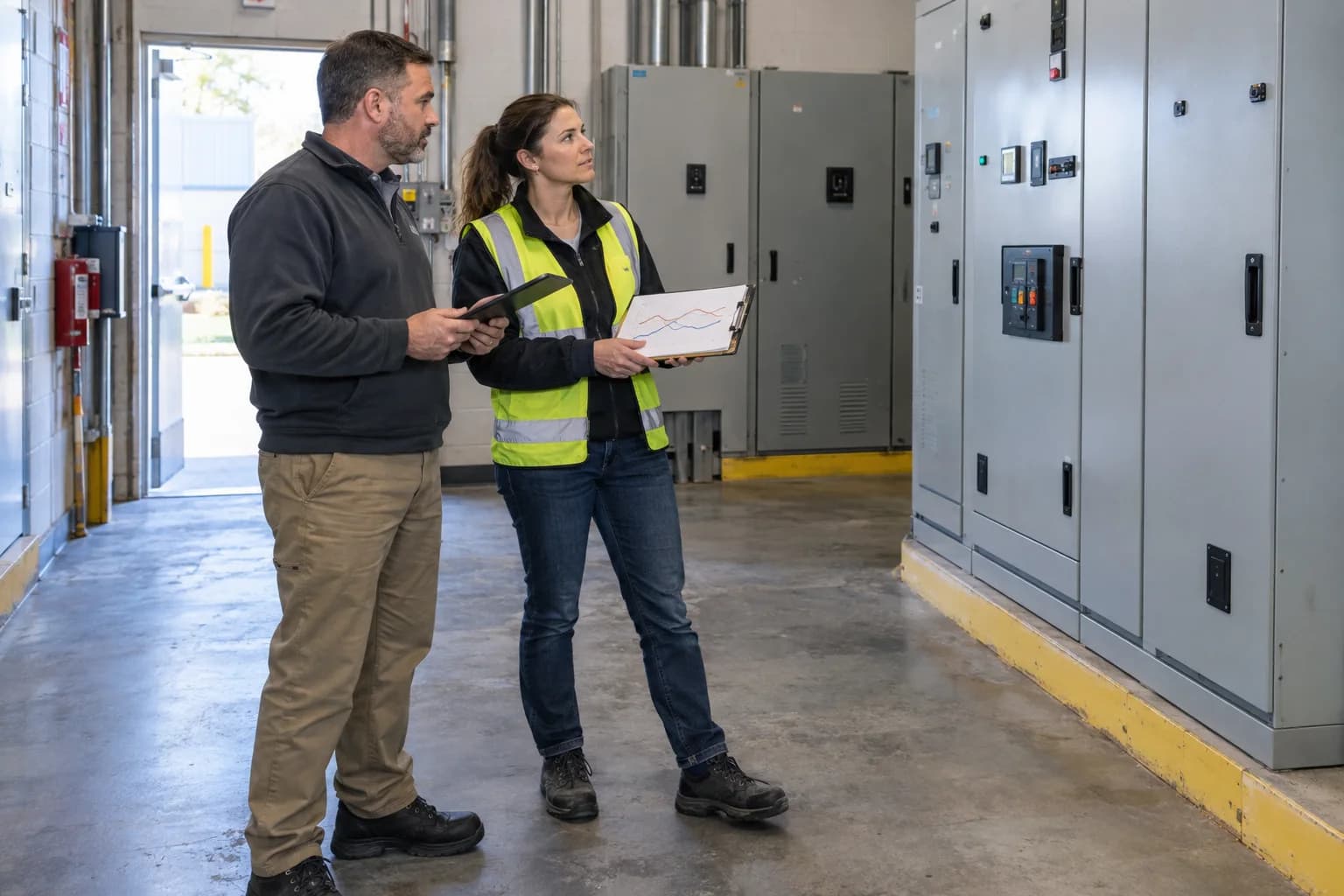
What is the business trying to fix?
A warehouse with steady daytime refrigeration may use most of its solar as it is generated. A workshop whose bill is set by a short compressor peak has a different problem. A hotel that wants refrigeration, lighting and communications during an outage has another. Starting all three with the same battery-to-solar ratio would hide the real decision.
Choose the main job first. It may be using more solar on site, reducing a monthly demand peak, moving energy away from an expensive tariff period or supporting selected loads when the grid is unavailable. Other benefits can be modelled afterwards. If every goal is treated as equally important, the proposed battery often grows while the reason for its size becomes harder to explain.
Timing is the link between the problem and the equipment. Solar can serve loads that run during daylight. Storage moves some of that energy to a later hour, clips a brief peak or keeps a defined load running. Its kW rating tells you how much power it can supply at once; its kWh rating tells you roughly how long it can do so. Keep outage value in a separate line from bill savings because the cheapest financial option may not provide the backup the owner expects.
The electricity bill does not show enough
A monthly bill tells you how much energy was bought, but it hides when the building used it. That missing timing can change both the equipment size and the return. Whenever possible, obtain at least 12 months of 15-minute, 30-minute or hourly import data. Put it beside the operating schedule and mark unusual shutdowns, seasonal production and any new machinery that will change the load.
Read the tariff instead of relying on an average cost per kWh. A commercial bill may contain energy charges, demand charges, time-of-use periods, fixed fees, minimum-import conditions or charges that onsite generation cannot remove. A battery can reduce some of these items and leave others untouched. For example, lowering the highest monthly kW may help where a demand charge is based on that peak, but it will not erase a fixed monthly fee.
The site also sets physical limits. Record the roof or ground area, shading, access, equipment locations, cable routes, grid connection and space available for the battery. For backup, make a separate list of the loads that truly need power. Keeping an entire factory alive is a very different request from maintaining controls, refrigeration, communications and a small production line.
- Twelve months of electricity bills and the current tariff sheet, including energy, demand, fixed and export terms.
- Interval import and export data, ideally at the same time resolution used to measure the site's peak demand.
- Operating hours, seasonal changes, planned new loads and equipment with high starting demand.
- Available roof, carport or ground area, with known shading, access and structural information.
- Grid voltage, frequency, phase arrangement, connection limit and any known export restriction.
- Critical-load power, required running time and the operating priority during an outage.
Four numbers that people often mix up
PV capacity in kWp describes the rated solar array. Solar-inverter capacity in kW describes how much AC power the inverter can deliver under its stated conditions. Battery power in kW describes how quickly the storage system can charge or discharge. Usable battery energy in kWh describes how much stored energy is available within the proposed operating limits.
Choose each number from the job it performs. The solar array starts with usable installation area, local solar resource, expected losses and the site's daytime energy demand. Battery power starts with the peak that must be reduced or the largest group of loads it must support. Battery energy starts with how long that power is needed. A simple first screen is target battery power multiplied by discharge duration, followed by allowances for usable operating range and conversion losses. That screen is not a purchase specification.
Suppose a site wants to reduce a 150kW peak for roughly two hours. The simple energy delivered during that window is 300kWh. A preliminary model might test a 200kW PCS and around 400kWh of usable storage so it has room for losses and a changing load. The model must then check whether enough charging energy is available, how often the peak occurs, whether the battery can repeat the duty, and how its control will interact with solar and the grid. Another site with the same annual consumption could produce a different answer.
- Number
- PV array — kWp
- Plain meaning
- The rated size of the solar modules
- What normally sets it
- Usable area, solar resource, daytime load and export limits
- Number
- Solar inverter — kW
- Plain meaning
- The AC power available from the PV system
- What normally sets it
- Array design, operating conditions and grid connection
- Number
- Battery / PCS power — kW
- Plain meaning
- How much power storage can absorb or supply at once
- What normally sets it
- Peak-shaving target, charging window and supported loads
- Number
- Usable battery energy — kWh
- Plain meaning
- How much energy can be delivered inside the planned limits
- What normally sets it
- Required duration, operating reserve, losses and battery limits
| Number | Plain meaning | What normally sets it |
|---|---|---|
| PV array — kWp | The rated size of the solar modules | Usable area, solar resource, daytime load and export limits |
| Solar inverter — kW | The AC power available from the PV system | Array design, operating conditions and grid connection |
| Battery / PCS power — kW | How much power storage can absorb or supply at once | Peak-shaving target, charging window and supported loads |
| Usable battery energy — kWh | How much energy can be delivered inside the planned limits | Required duration, operating reserve, losses and battery limits |
The equipment list is longer than it first appears
A first quotation often names the visible products and leaves the connecting equipment vague. That makes the price look simple, but it moves uncertainty into the construction stage. Ask for an itemised bill of materials with exact models, quantities and a note showing who supplies each part.
The battery package needs particular care. Cells or modules, racks or cabinets, battery management, PCS, energy management, metering, communications, thermal management and fire provisions may be sold as one integrated product or split across several suppliers. The quotation should show the proposed arrangement and the evidence used to confirm compatibility. A familiar brand name on each box is not enough.
Mounting, cables and protection cannot be finalised from a catalogue alone. Their specification depends on the layout, environment, electrical design and local requirements. A supplier can identify the proposed equipment and product-side accessories; the responsible project parties still have to approve the final structural, electrical and safety design for the site.
- Package
- Solar generation
- Items to make visible in the proposal
- Modules, mounting, solar inverters, monitoring and relevant DC/AC equipment
- Package
- Battery storage
- Items to make visible in the proposal
- Battery modules, racks or cabinets, BMS, PCS or hybrid inverter, thermal management and controls
- Package
- Control and measurement
- Items to make visible in the proposal
- EMS, meters, CTs, data logger, gateway, communications and remote-monitoring access
- Package
- Electrical balance of system
- Items to make visible in the proposal
- Distribution, protection, isolation, transformer or medium-voltage scope where required, cabling, earthing and labels
- Package
- Site and safety scope
- Items to make visible in the proposal
- Foundations or roof work, enclosure, access, barriers, ventilation and project-specific fire provisions
- Package
- Handover
- Items to make visible in the proposal
- Testing, commissioning, manuals, settings record, training, warranties, spares and as-built documents
| Package | Items to make visible in the proposal |
|---|---|
| Solar generation | Modules, mounting, solar inverters, monitoring and relevant DC/AC equipment |
| Battery storage | Battery modules, racks or cabinets, BMS, PCS or hybrid inverter, thermal management and controls |
| Control and measurement | EMS, meters, CTs, data logger, gateway, communications and remote-monitoring access |
| Electrical balance of system | Distribution, protection, isolation, transformer or medium-voltage scope where required, cabling, earthing and labels |
| Site and safety scope | Foundations or roof work, enclosure, access, barriers, ventilation and project-specific fire provisions |
| Handover | Testing, commissioning, manuals, settings record, training, warranties, spares and as-built documents |
Make the savings calculation easy to challenge
Someone reviewing the proposal should be able to follow the money from the electricity bill to the final result. Solar may create value through electricity used on site and, where applicable, exported energy. Storage may add value by shifting energy, trimming a measured demand peak or reducing solar curtailment. If a revenue stream depends on a special tariff or contract, name it instead of burying it in "battery savings."
Continue the fictional sizing example from above. Assume the wider proposal combines a 400kWp array with the 200kW / 400kWh storage option and costs 500,000U installed. Modelled solar use and export create 62,000U of annual value. After charging cost, lost export value and conversion loss have been allowed for, battery energy shifting and peak reduction add 22,000U. Annual monitoring and maintenance are estimated at 4,000U. The simplified net benefit is 80,000U a year, so simple payback is 500,000 ÷ 80,000 = 6.25 years.
Now try to break the result. Reduce the expected solar output, change the load schedule, let a second demand peak appear after the battery has discharged, and include financing or a future replacement if the project expects one. Simple payback ignores when cash arrives and what happens later. NPV and IRR add useful context only when the solar, tariff, degradation, maintenance and replacement assumptions remain visible.
- Fictional teaching example
- Complete installed project cost
- Annual or project value
- 500,000U
- Fictional teaching example
- Solar energy and export value
- Annual or project value
- +62,000U per year
- Fictional teaching example
- Battery shifting and peak-reduction value
- Annual or project value
- +22,000U per year
- Fictional teaching example
- Monitoring and maintenance
- Annual or project value
- −4,000U per year
- Fictional teaching example
- Simplified annual net benefit
- Annual or project value
- 80,000U
- Fictional teaching example
- Simple payback
- Annual or project value
- 6.25 years
| Fictional teaching example | Annual or project value |
|---|---|
| Complete installed project cost | 500,000U |
| Solar energy and export value | +62,000U per year |
| Battery shifting and peak-reduction value | +22,000U per year |
| Monitoring and maintenance | −4,000U per year |
| Simplified annual net benefit | 80,000U |
| Simple payback | 6.25 years |
All figures are invented to demonstrate the arithmetic. They are not prices, average savings, customer results or a warranty of financial performance.
A good equipment plan can still fail on site
The proposed models may be sensible and the arithmetic may work, yet the job can still stall over a weak roof, a blocked service route or nowhere suitable to place the battery. Check where the equipment will go, how it will arrive and what the building can accept. Roof condition and load capacity, drainage, access paths and maintenance space matter before modules are released. A ground-mounted array brings its own survey, civil design, drainage and access work.
The battery area needs a project-specific review covering enclosure or room conditions, temperature control, service clearance, emergency access, fire strategy and the route to the electrical connection. Record the distance between the array, inverters, battery, switchboard and meter. Long or difficult routes affect design, labour and cost even when the main equipment stays the same.
Agree the work boundary early. Name who owns the site survey, detailed drawings, structural review, protection study, utility submission, permits, construction, testing and final acceptance. The delivery plan also needs unloading space, lifting access and secure storage. Production teams should know when shutdowns or temporary power will be required. At handover, the owner should receive the agreed tests, monitoring access, training, as-built drawings, settings record, manuals and warranty contacts.
What the buyer should receive
A reviewer should not have to reverse-engineer the quotation. The final proposal should show the data received, any gaps filled with assumptions, the proposed operating strategy and the calculations that connect the site to the equipment. Alternatives should be labelled. If the battery is added mainly for backup, keep its extra cost and supported-load result visible rather than folding everything into a headline return.
For an early supplier discussion, the buyer does not need a complete engineering package. A year of bills, interval load data, site drawings or photographs, the main operating goal, the backup-load list and the desired project boundary are enough to expose the important questions. The next version can then replace assumptions with verified site information instead of pretending the first estimate is final.
- Design basis: load data, tariff, site conditions, operating goal and every material assumption.
- Proposed PV kWp, inverter kW, battery/PCS kW and usable battery kWh, with a short sizing explanation.
- Itemised equipment list with exact models, quantities, compatibility basis and exclusions.
- Energy and financial model with self-use, export, battery operation, losses, costs and sensitivity cases visible.
- Preliminary layout, construction boundary, grid and approval responsibilities, schedule and open decisions.
- Testing, commissioning, documentation, warranty and after-sales route.
How much battery storage does a commercial building need?
There is no reliable rule based only on the building size or monthly kWh. Battery power comes from the peak or supported load, while battery energy comes from how long that power is needed. Interval load data, the tariff, charging opportunity, operating reserve and exact equipment limits are needed before a size can be defended.
Can a commercial battery reduce demand charges?
It can where the tariff charges for a measurable demand peak and the battery can discharge at the right time. The result depends on how the peak is calculated, how predictable it is, the battery's available power and energy, and whether another peak appears after the battery is empty. Fixed and non-bypassable charges may remain.
What payback period should a commercial solar and battery system have?
No single period applies to every site. Use the complete installed cost and the site's own tariff, load and operating model. Show simple payback for an easy first comparison, then use a year-by-year cash flow for financing, degradation, maintenance and replacement assumptions. A result is only as reliable as the inputs behind it.
Does a commercial solar and storage quotation include installation?
Only when the written scope says so. Equipment supply, international shipping, local installation, civil work, grid connection, permits and commissioning can sit with different parties. The quotation should identify the owner of each task instead of relying on words such as complete or turnkey.
Related Articles

Do solar panels cause roof leaks or damage your roof?
Solar panels do not normally make a sound roof leak. Problems are more often linked to roof condition, unsuitable mounting, damaged materials or poor workmanship.
Read Article→
How to size solar panels, a home battery and an EV charger for a villa
Size the panels for energy, the inverter for loads that run together, the battery for evening use and backup, and the charger for the car's daily refill.
Read Article→
Solar only vs solar plus battery: which pays back faster?
Solar alone often pays back sooner on bill savings. A battery can change the calculation, but the extra cost and extra savings need their own line.
Read Article→