
How do I get solar panels for my house, and what will the full system cost?
Start with a year of electricity use, check the real roof and compare complete installed quotes. A cheap panel price does not tell you what the working system will cost.
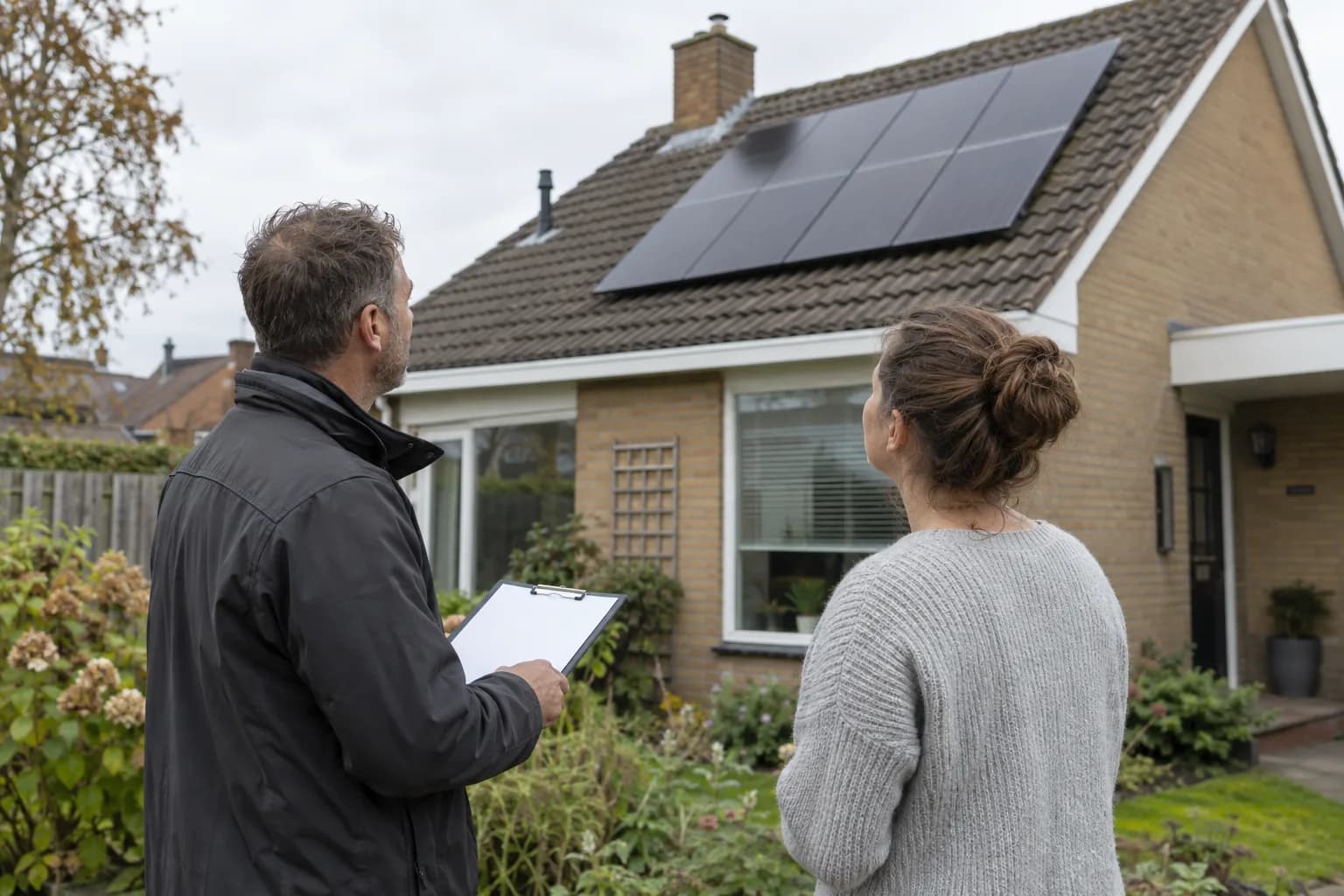
Search for “solar panels for a house” and you will see plenty of prices. Some are for one panel. Some are for a box of equipment. A few cover a working system on the roof. Until you know which one you are looking at, the numbers do not mean much.
The sensible starting point is straightforward: collect 12 months of electricity use, check the roof and main electrical equipment, decide whether you want backup during an outage, and ask qualified providers to price the same job. The full cost is the equipment plus everything needed to make it work at the house.
You can do the early homework yourself. The roof survey, electrical design, installation and approvals still belong with the responsible local professionals.

First, be clear about what you are buying
People use “a set of solar panels” to describe three different purchases. Panels only means exactly that. An equipment package may add an inverter and some hardware. An installed system should cover the agreed equipment, site work, testing and handover.
The most useful question is this: if the boxes arrived tomorrow, what else would you have to buy or arrange before the house could use the electricity? A low equipment price can leave mounting parts, transport, permits, electrical changes and installation with the buyer.
Ask for a written included-and-excluded list. The words “kit” and “complete” are used loosely; the list tells you what the price really buys.
Use a year of electricity, then look at the roof
Begin with the electricity used in the last 12 months. Use the kWh figures on the bills rather than the amount paid, because prices and fixed charges can change. Add any likely new load, such as an electric vehicle, heat pump, air conditioner or workshop equipment.
A rough starting formula is:
Starting solar size in kW = annual household electricity use in kWh ÷ expected annual solar output from each installed kW.
Take an easy example. A home uses 7,200kWh a year, and a location-based estimate suggests that each installed kW could produce about 1,200kWh a year. Dividing 7,200 by 1,200 gives a 6kW starting point. If the proposed module is rated at 400W, 15 modules add up to 6kW.
The arithmetic is useful, but the roof has the final say. Shade, direction, seasonal weather, dirt and equipment losses all move the result. Fifteen panels also need to fit the usable roof, with vents, chimneys and unsuitable areas taken out. Tools such as the Global Solar Atlas or PVWatts can provide an early production estimate. Keep the assumptions beside the result so you can compare them with the quotation.
Someone still needs to check the roof condition, safe mounting areas, shade, cable route and main electrical equipment. If the roof is close to replacement, deal with that before the panels make future roof work more complicated.
What should the full price include?
A useful quote lets you see where the money is going. It should identify the exact equipment and the work needed at the property. “Complete solar system” is too vague on its own.
Think of the total as equipment, delivery, site work and local project costs added together. A battery is a separate choice unless the quotation clearly includes one. Import charges, taxes and local approval costs should also be shown where they apply.
- Part of the price
- Solar modules
- What to look for in the quote
- Exact model, wattage, quantity and product warranty
- Part of the price
- Inverter
- What to look for in the quote
- Exact model, output rating, monitoring and warranty
- Part of the price
- Mounting and electrical hardware
- What to look for in the quote
- Roof-specific mounting, cables, isolating and protection equipment
- Part of the price
- Design and local approvals
- What to look for in the quote
- Site survey, drawings, permit or grid application responsibilities
- Part of the price
- Installation and handover
- What to look for in the quote
- Labour, access equipment, testing, commissioning and user handover
- Part of the price
- Property work
- What to look for in the quote
- Roof repairs, main-panel upgrades, trenching or other site-specific work
- Part of the price
- Optional battery backup
- What to look for in the quote
- Usable energy, supported output, backup circuits, controls and installation
| Part of the price | What to look for in the quote |
|---|---|
| Solar modules | Exact model, wattage, quantity and product warranty |
| Inverter | Exact model, output rating, monitoring and warranty |
| Mounting and electrical hardware | Roof-specific mounting, cables, isolating and protection equipment |
| Design and local approvals | Site survey, drawings, permit or grid application responsibilities |
| Installation and handover | Labour, access equipment, testing, commissioning and user handover |
| Property work | Roof repairs, main-panel upgrades, trenching or other site-specific work |
| Optional battery backup | Usable energy, supported output, backup circuits, controls and installation |
Why one worldwide price would mislead you
Two 6kW systems can cost very different amounts. One may go on a simple roof beside the main electrical panel. The other may need difficult access, roof repairs, a long cable route and an electrical upgrade. Labour, taxes, shipping and approval costs also vary widely.
An online average cannot see any of that. Get a current cash price for the actual property. If finance is offered, ask for the cash price as well as the total of all payments and fees.
For a quick comparison, divide the complete installed cash price by the system's DC rating in watts:
Installed cost per watt = complete installed cash price ÷ system size in watts.
Cost per watt is useful only when the scopes match. A quote that includes roof work, monitoring, approvals and a stronger installation warranty may show a higher figure than a hardware-only package and still be the more complete offer.
The expected annual electricity production matters too. A larger system is poor value if much of it has to be curtailed or sent away for little benefit. A smaller system may disappoint if the calculation ignored future household use. Price, production and the way electricity is valued need to be read together.
When a quote arrives, read these three lines first
The total at the bottom is tempting. Leave it for a minute and find the system size, panel count and exact inverter model. If those details are missing, you still do not know what is being priced.
Next, find the expected annual production. The kWh estimate should come with its roof, shade and loss assumptions. Two providers can put the same number of panels on paper and predict quite different output; the assumptions explain why.
Then read the exclusions. This is where roof repairs, electrical upgrades, access equipment, permits, delivery or grid work often sit. Check the cash price, any finance total and who deals with an installation fault. Only after those three parts line up is the headline total worth comparing.
Send the same electricity record, property details and goal to each provider. One quote for simple grid-connected solar and another that includes a battery are answers to different questions, even if both are headed “home solar system.”
Do you need a battery with the panels?
A battery is not required for every home solar project. Solar without storage can reduce electricity bought from the grid while the panels are producing. A battery can move available solar into later hours and may provide outage power when the system has been designed for that job.
Ask for the battery as a separate option. The quote should show usable energy, supported output, which parts of the home receive backup and how the battery works with the exact inverter. Ordinary grid-connected solar often shuts down during a grid failure, so do not assume panels alone will keep the house running.
If the budget is tight, it can be sensible to understand the solar-only result first. Future battery addition should only be described as ready when the chosen equipment, wiring route, space and local requirements have actually been checked.
How many solar panels do I need for my house?
Start with 12 months of electricity use and a location-based production estimate, then check how many modules fit the usable roof. Floor area alone cannot give a reliable panel count. Future loads and local system limits may change the result.
How much does a complete home solar system cost?
There is no reliable worldwide figure. The total depends on system size, equipment, roof and electrical work, labour, approvals, shipping, taxes and whether a battery is included. Compare current itemised installed quotes for the same property and scope.
Does the price of solar panels include installation?
Sometimes, but never assume it does. A panel price may cover only the modules. Ask whether the quote includes the inverter, mounting, protection equipment, delivery, design, permits, installation, testing and any property upgrades.
Related Articles

Why is my home battery low every morning?
A low morning reading does not prove the battery is too small. First find out how full it was at bedtime and where the energy went overnight.
Read Article→
How to plan a commercial solar and battery storage system
Start with the load curve and electricity bill. They reveal far more about the right commercial battery than the building's monthly kWh.
Read Article→
Do solar panels cause roof leaks or damage your roof?
Solar panels do not normally make a sound roof leak. Problems are more often linked to roof condition, unsuitable mounting, damaged materials or poor workmanship.
Read Article→