
What does a turnkey solar system actually include?
Two quotations can both say turnkey and finish at different points. Define the equipment, site work, approvals, commissioning and handover before comparing the price.
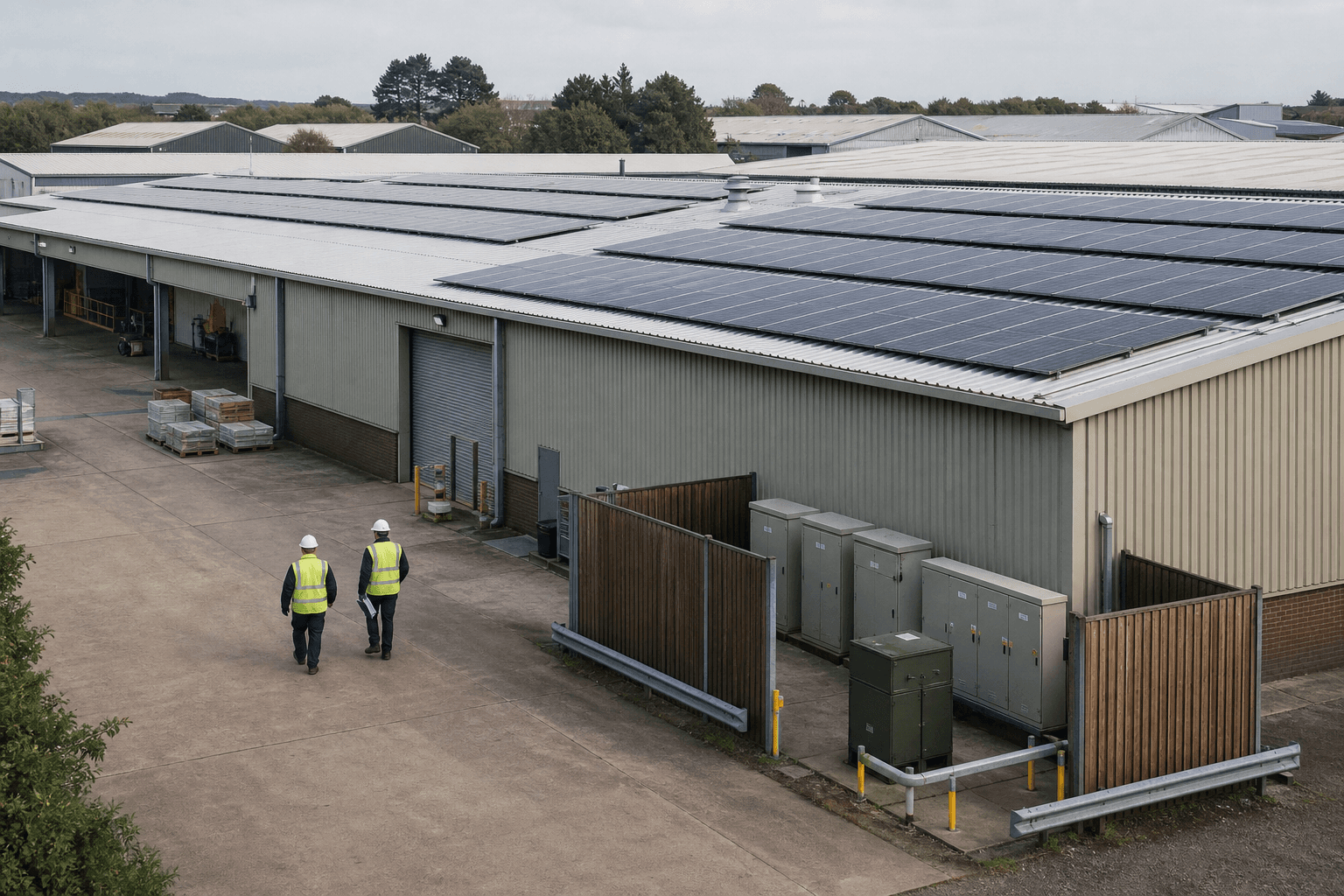
Two suppliers can label their quotations 'turnkey solar system' and still be offering different endpoints. One price may stop at a packed equipment package. Another may include engineering, procurement, construction, testing and handover. A third may include most site work but leave utility approval, civil works or import clearance with the buyer. The word alone does not make those quotations comparable.
The practical question is not whether the offer sounds complete. It is whether every task, deliverable, interface and exclusion has an owner. The buyer should be able to see where product supply ends, where local engineering begins, who controls the site, what must pass before taking-over, and which documents will remain after the contractor leaves.
This guide provides a scope-checking method for commercial, industrial, off-grid and solar-plus-storage projects. It is not a model contract or legal advice, and it does not imply that one supplier can perform licensed design, construction or grid work in every destination. Final engineering, contract drafting, installation, permits and acceptance must be handled by the appropriately qualified and authorised parties for the project. The photographs are illustrative editorial images rather than Rongkai project records.

Turnkey describes an endpoint, not a universal list
A useful turnkey requirement starts with the condition in which the owner expects to receive the project. That may mean an installed plant ready for agreed commissioning tests, a functioning off-grid system with operator training, or a commercial rooftop system handed over with its documentation and open utility actions clearly recorded. The contract must define the endpoint; the adjective cannot do it.
For larger projects, EPC is a familiar delivery structure because engineering, procurement and construction responsibilities can be placed under one contract. FIDIC publishes a specific EPC/Turnkey form and notes that contract-specific information belongs in the particular conditions. The World Bank's utility-scale solar guidance also describes a turnkey-style EPC arrangement as a way to place design, equipment procurement and execution under a single point of responsibility. Neither source means that every quotation using 'turnkey' automatically follows that allocation.
Ask the bidder to describe its role in plain language. Is it an equipment supplier coordinating several manufacturers, an EPC contractor responsible for design and construction, a local installer, or a consortium with divided responsibilities? If more than one company is involved, the buyer needs one responsibility matrix showing who contracts, designs, supplies, imports, installs, tests, obtains approvals and responds after handover.
- The exact physical and operational condition required at the proposed handover date.
- Contracting parties and named responsibility for engineering, procurement, construction and project management.
- Owner-supplied information, facilities, permits, access and decisions that the contractor relies on.
- Interfaces between overseas equipment supply, importer, local EPC, installer, utility and authority.
- Acceptance milestones, evidence and exclusions written into the quotation or contract schedule.
Does turnkey always include installation?
No. Some sellers use turnkey to describe a complete equipment package or a coordinated supply offer. Installation, civil work, permits, grid connection or commissioning may still be excluded. The signed scope and responsibility matrix determine what is included.
Separate the equipment package from the project services
The equipment schedule may include PV modules, inverters, battery storage, mounting, monitoring and selected balance-of-system items. Depending on the project, it may also include transformers, switchgear, communications, spare parts, tools, packing and destination documents. A long bill of materials can still be supply-only. It does not prove that anyone has accepted responsibility for site measurements, structural review, detailed electrical design, installation or operational performance.
Services need their own schedule. Early work may cover surveys, yield or load inputs, concept design, detailed drawings and model selection. Delivery work may cover factory documents, inspections, packing, shipping and site logistics. Site work may cover civil preparation, installation, testing, commissioning and training. Each line should state the deliverable, reviewer, acceptance point and whether it is included, provisional, excluded or supplied by the owner.
Keep locally regulated work visible. An overseas supplier may coordinate equipment, technical information, factory documents and international transport while a licensed local party completes the site design, protection review, installation and utility process. That can be a workable project structure, but it should be described as coordinated equipment supply with defined local responsibilities rather than presented as an unrestricted worldwide EPC promise.
- Exact equipment models or stated selection criteria, quantities, required accessories, spares and document revisions.
- Engineering deliverables: surveys, calculations, drawings, review stages and the qualified approving party.
- Packing, Incoterm, named handover point, freight, insurance, import clearance, unloading and site storage.
- Civil, structural and electrical installation scope, temporary services, access equipment and waste removal.
- Testing, commissioning, training, handover documents, warranty routing and operation or maintenance support.
Is a complete solar equipment package the same as a turnkey solar system?
No. A complete equipment package may cover the planned hardware, accessories and documents, but site engineering, construction, approvals, testing and handover can remain outside it. Call the offer by the scope it actually provides.
EPC and turnkey are related, but not interchangeable labels
EPC names three broad responsibilities: engineering, procurement and construction. Turnkey usually describes the owner's expectation that the delivered facility can be taken over for its agreed use. A project may use a turnkey-style EPC contract that places wide responsibility with one contractor. It may also use an EPC contract while retaining owner-supplied modules, grid works, permits or other packages. The actual agreement decides the allocation.
This distinction matters when bids arrive. A supplier that quotes modules, inverters and batteries is not directly comparable with a contractor pricing site investigation, detailed design, civil work, installation management, tests and schedule risk. Nor is a lower EPC price automatically equivalent if it assumes the owner will provide interconnection works, crane access, security, temporary power or customs clearance. Create a common scope table before comparing totals.
Risk should follow information and control. FIDIC cautions that its EPC/Turnkey form is not suitable where tenderers lack enough time or information to examine the employer's requirements and assess the project. A buyer asking for a fixed result should therefore provide usable site data, functional requirements, interface information and time for review. Unpriced unknowns do not disappear; they return as exclusions, contingencies, disputes or change orders.
- Owner's requirements written as measurable functions, capacities, operating modes and project constraints.
- Site, grid, geotechnical, structural, environmental and access information supplied for bid review where applicable.
- Performance guarantees and test conditions separated from product datasheet values and energy-yield estimates.
- Owner-retained packages, nominated suppliers and interface responsibility between separate contractors.
- Change, delay, claim, defect and taking-over processes reviewed with suitable engineering and legal advice.
Commissioning and handover need named evidence
A project is not ready for handover simply because the equipment is present and the monitoring screen turns on. The contract should define inspections, pre-commissioning checks, commissioning tests, performance or functional tests, defect treatment and the evidence needed for taking-over. The exact regime depends on project type, destination rules and the agreed design; it should not be replaced by a generic factory certificate.
For grid-connected PV, IEC 62446-1 defines customer handover information and documentation and describes commissioning tests and inspection criteria used to verify installation and operation. A project with batteries, backup operation, generators, medium-voltage equipment or specialised controls will need additional model-, site- and jurisdiction-specific procedures. The responsible technical parties should develop and approve those procedures before the planned completion date.
The handover file often outlives the people who built the project. Agree its contents early: final drawings, equipment schedules, serial or traceability records, manuals, settings records where appropriate, test results, training record, warranty documents, spare-parts list, outstanding-item register and support contacts. If an approval remains open, record its status and owner instead of describing the plant as unconditionally ready.
- Inspection and commissioning plan, acceptance criteria, witnesses and required test records.
- As-built drawings, final BOM, exact model list, manuals and controlled document register.
- Operator training, shutdown and normal operating information within the agreed safe scope.
- Defect or punch-list process, completion evidence and conditions for taking-over.
- Warranty start points, claim route, local service responsibility, spares and unresolved approval actions.
Make turnkey quotations comparable before selecting one
Start the comparison with a short project brief, not a request for 'one turnkey system'. State the site and application, grid condition, target PV and storage role, load or energy objective, backup requirement, known constraints, destination and desired delivery endpoint. Then send every bidder the same scope matrix and ask them to mark inclusions, exclusions, assumptions, deviations and owner inputs.
Compare commercial terms only after that alignment. Record the exact models, quantities, design basis, document status, delivery term and named place, installation boundary, schedule basis, tests, acceptance criteria and warranty route. Keep optional items separate. If a bidder proposes an alternate model or delivery structure, show it as an alternate rather than silently folding it into the base offer.
Rongkai can support product sourcing, model and BOM coordination, supplier documents, packing and international shipping quotation for defined solar and storage equipment packages. Where the project needs local engineering, construction, permits, grid work or final commissioning, those responsibilities must be assigned to capable and appropriately authorised project parties. A clear boundary is more useful to a buyer than applying the turnkey label to work that has not been contracted.
- Project location, application, target capacity, operating objective, load information and desired handover condition.
- Common BOM and scope matrix covering equipment, engineering, logistics, installation, approvals, testing and training.
- Exact inclusions, exclusions, assumptions, provisional sums, owner inputs and interfaces for each bidder.
- Schedule milestones tied to design release, document approval, site readiness, delivery, testing and taking-over.
- Incoterm and named place, payment and security terms, acceptance basis, change procedure and warranty responsibilities.
- Named owner for every open technical, commercial, logistics and local-compliance decision.
What information is needed for a turnkey solar quotation?
Provide the location, site and grid information, target capacity or load objective, required operating and backup modes, available drawings or surveys, desired delivery endpoint, schedule, logistics boundary and local project parties. Missing inputs should be stated as assumptions rather than hidden in a fixed price.
Can a turnkey supplier guarantee every permit and grid approval?
Only responsibilities expressly allocated in the contract can be assessed, and authority decisions remain with the relevant bodies. The proposal should identify applications the contractor prepares or coordinates, information the owner supplies, fees and third-party works, and approvals that remain conditions outside the supplier's control.
Related Articles

Do solar panels cause roof leaks or damage your roof?
Solar panels do not normally make a sound roof leak. Problems are more often linked to roof condition, unsuitable mounting, damaged materials or poor workmanship.
Read Article→
How to size solar panels, a home battery and an EV charger for a villa
Size the panels for energy, the inverter for loads that run together, the battery for evening use and backup, and the charger for the car's daily refill.
Read Article→
Solar only vs solar plus battery: which pays back faster?
Solar alone often pays back sooner on bill savings. A battery can change the calculation, but the extra cost and extra savings need their own line.
Read Article→