
Best solar panels for a tiny house: start with the work, not the panel
A tiny roof and a three-hour work session can make solar look simple. The missing loads, battery reserve and poor-sun days usually decide whether it really is.
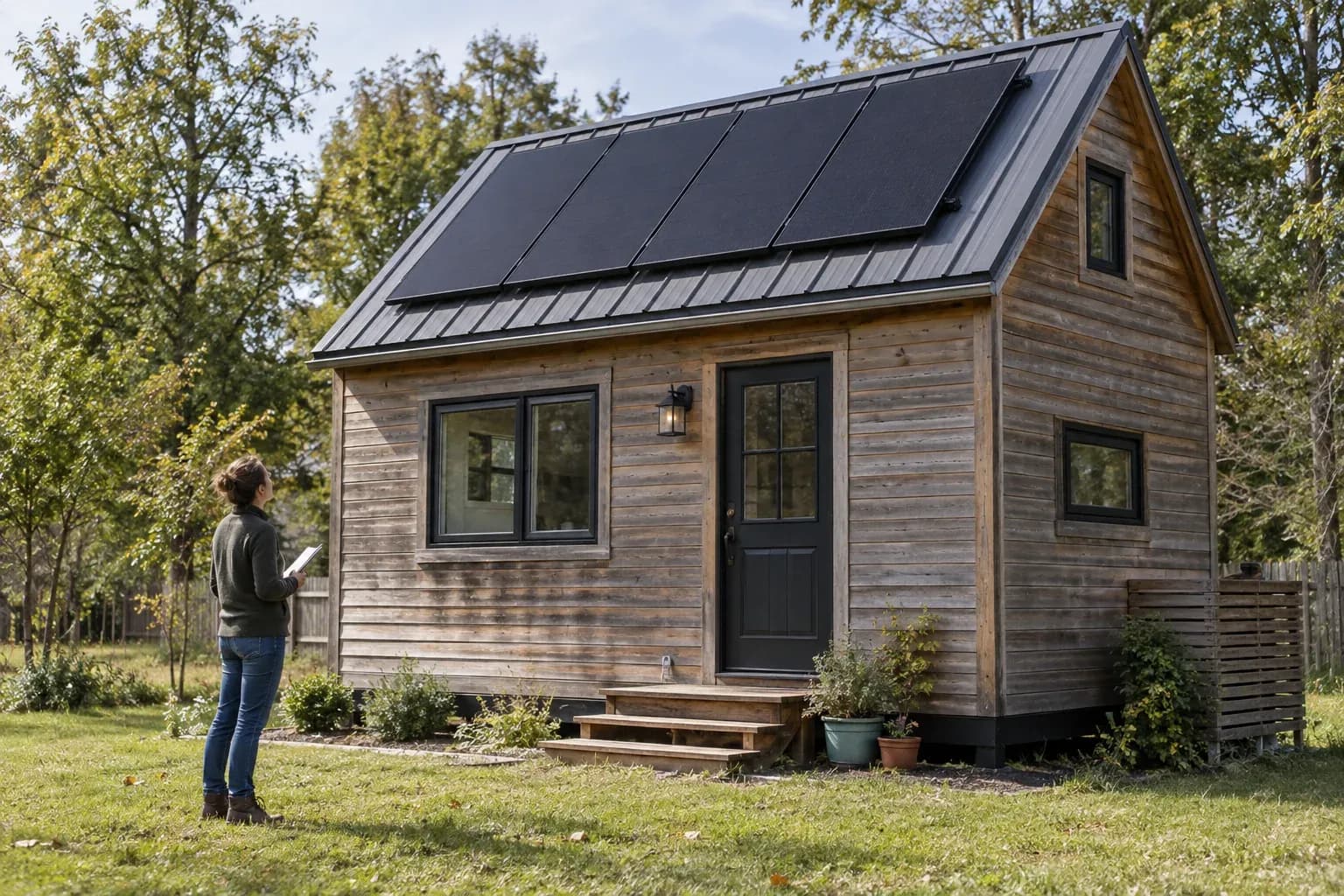
Someone shopping for the best solar panels for a tiny house often starts with colour, wattage and warranty. Those details matter, especially when the roof is small and the panels are always in view. They are not enough to size the system.
Imagine a tiny house used as a tattoo or creative studio for a few hours at a time. A tattoo machine, task lamp, television and room lights may use fairly little energy. Air conditioning, heating, ventilation, hot water, a small refrigerator or cleaning equipment can quietly change the plan. Solar panels also make energy at a different time from when the studio may need it, so a battery or another source has to bridge that gap.
This guide explains the choice in the order that makes sense: write down the work, estimate the energy, choose the power system, measure the roof and then compare panels. It does not recommend one brand or pretend that one package fits every small building. The photographs are illustrative editorial scenes rather than customer projects.

Begin with one normal day in the tiny house
Walk through a real work session from opening the door to switching everything off. Which lights are on before the customer arrives? Does the television run for the full session? Is there a router, fan, printer, refrigerator or water pump working in the background? Heating and cooling may cycle rather than run continuously, but they still belong on the list.
The label on each appliance is a better starting point than an online list of typical wattages. Record the rated power, how long the item normally runs and whether it may be on at the same time as the others. If an appliance has a motor or compressor, its starting demand may also affect the inverter even when its daily energy use is modest.
This short exercise prevents a common mistake: building the system around the visible work equipment while leaving out the equipment that makes the room usable. In a small studio, the machine on the desk may not be the largest load in the room.
- 1
Only a few small plug-in loads
A portable power station may be enough if its output, battery and solar input all fit the measured job.
- 2
Daily work with cooling, heating or fixed circuits
A fixed inverter-and-battery system is usually easier to plan around the building and future loads.
- 3
Grid power is available
Decide whether solar is meant to lower grid use, provide backup, or do both before choosing the inverter type.
- 4
No reliable grid connection
Size for the weak-sun period and a fallback plan rather than one good afternoon.
Three numbers describe most of the job
First, add the power of the items that may run together. This is the running load in watts and gives the inverter a starting point. It is not the same as daily energy.
Next, multiply each appliance's watts by the hours it runs. Add those watt-hours together. This is the energy the battery and solar array have to deliver over the day. A three-hour session helps only with the items that truly switch off after three hours.
The third number is recharge energy. The panels need to replace what was used while also covering charging losses, ordinary system losses and the energy being consumed during daylight. On a cloudy day they may replace much less.
The table below is a made-up teaching example, not a typical tattoo studio and not a recommended system size. Real values should come from the exact equipment labels or measurements.
- Illustrative load
- Tattoo machine or similar small tool
- Assumed power
- 60W
- Time used
- 3 hours
- Energy
- 180Wh
- Illustrative load
- Television
- Assumed power
- 50W
- Time used
- 3 hours
- Energy
- 150Wh
- Illustrative load
- Task and room lighting
- Assumed power
- 45W
- Time used
- 4 hours
- Energy
- 180Wh
- Illustrative load
- Router and small charging loads
- Assumed power
- 25W
- Time used
- 5 hours
- Energy
- 125Wh
| Illustrative load | Assumed power | Time used | Energy |
|---|---|---|---|
| Tattoo machine or similar small tool | 60W | 3 hours | 180Wh |
| Television | 50W | 3 hours | 150Wh |
| Task and room lighting | 45W | 4 hours | 180Wh |
| Router and small charging loads | 25W | 5 hours | 125Wh |
This example totals 635Wh before battery reserve and conversion losses. Adding climate control, hot water, a pump or cleaning equipment could change the result far more than changing the television.
The hidden loads can be larger than the work itself
A tiny room heats and cools quickly, but clients and workers still need a comfortable space. An air conditioner or electric heater can use more power than the lights, television and tattoo equipment combined. Its compressor or heating element can also raise the peak load that the inverter must handle.
Ventilation may run throughout the appointment. A small refrigerator continues cycling after the studio closes. A water pump may run briefly but start hard. Cleaning or sterilising equipment can add a high-power block of energy between sessions. None of these loads should be assumed; include only what the studio really uses.
This is where “I only work for three hours” can mislead. If cooling starts an hour before the appointment and the refrigerator stays on all day, the battery is serving a longer day than the work schedule suggests. A simple timeline often reveals this faster than another equipment catalogue.
Portable power station or fixed solar system?
A portable power station bundles a battery, inverter, charger and outlets into one case. It can be a good fit when the load list is short, every appliance can plug directly into the unit and there is another safe place to recharge it during several poor-sun days. The limits are set by that exact product: AC output, usable battery energy, solar-input voltage and current, expansion options and replacement parts.
A fixed system gives more freedom to match an inverter, battery and array to the building. It is usually the more natural route when the studio has fixed wiring, automatic backup, climate control or a plan to add equipment. It also needs proper design, protection and installation.
Neither route is automatically more reliable. A portable product may be simple to replace but difficult to repair or expand. A modular system may allow one part to change later, yet it has more interfaces that must be compatible.
- Question
- How loads connect
- Portable power station
- Usually through the unit's approved outlets
- Fixed inverter and battery
- Can be designed for selected fixed circuits and outlets
- Question
- Solar input
- Portable power station
- Limited to the unit's stated voltage, current and wattage range
- Fixed inverter and battery
- Array is matched to the selected charge controller or hybrid inverter
- Question
- Expansion
- Portable power station
- Often tied to the same product family
- Fixed inverter and battery
- Potentially more flexible, subject to model compatibility
- Question
- Best fit
- Portable power station
- Small movable load list and occasional use
- Fixed inverter and battery
- Regular work, fixed wiring or larger future loads
| Question | Portable power station | Fixed inverter and battery |
|---|---|---|
| How loads connect | Usually through the unit's approved outlets | Can be designed for selected fixed circuits and outlets |
| Solar input | Limited to the unit's stated voltage, current and wattage range | Array is matched to the selected charge controller or hybrid inverter |
| Expansion | Often tied to the same product family | Potentially more flexible, subject to model compatibility |
| Best fit | Small movable load list and occasional use | Regular work, fixed wiring or larger future loads |
Are all-black solar panels a good choice?
All-black modules can look much cleaner on a small roof. The black frame, dark cells and dark backing reduce the bright grid pattern that some owners dislike. If the available models fit the roof and the electrical design, choosing the appearance you prefer is reasonable.
Colour does not tell you how long a panel will last. A white backsheet is not a warning sign, and a black frame is not proof of better cells or stronger construction. Compare the exact model's product warranty, performance warranty, dimensions, weight, temperature coefficient, mechanical-load information and applicable test documentation.
Dark surfaces can absorb more heat, while solar cells generally produce less power as they become hotter. The real operating temperature also depends on the module construction, roof clearance, airflow and weather. Treat the datasheet values and proposed mounting as more useful evidence than the marketing name “all black.”
Bifacial panels deserve the same practical view. Their rear side can collect reflected light when the mounting and surroundings allow it. A panel sitting close to an opaque roof may gain little from the rear, so “bifacial” is not automatically the best use of scarce roof area.
A small roof turns panel dimensions into a major decision
A tiny house's floor area does not translate directly into usable panel area. The roof slope changes the surface area, and the final layout may need room around edges, ridges, vents, flues and other features. Local fire, building and wind requirements can also affect the usable zone.
Modern high-wattage panels can be physically large. Four lower-wattage modules that fit neatly may produce more useful energy than three larger modules that leave an awkward strip of unused roof. Exact length and width belong in the layout before an order is placed.
Shade matters more on a small array because one branch or roof feature can affect a large share of the available panels. Record the shade across the day and across seasons. If the roof cannot hold enough well-positioned modules, a small ground-mounted array may be worth comparing where the site and local rules allow it.
The roof itself needs a qualified assessment. Panel weight is only part of the question; mounting points, wind and snow loads, roof condition and waterproofing also matter. A catalogue panel count cannot answer those structural questions.
Do not turn panel watts into a promised daily result
Multiplying the panel rating by a fixed number of “sun hours” can be useful for a first sketch. It is not a guarantee. Location, season, cloud, shade, direction, tilt, panel temperature and system losses all change the energy collected.
Suppose a 600W array produces the equivalent of four full-power hours on a particular day. The simple estimate is 2.4kWh before system losses. It does not mean the array stays at 600W for four straight hours, and it says nothing about a cloudy week. The same array can give a very different result in another month or on another roof.
Use a location-based tool such as NREL's PVWatts to build a monthly reference, then look closely at the weakest useful season. PVWatts models grid-connected PV and cannot know how a small battery system will limit charging when the battery is full, so its result remains an estimate rather than an off-grid promise.
For a business space, decide what happens when solar falls short. Grid charging, moving a portable unit to another approved charging source, a properly integrated generator or reducing non-essential loads are different fallback plans. One of them should be clear before the first poor-weather week.
The longest-lasting panel is part of a longer system
Solar modules can remain in service for decades, but their output changes gradually and their warranties do not cover every cause of damage or lost production. Read the product and performance warranty for the exact model rather than relying on a large year count printed on a sales page.
The mounting and roof can shorten an otherwise good purchase. Water paths, loose cable support, poor ventilation, corrosion and unsuitable structural attachment are system issues, not cell-efficiency issues. Weather conditions at the site should influence the mounting and material review.
The inverter, battery and portable power electronics have their own operating limits and warranty terms. They should not be assumed to last as long as the panels. A durable plan leaves safe access, keeps model and warranty records, and makes it possible to replace one component without rebuilding the tiny house.
For panel comparison, efficiency is useful when roof area is genuinely tight. It tells you how much rated power fits into a given area. It still does not replace fit, shade, thermal behaviour, warranty wording or a realistic energy estimate.
A practical buying list for a tiny house or small studio
The first supplier conversation does not need a finished electrical design. It should contain enough real information to stop everyone from guessing.
- List every appliance, its label power, expected daily hours and which items may run together.
- Separate work-session loads from all-day loads such as cooling, ventilation, a refrigerator, router or pump.
- State whether grid power is available and what must keep working during an outage or poor-sun period.
- Measure the usable roof planes and mark vents, shade and required clear areas; keep the structural decision with a qualified local party.
- Compare exact panel dimensions, warranty terms, temperature coefficient, weight and model-level documentation—not colour alone.
- Confirm the inverter or power station's AC output, usable battery energy, solar-input limits and supported expansion route.
How many solar panels does a tiny house need?
There is no reliable answer from floor area alone. Add the daily watt-hours of the real loads, estimate solar production for the site and weak season, then check how many exact panel models fit the usable roof. Battery reserve and a fallback source also affect the answer.
Can one large solar panel run a small studio?
It may cover a short list of low-power loads on a good day, but the panel does not directly solve night use, cloudy weather or inverter limits. The battery or power station must accept that panel's voltage and current and provide enough output and usable energy for the full load list.
Do all-black solar panels last longer?
Not because they are black. Appearance does not establish cell quality, construction or service life. Compare the exact model's warranty, testing, materials, temperature data and installation requirements with the alternatives that fit the roof.
Related Articles
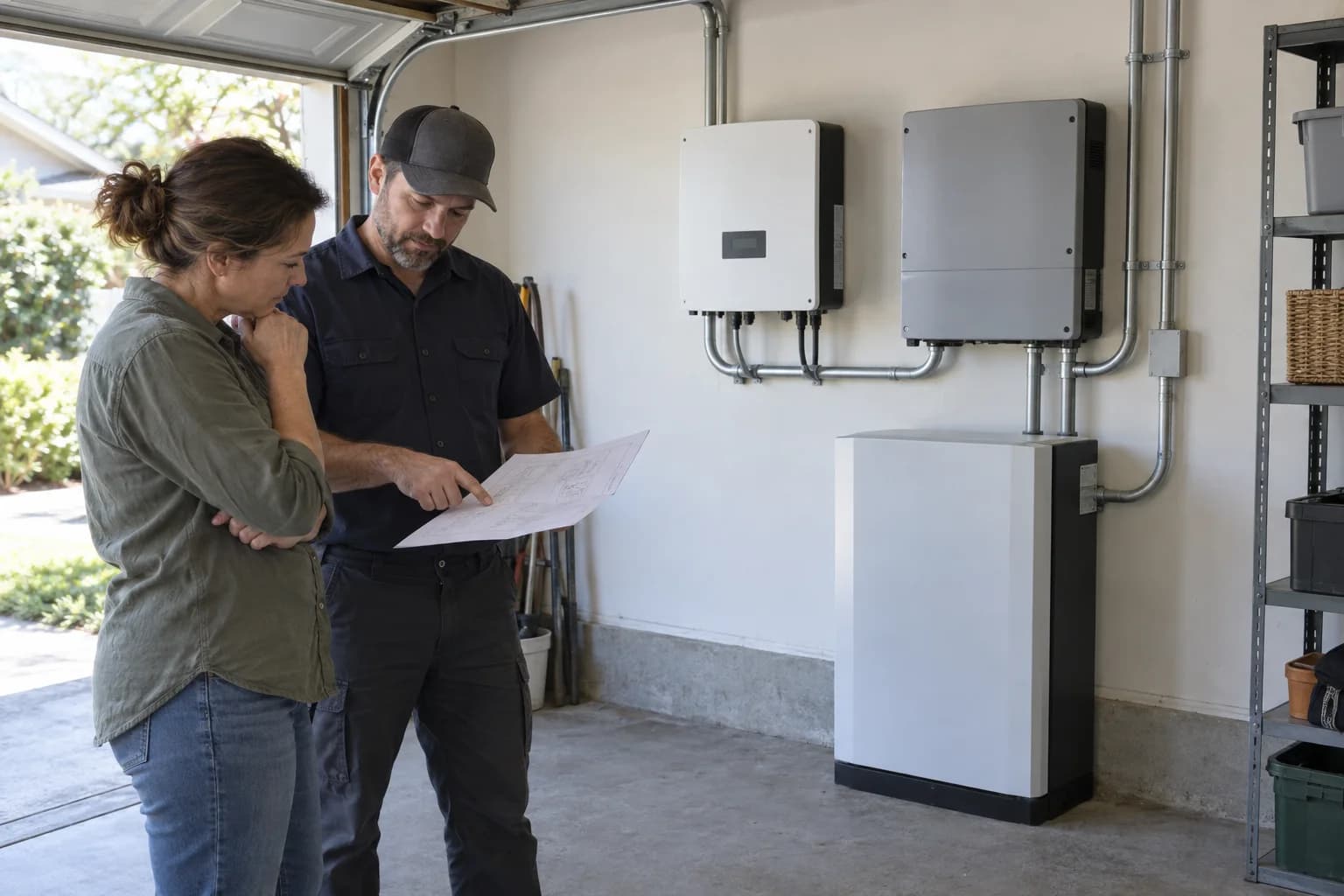
Hybrid inverter or separate solar and battery inverters: which is better for power cuts?
A separate battery inverter can be simple and independent. A hybrid system can make better use of solar during an outage. The right choice depends on the backup job and what is already installed.
Read Article→
Is 15 kWh of home battery enough, or is the next module worth it?
A bigger battery can cover more hours, but the last module may do very little work. Judge it by the expensive electricity it actually avoids, the backup you need and the limits of the full system.
Read Article→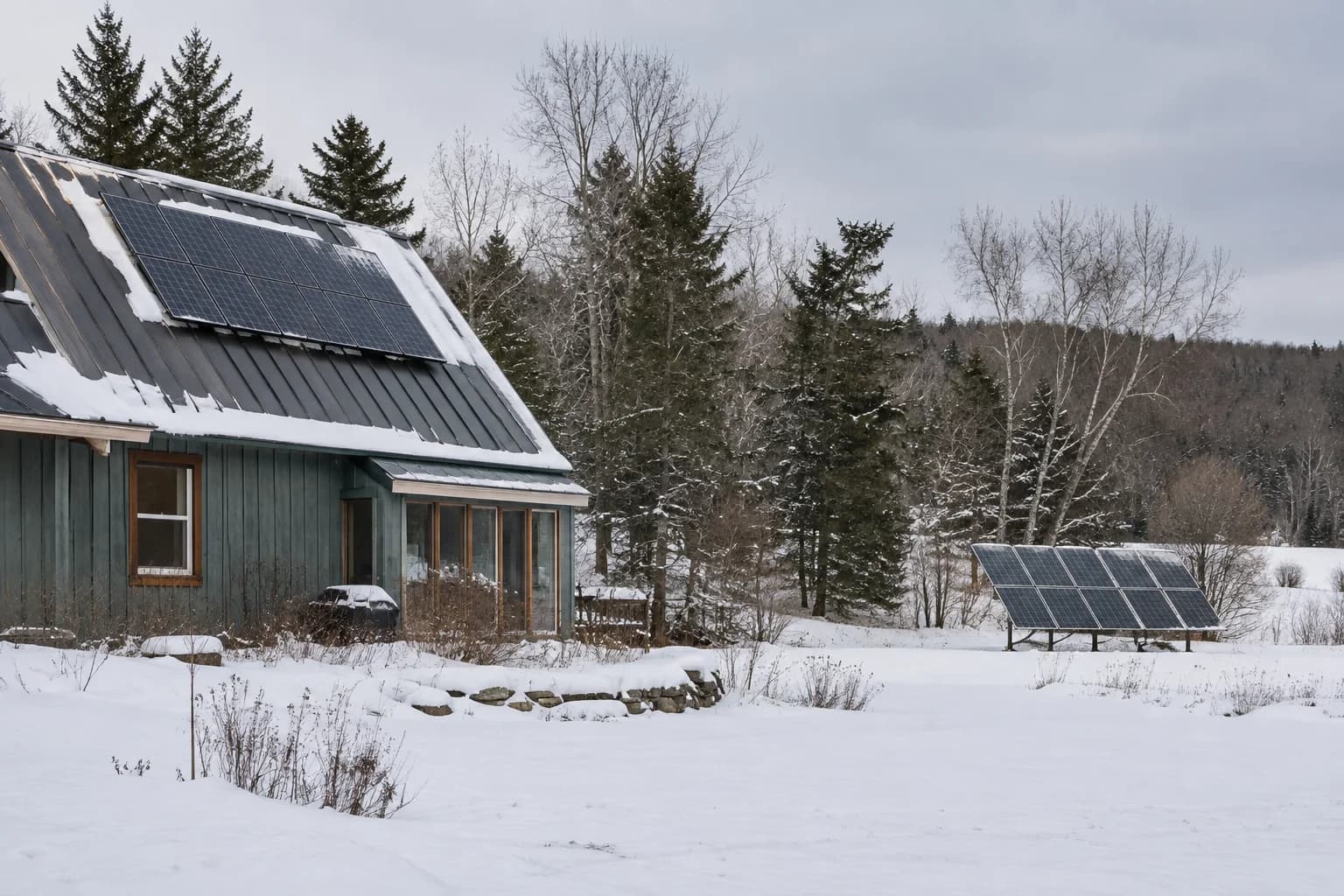
Roof or ground-mount solar in a snowy area: how to choose
A steep roof may shed snow and shorten the cable run. A ground array is easier to reach but may use valuable land or sit in tree shade. Compare the whole site before choosing.
Read Article→