
Solar solutions for telecom towers, schools and clinics with unreliable grids
A classroom, a telecom station and a clinic need different backup plans. Start with the equipment that must keep working, then build the solar supply around it.
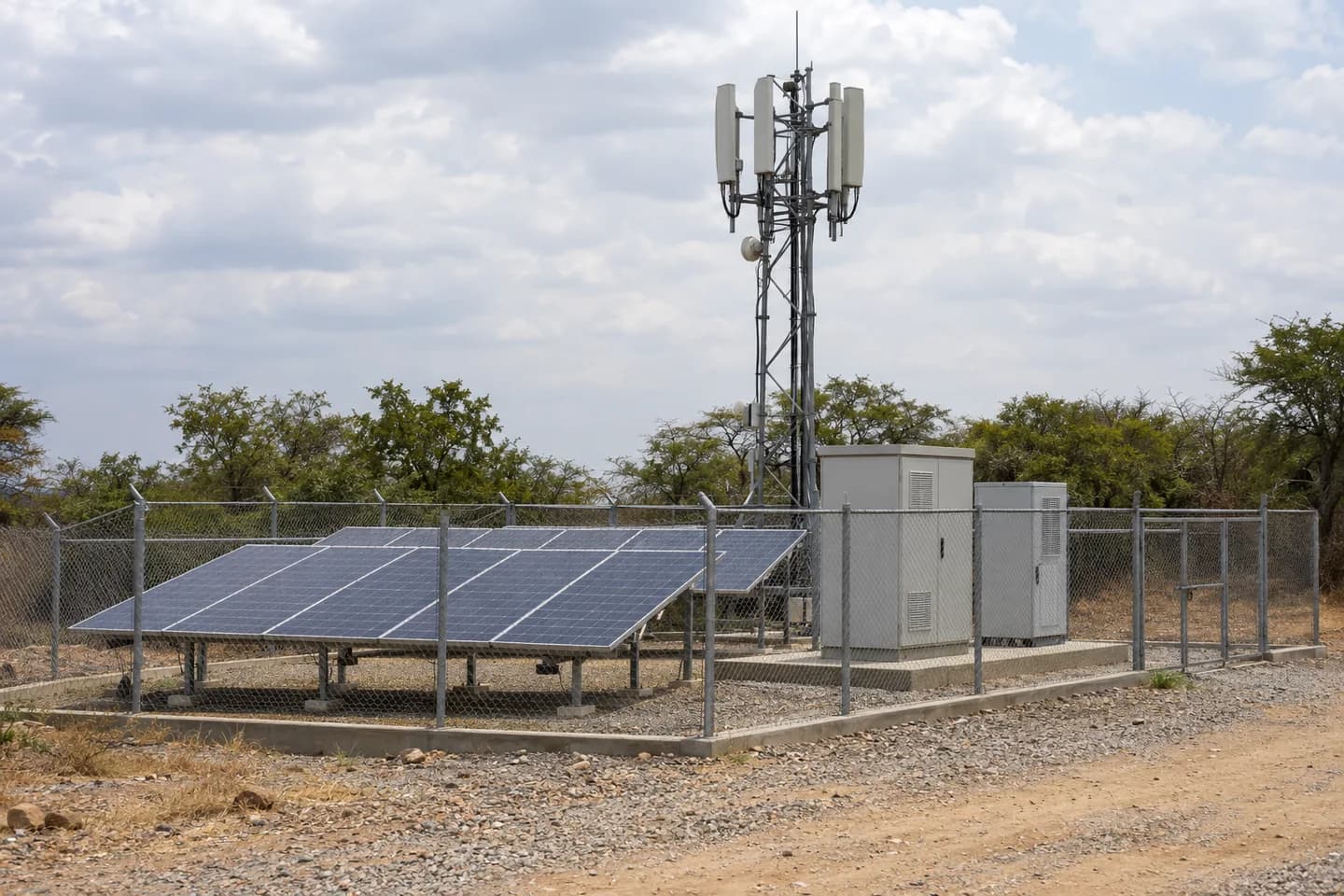
For telecom towers, schools and clinics with unreliable grids, compare a solar-and-battery system built around the equipment that must stay on. Decide which existing power equipment to keep and what the grid or generator will still supply.
Ordinary grid-tied solar usually stops when the grid fails. Supplying equipment during an outage needs power equipment and switching designed for operation without the grid.
Three sites, three different power needs
Choose which equipment must keep running during a cut. The arrangements below can then be compared against the site's actual needs.
- Site
- Telecom tower
- Equipment to consider
- Communications equipment and the cooling or other support equipment it needs
- Setup to compare
- Solar charging and compatible batteries integrated with the existing telecom power system, with generator backup where needed
- Site
- School
- Equipment to consider
- Classroom lighting, fans, computers, internet and any essential water supply
- Setup to compare
- Daytime solar plus battery backup for selected classroom circuits; allow for evening or boarding use where needed
- Site
- Clinic
- Equipment to consider
- Lighting, communications, specified refrigeration and identified medical equipment
- Setup to compare
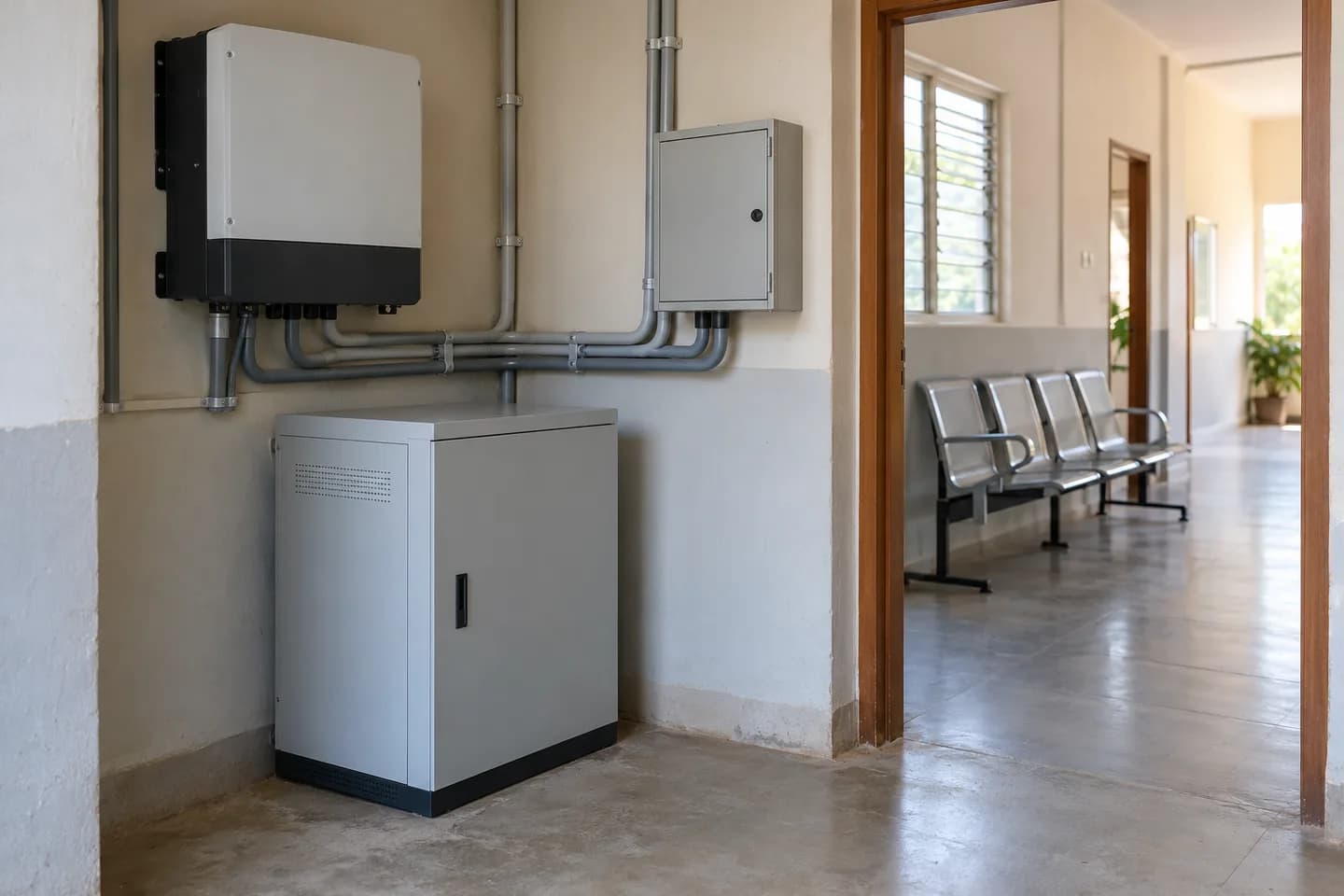
- Solar and battery backup for selected services; assess a suitable UPS separately for devices that cannot tolerate interruptions
| Site | Equipment to consider | Setup to compare |
|---|---|---|
| Telecom tower | Communications equipment and the cooling or other support equipment it needs | Solar charging and compatible batteries integrated with the existing telecom power system, with generator backup where needed |
| School | Classroom lighting, fans, computers, internet and any essential water supply | Daytime solar plus battery backup for selected classroom circuits; allow for evening or boarding use where needed |
| Clinic | Lighting, communications, specified refrigeration and identified medical equipment | Solar and battery backup for selected services; assess a suitable UPS separately for devices that cannot tolerate interruptions |
Keep the existing equipment in the picture
At a telecom site, start with the existing power cabinet and equipment labels. Some communications equipment uses direct-current power rather than ordinary wall-socket power. Solar charging equipment and batteries need to match that supply; the Vertiv reference shows one example. Cooling and other building equipment may need a separate supply, so include them in the review too.
For a school, use the actual teaching hours. Count the fans and computers running together, then check any boarding or evening use separately. The battery needs to cover the chosen equipment during outages; night-time use adds to that energy requirement. Review pumps, kitchens and air conditioning separately from classroom backup.
For a clinic, plan the solar and battery supply around the agreed essential services. A separate UPS may be needed for devices that cannot tolerate a brief interruption. The facility team should list the exact models, their power requirements and any built-in backup, including refrigeration and sterilization equipment.
Should the generator stay?
For frequent shorter cuts, compare a solar-and-battery system that supports the selected equipment while the grid is unavailable. Solar can serve daytime demand and recharge storage when conditions allow.
Long outages change the question. If the battery cannot recover through several poor-sun days, an existing generator may still have a useful role. If compatible with the proposed charging and switching equipment, it can supply power or help recharge the batteries. Keeping that option may be more practical than buying enough batteries for every possible interruption.
Where the grid is largely unusable, the project needs an off-grid operating plan: daytime supply, overnight storage, a poor-weather reserve and any retained generator support. An average sunny day is not enough to size that arrangement.
Ask the supplier to show which sources can supply or recharge the system, and what happens when one is unavailable. Generator controls, charging limits and safe switching need to be checked against the actual equipment. Solar may reduce generator use, but the project needs its own fuel and operating-cost comparison rather than a promised saving percentage.
Check the night-time demand and the next day's recharge
Two questions decide much of the battery discussion: what needs to run together, and for how long? The first affects power output; the second affects the amount of energy stored.
As a simple illustration, equipment drawing a steady 1,000 watts for eight hours uses 8 kilowatt-hours, or 8 kWh, of electricity. That is energy delivered to the equipment, not a battery size recommendation. The battery calculation also needs to allow for conversion losses and a reserve, using the proposed system's usable energy rather than just its label.
Next, check how that energy will be put back. If the panels only cover daytime equipment, there may be little left to refill the battery. Review the available panel area, local solar conditions and the opportunity to charge from the grid or generator. Ask how long recharging is expected to take while the site is still using power.
A short interruption can still matter
A battery that lasts all night does not automatically prevent a device from restarting when the supply changes. Backup duration and the gap during switching are separate questions.
Sensitive equipment may need an uninterruptible power supply, usually called a UPS. UPS types differ: Eaton's guide distinguishes models that switch to battery from online models that continuously supply the equipment through their inverter. Have the device supplier and the facility's qualified electrical team check whether each device can tolerate the switching gap and the proposed power supply. For clinical equipment, involve the responsible clinical team as well. A generic UPS or solar battery label does not establish medical suitability.
The plan also needs someone to notice a problem. Decide who receives low-battery and equipment-fault alerts, who can reach the site, and which spare parts can be obtained. Include heat, dust, equipment space and service access in the request.
Bring the requirements into one solar supply proposal
Rongkai can help bring the site's requirements into one equipment plan: what can stay, what needs adding, which services get backup and which connections still need checking. The buyer and local technical team can review the same list before ordering.
Our one-stop solar service coordinates the agreed panels, inverters, batteries, mounting, cables and accessories with model documents, packing and delivery. If a model changes, the related parts and documents can be reviewed together. The site's telecom or clinical specialists confirm their equipment's requirements, and the offer identifies anything to be supplied separately.
Final electrical design, installation, protection and on-site testing remain with the qualified project team. For an initial discussion, send:
- The site type, equipment to protect, operating hours and any devices that must not restart.
- Recent outage times and durations, low-voltage problems, and details of existing power equipment or generators.
- Equipment labels or a load list, available panel and battery space, and known heat, dust or access constraints.
- Delivery destination, requested documents and the local team responsible for installation and ongoing service.
Related Articles

What does a one-stop solar system supplier actually provide?
Need panels, an inverter, batteries and the parts to put them together? Here is how Rongkai helps turn a project requirement into a coordinated supply package.
Read Article→
How do solar panels perform in clouds, heat, salt air and dust?
A panel's watt rating cannot describe every site. Learn what changes in cloudy, hot, coastal and dusty locations, and which details belong in a supply quote.
Read Article→
How to compare solar battery specifications before buying
Two batteries with the same kWh label can do different jobs. Here is how to read the numbers, check the missing details and compare like-for-like quotes.
Read Article→