
Can solar power a home 24/7 with air conditioning and batteries?
A 24-hour solar plan has three separate jobs: cover the home while the sun is up, carry chosen loads overnight and recover when the next day is cloudy.
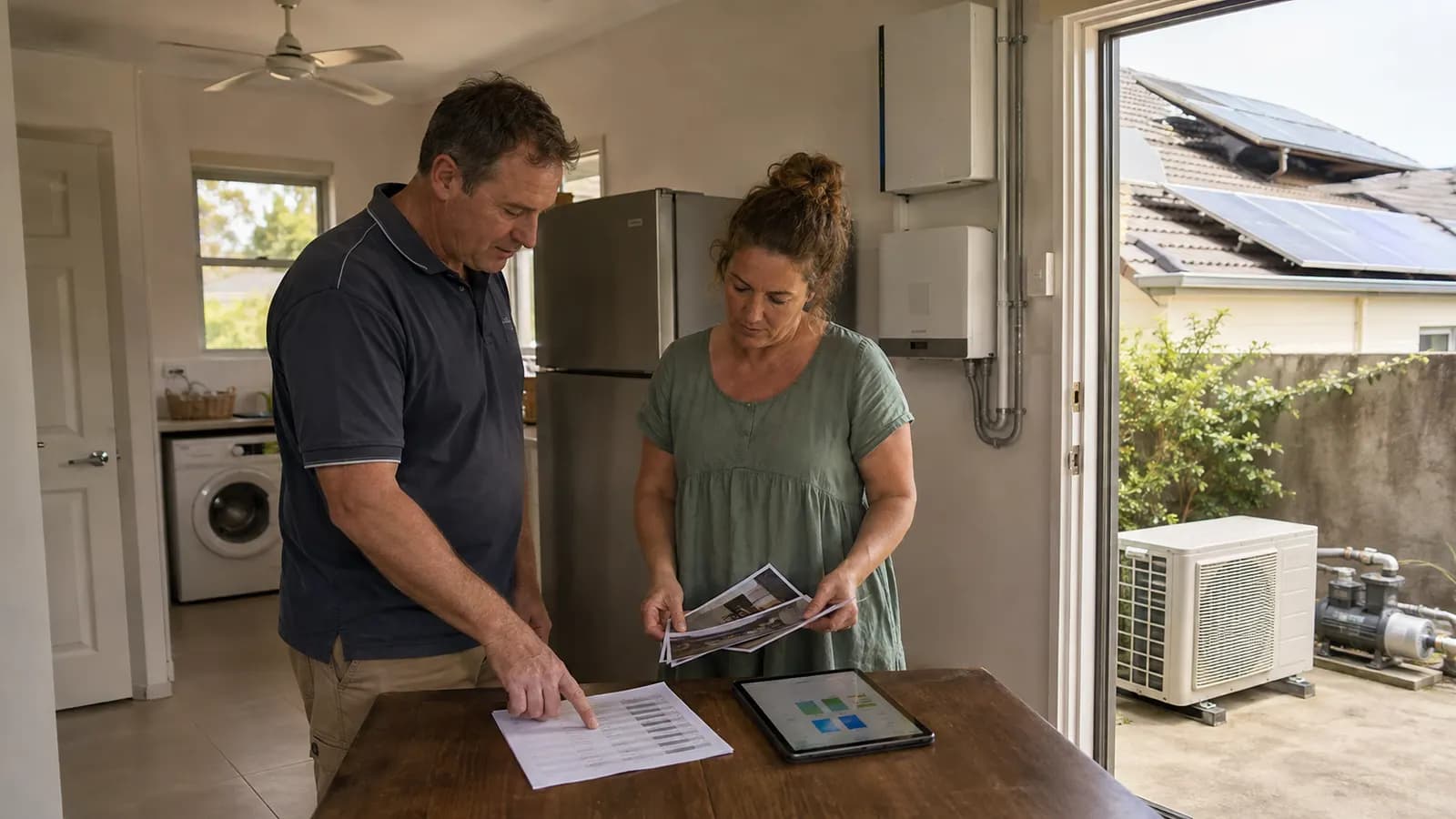
“I want the whole house on solar, day and night” sounds like a clear request. It is not quite enough to size a system.
One homeowner may be happy to use solar first and let the grid help when several appliances run together. Another wants the refrigerator, fans and lights to survive an outage. A third wants to live with almost no grid power, even through poor weather. Those homes can own the same appliances and still need very different systems.
The useful way to plan 24-hour solar is to split it into three jobs: what the panels must do in daylight, what the battery must do after sunset and what keeps the home running when the sun is weak. This guide shows how to build that picture without needing to be an electrical expert. Its numbers are simple teaching examples, not a design for a particular property. The photographs are illustrative editorial scenes rather than customer installations. Final equipment selection, protection and local approval belong with the responsible qualified parties.
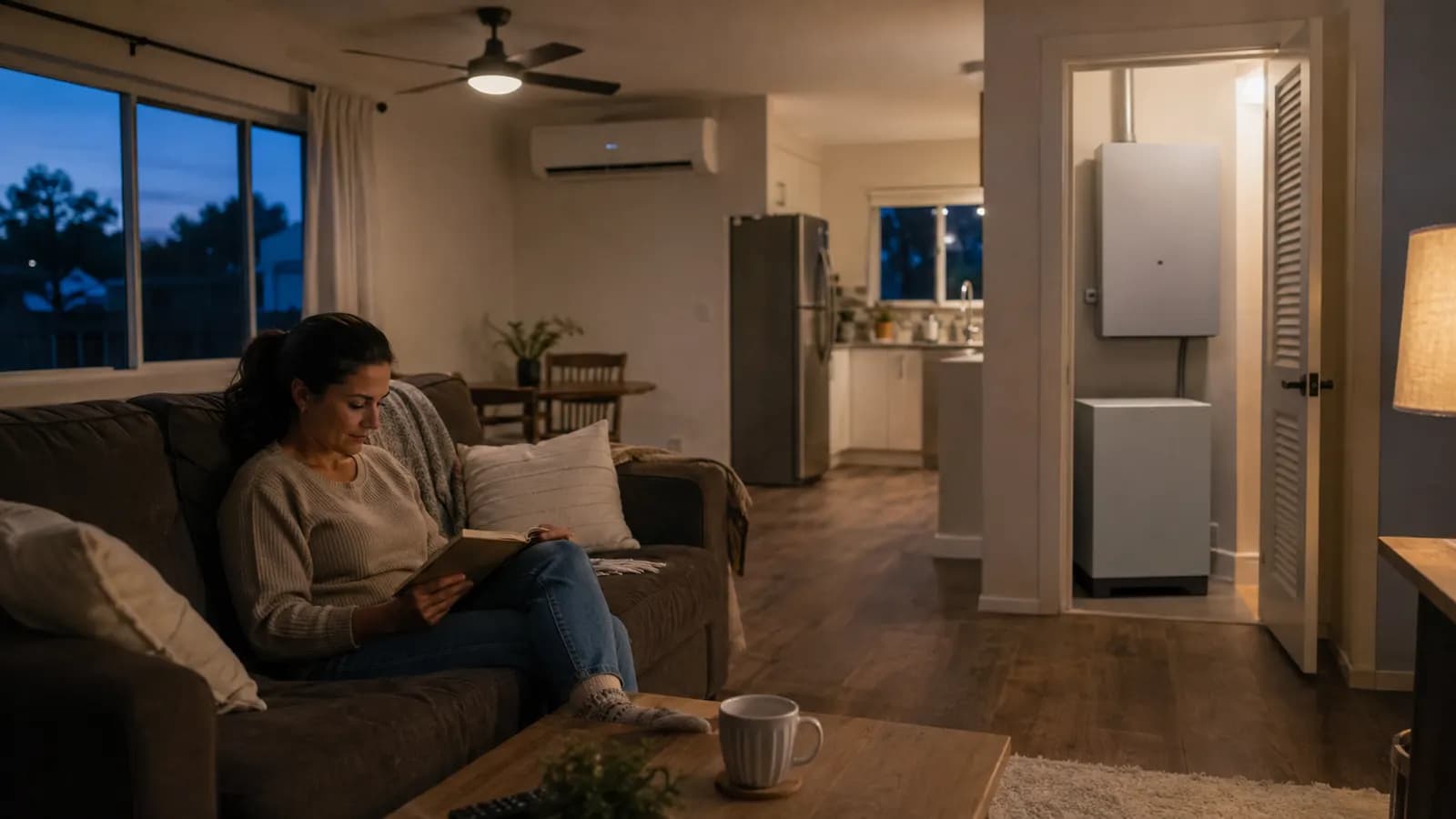
First decide what “24/7 solar” means to you
There are three common versions of this request. A solar-first home still has a grid connection. Solar covers as much of the daytime use as it can, the battery handles selected evening use and the grid fills the gaps. This is often the easiest way to reduce electricity purchases without designing the home as a small power station.
A backup-focused home keeps a shorter list alive during an outage. That list might include refrigeration, fans, lights, internet equipment and a few outlets. Large loads such as air conditioning, water heating or cooking may remain outside the backup circuits, or they may be used only under agreed conditions.
A near-zero-grid or fully off-grid home is a harder job. It needs enough energy for nights and weak-sun periods, plus a recovery plan after the battery has been drawn down. The owner may also need to delay optional loads or use another approved source during a long spell of poor weather. “24/7” should therefore be written as an operating goal, not left as a slogan.
- Goal
- Use solar first and lower the bill
- What the grid does
- Helps during peaks, low solar and battery reserve
- Question to answer first
- How much daytime and evening energy should solar replace?
- Goal
- Keep selected loads running in an outage
- What the grid does
- Normally available, but absent during the event
- Question to answer first
- Which appliances are truly essential, and for how long?
- Goal
- Use little or no grid power
- What the grid does
- Rarely used or not available
- Question to answer first
- What is the plan for poor weather and battery recovery?
| Goal | What the grid does | Question to answer first |
|---|---|---|
| Use solar first and lower the bill | Helps during peaks, low solar and battery reserve | How much daytime and evening energy should solar replace? |
| Keep selected loads running in an outage | Normally available, but absent during the event | Which appliances are truly essential, and for how long? |
| Use little or no grid power | Rarely used or not available | What is the plan for poor weather and battery recovery? |
The same house can require a very different solar array, battery and backup arrangement depending on which goal is chosen.
Build a daily routine before choosing equipment
A list that says “air conditioner, two refrigerators, water pump, fans and lights” is a useful start, but it leaves out the details that change the answer.
An air conditioner's cooling capacity is not the same as its electrical input. Read the model label or technical sheet instead of treating the number in the product name as power consumption. A refrigerator switches its compressor on and off, so its daily energy matters more than one quick reading. A pump may run for only a short time but still create a demanding start. An iron or microwave is also brief, yet it can noticeably raise the load while it is on.
You do not need a perfect engineering survey to make progress. Take a clear photo of each important appliance label. Note roughly when it runs, for how long and whether another large appliance is normally on at the same time. If an appliance has several modes, record the one the household actually uses. A recent electricity bill can help check the total, but it cannot show which loads overlap at a particular moment.
- Appliance name and full model code, with a clear photo of the electrical label where possible.
- Rated input in watts or kilowatts, not just cooling capacity, horsepower or physical size.
- Expected hours of use in daylight and after sunset.
- Large loads that may run together, including pumps, cooking equipment and air conditioning.
- The shorter list that must keep working during a grid outage.
The inverter answers: what can run at the same time?
The inverter has to carry the appliances that are on together. Adding every appliance in the building will usually exaggerate the requirement because many of them are idle most of the day. Looking only at the average electricity bill can create the opposite mistake: the daily total may look modest even though the home has a busy half hour.
Here is a deliberately simple example. Imagine the air conditioner is drawing 1.6kW, one water pump 1.1kW, the refrigerators together 0.3kW while their compressors are running, and the remaining fans, lights and small loads 0.7kW. The running total is 3.7kW. If a 1.3kW microwave starts at the same time, it becomes 5kW. These invented figures are only there to show the method; a real home needs its own appliance data.
There is one more check. Motors and compressors can ask for extra power when they start, while a battery has its own discharge limit. The inverter's continuous output, short-duration capability, operating temperature, backup output and battery support all need to suit the chosen equipment. A large inverter label alone does not prove that the full system can run the load.
The panels answer: how much daytime energy is available?
Solar panels are rated in kilowatts, while the home uses energy over time in kilowatt-hours. Matching an 8kW solar array to an 8kW inverter does not mean the home receives 8kW from sunrise to sunset. Panel direction, shade, temperature, season and weather change the output through the day.
Daytime appliances use the solar energy first in many common system arrangements. Only the remaining production is available to charge the battery or export. That means a busy afternoon can leave a large battery partly charged even when the array looked generous on paper.
Estimate monthly solar production for the actual location and roof or ground-mount layout, then compare it with the daytime load and the energy that must be returned to the battery. NREL's PVWatts calculator is one useful early estimate for locations it supports. It is still a planning model rather than a production guarantee. Local shade, equipment limits and site conditions need separate review.
The battery answers: what must keep running after sunset?
Start with the quiet night, not the worst possible combination. Refrigeration, a few fans, lights, internet equipment and standby loads often form the base. Then add optional night use such as air conditioning as a separate line. This makes the cost of each comfort choice visible.
Consider another teaching example. Suppose the combined fans, lights and internet equipment average 0.35kW for eight hours. That is 2.8kWh. Assign another 0.9kWh to refrigeration over the same period and the overnight load reaches 3.7kWh. If the plan also includes an air conditioner averaging 1.4kW for four hours, it adds 5.6kWh and brings the total to 9.3kWh.
Those figures are not typical values and should not be copied into a quotation. They simply show why “fans and a refrigerator overnight” is a different battery job from “air conditioning all night.” The battery also needs room for its permitted reserve, conversion losses, temperature effects and aging. Its usable energy is measured in kWh, while its maximum charge and discharge rate is measured in kW or amps. Both need checking.
A sunny-day design is not automatically a 24-hour design
A system may work beautifully on a clear day: the panels run the home, refill the battery and leave enough stored energy for the evening. The real test comes the next morning after a hot night, followed by clouds or rain.
If the grid remains connected, it can cover a temporary shortfall and recharge the battery according to the approved settings. That is why a solar-first home can achieve low grid use without carrying enough equipment for every rare condition. A fully off-grid home has no such safety net. It needs an agreed reserve, a poor-weather operating plan and often another suitable energy source.
Ask how the proposed system recovers after one low-sun day, not only how long the battery lasts from full. Also ask what happens when the battery reaches its reserve while a large appliance is running. A practical answer may include automatic load priorities or a clear household rule. A promise of “zero bill” or “complete independence” without this explanation is not a useful design.
Small changes to timing can avoid a large equipment jump
Some loads can move without making the home less comfortable. Run the water pump when solar production is strong. Use the iron or microwave without starting another large appliance at the same moment. Cool the occupied room in late afternoon, then use a gentler setting after sunset. Keep battery backup for the rooms and appliances people actually need during an outage.
This is not about living around the solar system. It is about noticing which short overlaps force the inverter or battery into a much larger class. If a five-minute event is the only reason for a bigger quotation, simple control or scheduling may be the better answer. If several large loads really do run together every day, the equipment should be sized for that routine rather than hoping users will remember a rule.
Write these choices into the request for quotation. Suppliers can then compare the same daytime schedule, night schedule and outage list instead of guessing from appliance names.
Prepare one brief that a solar supplier can use
A useful home-solar brief does not need to name the inverter or battery in advance. It should explain the job. Include the daily electricity use, appliance-label photos, expected overlap, night schedule, backup priorities and the role of the grid. Add the site location and available roof or ground space because solar production depends on where and how the panels are installed.
Ask the supplier to show the calculation in separate lines: expected daytime load, estimated solar production, energy left for charging, overnight load, usable battery energy and the poor-weather recovery plan. Assumptions should be visible. That makes two proposals far easier to compare and reduces the chance of buying a large battery that cannot be recharged, or a large inverter that the battery cannot fully support.
- A recent electricity bill or meter history, plus any planned new loads.
- Appliance-label photos and a short list of what normally runs together.
- Separate estimates for daytime use and use after sunset.
- The exact loads that must operate during an outage and the desired runtime.
- Whether the goal is lower grid use, backup, near-zero import or fully off-grid operation.
- Site location, usable installation space and any known shade or grid constraints.
How many solar panels are needed to run an air conditioner and refrigerator?
There is no reliable answer from the appliance names alone. Record each model's electrical input and daily runtime, then estimate solar production for the location, season, shade and panel layout. The array must cover the daytime appliances and still leave enough energy for the chosen battery-charging job.
What battery size is needed for fans, a refrigerator and air conditioning overnight?
Add the energy used by each chosen load during the night in kWh, then account for permitted battery reserve, conversion losses, temperature and aging. Treat air conditioning as a separate line because its runtime and electrical input can make the night total much larger.
Can a solar system eliminate grid electricity completely?
It can be designed for very low grid use or off-grid operation, but the equipment and operating plan must cover nights, weak-sun days, large simultaneous loads and recovery after the battery is depleted. A grid-connected solar-first design may be more economical when occasional grid support is acceptable.
Related Articles
What does a one-stop solar system supplier actually provide?
Need panels, an inverter, batteries and the parts to put them together? Here is how Rongkai helps turn a project requirement into a coordinated supply package.
Read Article→
How do solar panels perform in clouds, heat, salt air and dust?
A panel's watt rating cannot describe every site. Learn what changes in cloudy, hot, coastal and dusty locations, and which details belong in a supply quote.
Read Article→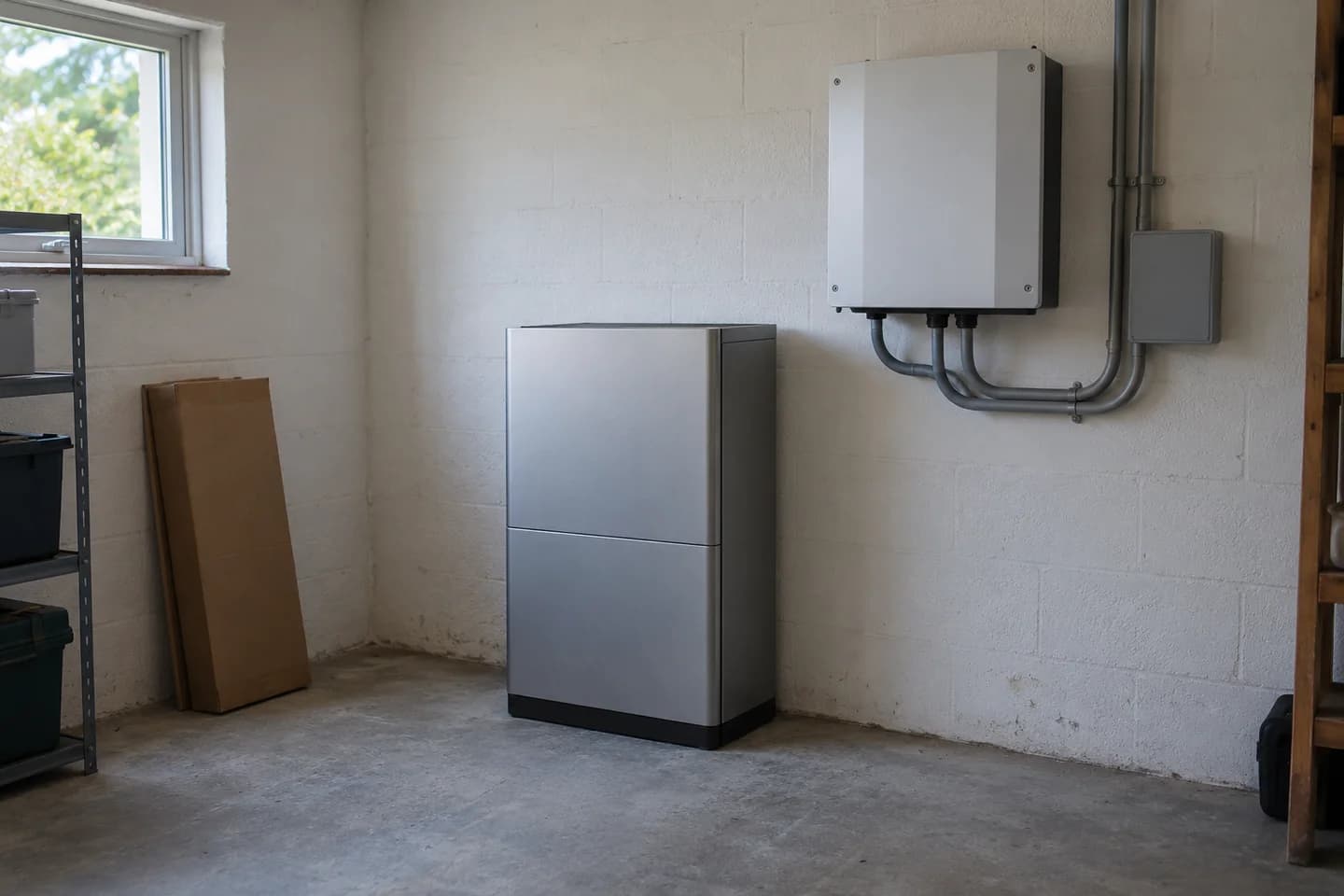
How to compare solar battery specifications before buying
Two batteries with the same kWh label can do different jobs. Here is how to read the numbers, check the missing details and compare like-for-like quotes.
Read Article→