Great Power utility-scale DC battery-container review
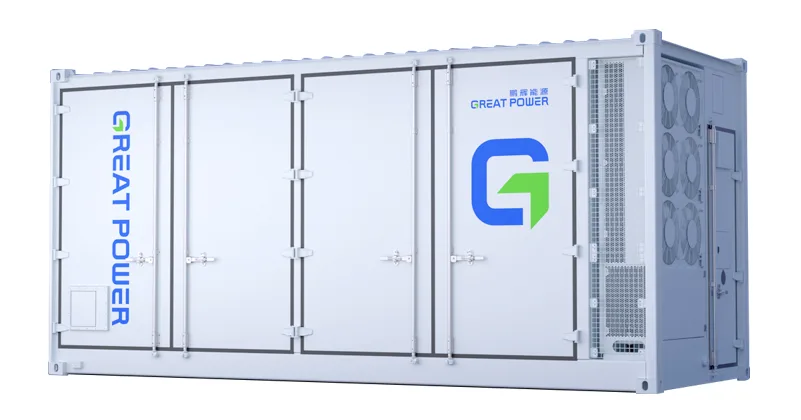
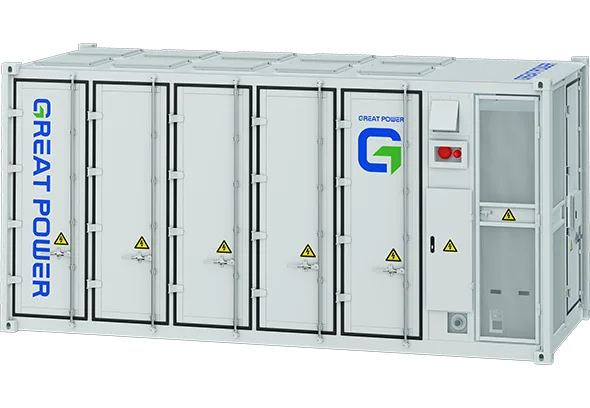
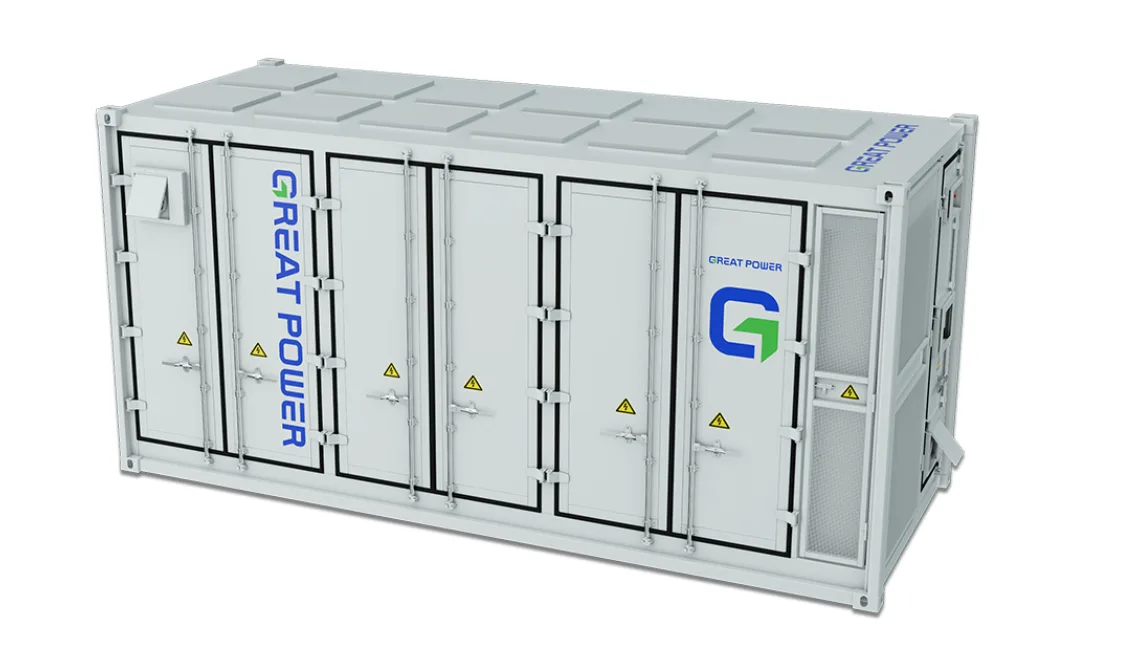
Great Power Max-20HC-5000 5.0 MWh Liquid-Cooled Battery Container
The current Great Power company profile identifies Max-20HC-5000 as a 5.0 MWh at 0.5C, 20HC DC liquid-cooled container energy-storage solution using 314 Ah LFP cells in twelve 1P416S strings. It lists a 1164.8-1497.8 V DC output range, liquid cooling, IP55 protection, under 46 t weight and 6058 × 2438 × 2896 mm dimensions. This is a DC battery-container platform; a PCS, transformer, MV switchgear, EMS/PPC, auxiliaries and plant-level guarantees must be explicitly included or allocated by the project BOM.
Current source identity: Max-20HC-5000 specification table in Great Power's June 2026 company introduction plus the official large-energy-storage product route. The current table's 20HC identity supersedes loose web wording such as 20-foot general-purpose container.
Current document status
Before quotation, obtain the exact Max-20HC-5000 revision and BOM, cell/rack/string/BMS architecture, usable-energy and degradation schedule, DC interface and PCS compatibility, HVAC/liquid loop and auxiliary load, detailed fire/safety evidence, communications, transport/lifting drawings, FAT/SAT, warranty and site acceptance package. Separately define PCS, MV, EMS/PPC, SCADA and civil scope.
Current Max-20HC evidence
Treat the Max-20HC-5000 as a DC battery container, not a complete AC/MV plant
The published table defines the battery block but leaves project power conversion and grid scope open.
Battery architecture
The table states 314 Ah LFP cells and 1P416S × 12 configuration. Obtain rack/string layout, BMS hierarchy, DC protection/combining, isolation monitoring, maintenance bypass and service clearances.
Power presentation needs topology
Rated power is shown as no more than 417 kW × 6 or 1.25 MW × 2. Confirm how strings group to DC terminals and compatible PCS channels; do not add the alternatives together.
Current and temperature limits
The source lists 157 A × 12 maximum discharge, 193 A × 12 charging for five minutes, -30 to 50°C charge and -35 to 60°C discharge ranges. Derating and thermal-control conditions still need curves.
Physical and communications route
The table lists liquid cooling, IP55, functional safety class B, CAN/RS485/RJ45 or optical-fiber communications, under 46 t and 20HC dimensions.
Utility ESS RFQ inputs
Six project packages required for a comparable 5 MWh offer
Performance is meaningful only when the DC, AC/MV, controls, safety and acceptance boundaries are fixed.
Supply and responsibility boundary
State battery container, PCS, transformer, MV switchgear, EMS/PPC, SCADA, auxiliary transformer, fire/HVAC, cables, spares, studies and commissioning as included, optional or by others.
Duty and guarantees
Define MW/MWh at the point of connection, duration, C-rate, cycles/day, SOC/DoD, reserve, availability, RTE boundary, auxiliaries, degradation, augmentation and end-of-life capacity.
DC and PCS architecture
Provide DC grouping, terminals, voltage/current window, cable/protection design, PCS channels, grounding, fault isolation, controls, black-start need and compatibility evidence.
Thermal and safety design
Define site temperatures, altitude/corrosion, cooling capacity/redundancy, leak response, gas/smoke/heat detection, suppression, ventilation/explosion strategy, E-stop, separation and AHJ requirements.
Civil and logistics
Confirm final dimensions/gross weight, CSC/structural status, foundation loads, drainage, clearances, lifting points, center of gravity, shipping SOC, dangerous-goods files, route and crane plan.
Documents and acceptance
Request drawings, calculations, certifications/test reports, cybersecurity/protocol list, FAT, delivery inspection, SAT, capacity/RTE and controls tests, training, O&M, spares and warranty remedies.
Container performance boundaries
5.0 MWh at 0.5C is not a turnkey plant guarantee
Usable energy, AC power and compliance depend on the contracted system and test boundary.
Rated energy is not POC energy
Apply SOC/DoD, BMS limits, DC/PCS/transformer losses, auxiliary loads, temperature, power, reserve and degradation to establish warranted usable MWh at the stated point.
DC-side efficiency is not plant RTE
Any published DC-side round-trip-efficiency claim must retain its 0.25P or 0.5P test rate and measurement boundary. It does not include PCS, transformer, MV or plant auxiliaries unless contracted.
Safety labels need report scope
UL 9540A is a test method and NFPA 855 is an installation code. Request the actual report/configuration scope and complete site code/AHJ design rather than treating them as a generic container certificate.
Container wording must follow revision
Use the current 20HC model and dimensions in procurement and logistics. Do not rely on a marketing reference to a 20 GP container when the current specification says 20HC.
Continue the utility ESS review
Connect the Max container to the complete AC/MV project scope
Use the utility and delivery guides to align technical packages, logistics and acceptance.
Utility solar and storage procurement
Coordinate battery blocks, PCS/MV, controls, studies, civil works, safety, logistics and commissioning.
Review utility scope →Phased project delivery guide
Plan document release, factory tests, shipping, site sequence, inspection and handover across project packages.
Review delivery controls →Great Power Max-20HC-5000 FAQ
Questions to close before defining the 5 MWh block
The contract must define the exact configuration, system boundary and acceptance test.
Does Max-20HC-5000 include PCS and MV equipment?
Not established by the current product table. Treat it as a DC battery container and identify PCS, transformer, MV switchgear, EMS/PPC and auxiliaries explicitly.
Is 5.0 MWh the usable energy at the grid connection?
No. Establish warranted usable energy at a stated POC after reserve, losses, auxiliaries, temperature, power and degradation.
Can the two rated-power expressions be combined?
No. They appear as alternative interface/topology presentations. Require the exact DC grouping and PCS configuration for the quoted system.
What acceptance tests should be contracted?
Define capacity/usable energy, power, RTE boundary, auxiliaries, thermal operation, alarms/safety interfaces, controls/protection, availability and measurement tolerances.
Prepare a project-specific Max-20HC-5000 RFQ
Send required MW/MWh and duty, DC/AC/MV boundary, PCS topology, controls, site climate/safety, logistics, performance guarantees and acceptance plan.
Start with the product, application or project information you have. We can help identify the remaining configuration, document or delivery questions before a final quotation.
Define the Max ESS Scope