Lightweight solar panels: choosing panels and mounts for your roof
A lighter panel helps, but rails and ballast can change the result. Compare the whole roof installation before choosing equipment.
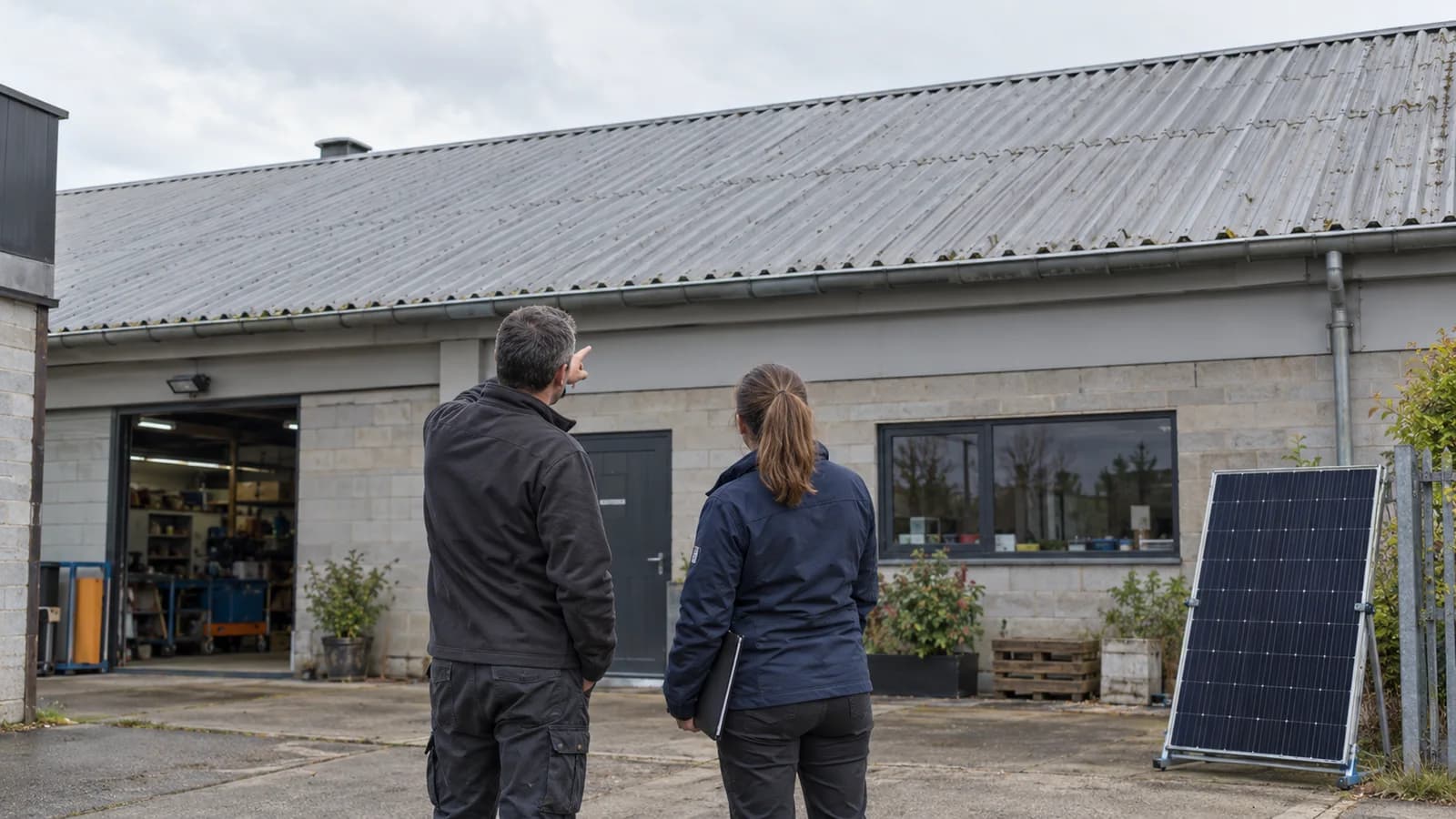
Lightweight solar panels can help when a roof has little spare load capacity. A quote that lists only the panel weight is unfinished, though. The supports, fixings, cable equipment and any ballast will go up there too.
Start with a qualified structural professional's assessment of the roof and proposed layout. Then compare complete panel-and-mounting packages for the same planned system size. An "8 kg panel" tells you the panel weight. A "no-drill system" tells you something about the attachment method. You still need the installed weight of the whole package.
How much spare capacity does this roof actually have?
The roof survey should say how much extra load the proposed solar installation can add. Existing roofing, insulation and equipment already use part of the structure's capacity. An old design rating may need reviewing if the roof has been altered or damaged.
A metal sheet that looks sound from below says little about the beams, connections or supports carrying it. Photos help identify the roof type and obvious concerns; they cannot establish structural capacity. If there are leaks, corrosion or damaged areas, include them in the survey rather than assuming a lighter panel will solve the problem.
The layout matters as well. Supports put weight at particular locations, and wind can pull upward on the array. Snow adds another load where it occurs. These checks belong in the structural assessment; a roof-wide average cannot settle them. The report should identify any limits on equipment positions so the supplier has something concrete to work with.
What will the complete solar installation weigh?
Look for separate weight figures for the panels and the equipment supporting them: rails, clamps, fasteners, roof-protection pads and cable supports. Any other equipment that stays on the roof counts too. A ballasted mounting system has an extra item: ballast, often blocks or slabs used to help hold the array against wind.
Here is an illustrative calculation, using invented round numbers rather than a product specification or a safe roof limit. A 10 kW proposal uses twenty 500 W panels weighing 20 kg each. The panels total 400 kg. If mounting and cable equipment add 80 kg, and the project design calls for 300 kg of ballast, the installed total is 780 kg: 400 + 80 + 300.
Twenty panels weighing 8 kg each would reduce the panel portion to 160 kg. That is a 240 kg saving on panels. The mounting and ballast still need their own figures for the new layout; changing panels does not let you carry over the old wind design or ballast calculation unchanged.
You may also see solar panel roof load written as kg/m²: kilograms per square metre. The quote should name the area used in that calculation. Panel surface, array footprint and whole-roof area give different averages. Two offers need the same area definition to be comparable, alongside the total weight and the loads at individual supports.
Which lightweight solar panels are worth comparing?
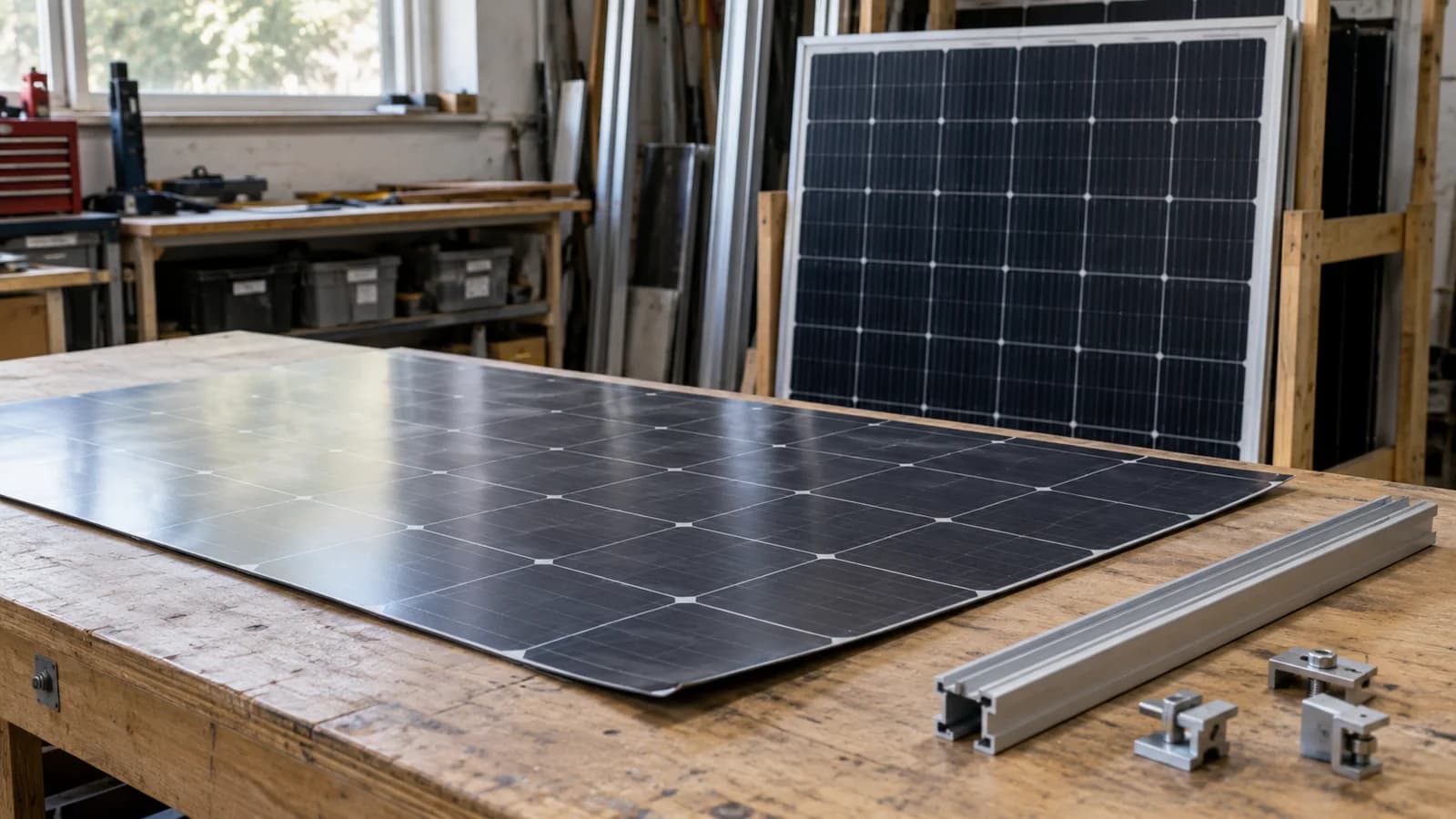
There is more than one way to make a panel lighter. Some retain glass and a frame; others use a glass-free construction. "Flexible" describes how a panel can bend, while "lightweight" describes its weight. The terms can overlap, but they do not tell you how the panel must be mounted.
Keep the model's weight and power rating beside each other when comparing offers. A smaller panel may be lighter simply because it produces less power; buying more of them can change the apparent saving. Its dimensions and installation manual will show what supports it needs.
- Option
- A lighter glass module
- What it offers
- A glass-panel option that may work with compatible conventional mounting
- What to check
- Weight and size, where supports or clamps may contact the panel, and total mounting weight
- Option
- A glass-free lightweight module
- What it offers
- A different module construction that can reduce panel weight
- What to check
- Supported roof surfaces and fixing methods, relevant wind, snow and fire test documents, and warranty terms
- Option
- A flexible module
- What it offers
- Limited bending for applications permitted by its manufacturer
- What to check
- How far it may bend, what backing or support it needs, and whether it is intended for permanent building-roof use
| Option | What it offers | What to check |
|---|---|---|
| A lighter glass module | A glass-panel option that may work with compatible conventional mounting | Weight and size, where supports or clamps may contact the panel, and total mounting weight |
| A glass-free lightweight module | A different module construction that can reduce panel weight | Supported roof surfaces and fixing methods, relevant wind, snow and fire test documents, and warranty terms |
| A flexible module | Limited bending for applications permitted by its manufacturer | How far it may bend, what backing or support it needs, and whether it is intended for permanent building-roof use |
These descriptions overlap. A glass-free module may also be flexible. They are not three interchangeable installation methods.
What holds the panels in place?
On a metal roof, the fixing method must suit the shape and material of the roof. A compatible seam clamp, rails attached to the building and a bonded module are different options. "Aluminum rails" in a quote does not tell you what carries the weight or what holds the system down in strong wind. The roof covering and its connections need checking too.
Flat-roof ballast deserves its own line in the quote. Renusol's FS Pro instructions tie the amount to building height, location, roof covering and wind loads. Its range includes a mechanically fixed variant that needs no extra ballast when fixed exclusively with the specified roof fasteners. That may offer a lighter route for a suitable roof. Removing ballast from a different design would require a new assessment.
For bonded lightweight panels, one useful question is: "Was this method designed for my roof surface?" The metal or membrane, its coating and the bonding materials have to suit the specified method. Sunman's published eArc manual, for example, names roof and bonding materials for its profiled-steel installation route. The current manual for the offered model should support the proposed combination; a general-purpose adhesive is no substitute.
There is also the repair question. If a bonded panel fails, or the roof below it needs work, who removes it and what needs replacing? Settle the removal method and roof-warranty responsibility while the equipment is still on paper.
What is still missing from the quote?
A line saying "mounting included" gives you little to compare. The offer needs a named system and a weight breakdown. If ballast is required but has not been calculated, there is no complete installed weight yet.
Give each supplier the same roof information and target system size, then compare these parts of the offer. Leave room in the decision for wind, snow and fire requirements, warranty terms, access and drainage. If no complete package fits the roof assessment, consider a smaller layout, strengthening the roof or another location before buying panels.
- Exact panel model, datasheet revision, quantity, rated system power and total panel weight.
- Named mounting system, full weight breakdown and any project-specific ballast, with the area basis for kg/m² figures.
- A roof layout showing equipment positions, access and drainage, checked against the structural assessment.
- Current installation instructions, confirmation of roof-material compatibility, and relevant wind, snow and fire test documents.
- Who is responsible for final design, roof warranty questions, installation and later removal or repair.
Questions about lightweight panels and roof weight
Are flexible solar panels always better for a roof with limited load capacity?
No. A flexible panel may be lighter, but it still needs a suitable roof and a manufacturer-supported installation method. Compare total installed weight, rated system size, mounting requirements and product documents with other lightweight options.
Does no-drill solar mounting add less roof weight?
Not necessarily. Some no-drill flat-roof systems use substantial ballast. Other roof-specific systems can avoid ballast, but suitability depends on the roof and the specified fixing method. Ask for the complete installed weight and attachment proposal.
Can lightweight solar panels avoid the need to strengthen a roof?
They may help a complete proposal fit within an assessed roof allowance, but that must be checked for the actual building and layout. A lighter panel cannot fix damaged structure or unsuitable connections. Do not assume that a lightweight label means reinforcement is unnecessary.
Related Articles
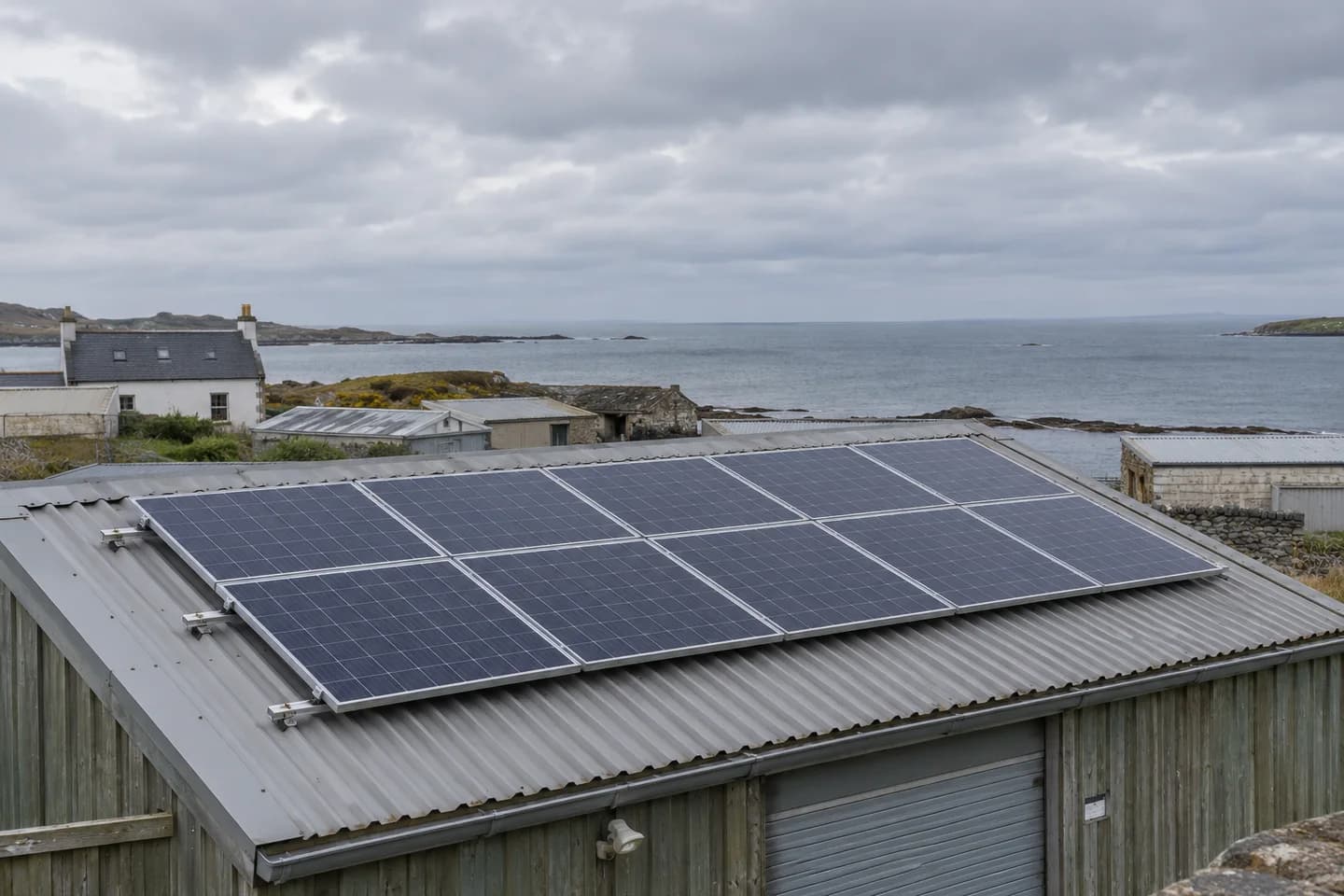
How do solar panels perform in clouds, heat, salt air and dust?
A panel's watt rating cannot describe every site. Learn what changes in cloudy, hot, coastal and dusty locations, and which details belong in a supply quote.
Read Article→
How to compare solar battery specifications before buying
Two batteries with the same kWh label can do different jobs. Here is how to read the numbers, check the missing details and compare like-for-like quotes.
Read Article→
Solar self-consumption and grid export: what equipment do you need?
For project buyers, installers and distributors: what to source as an equipment package, what to arrange locally, and what a useful supply quote should include.
Read Article→