
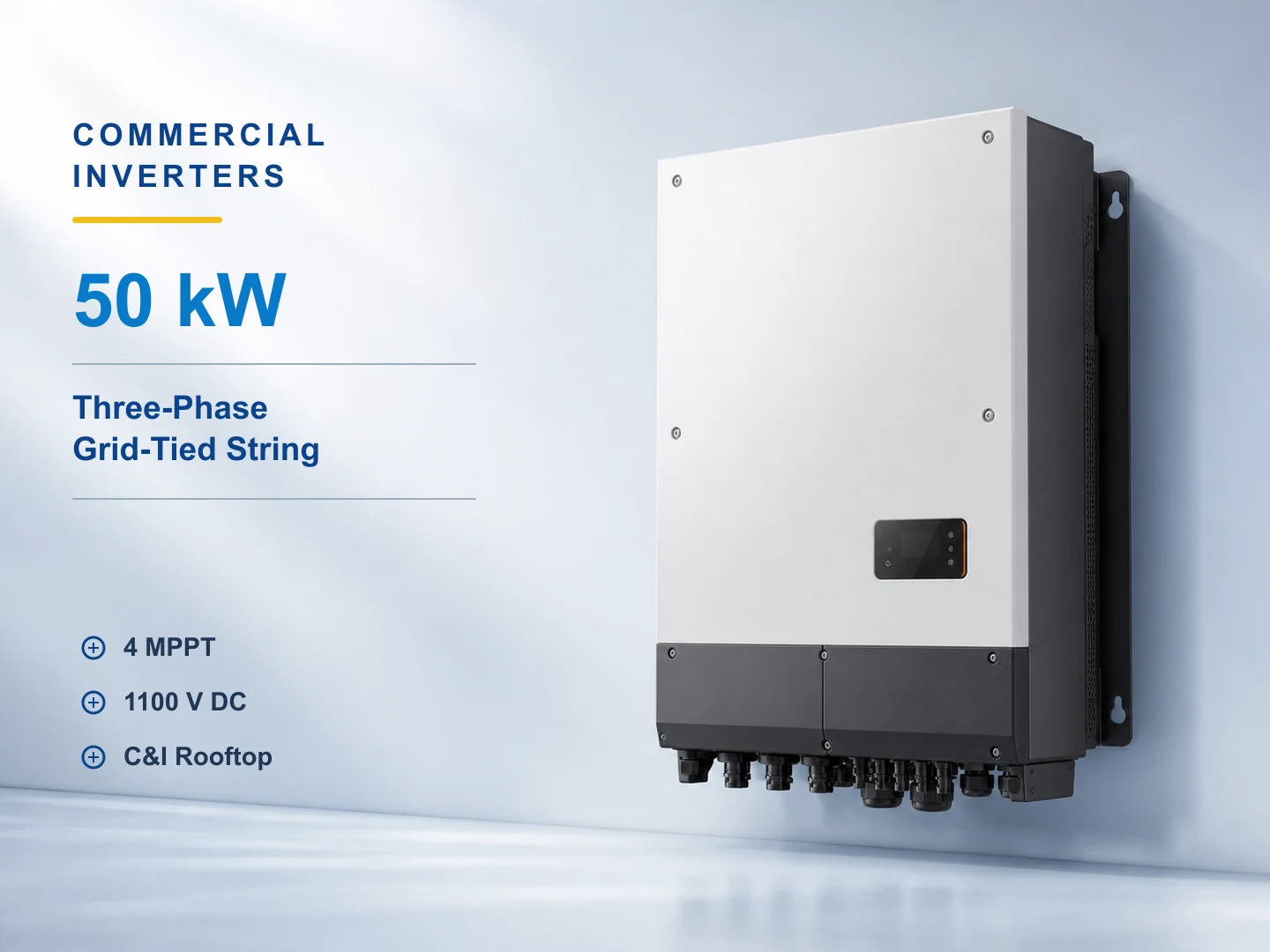
50kW Three-Phase Commercial String Inverter
50 kW three-phase grid-tied string inverter for factory roofs, logistics centers and large commercial solar sites.
Three-phase grid-tied string4 MPPT / up to 8 PV strings
View DetailsOpen a sourcing page to review its representative configuration, then confirm the factory model, exact electrical limits, optional functions, interfaces, documents, accessories, availability, warranty, and project acceptance conditions.
50 kW three-phase grid-tied string inverter for factory roofs, logistics centers and large commercial solar sites.
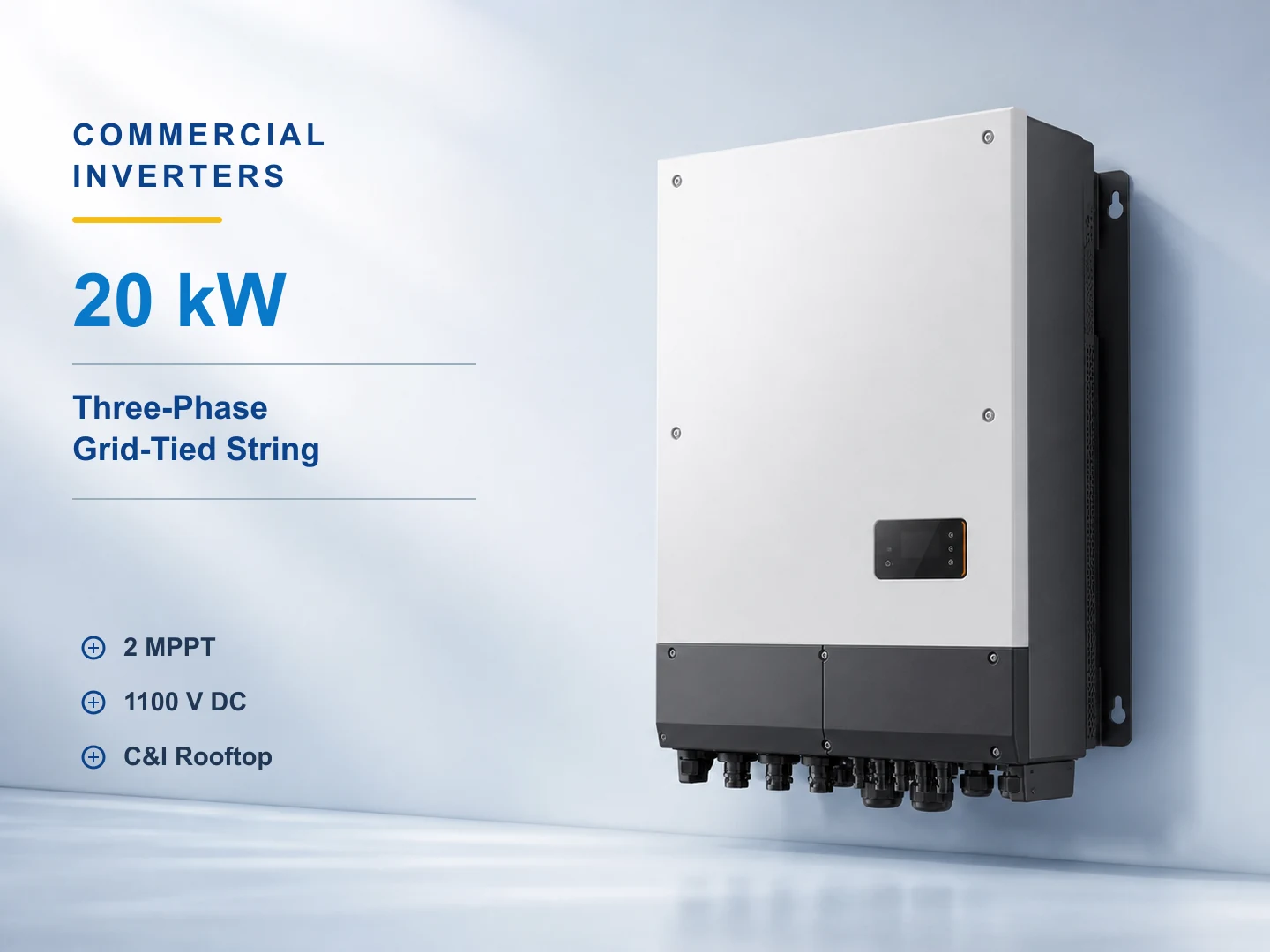
20 kW three-phase grid-tied string inverter for shops, warehouses, carports and small factory rooftops.
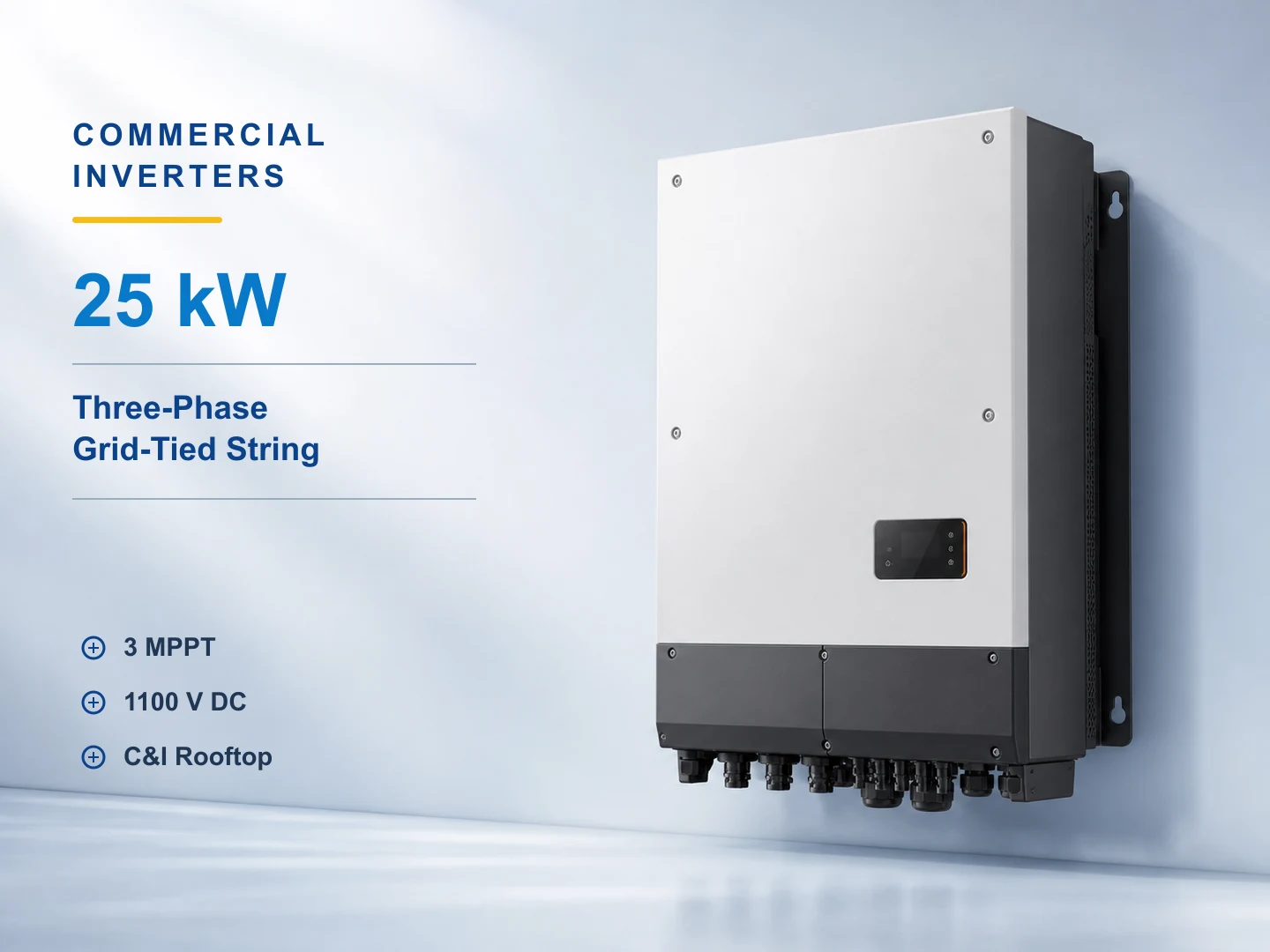
25 kW three-phase grid-tied string inverter for retail sites, schools and medium commercial rooftops.
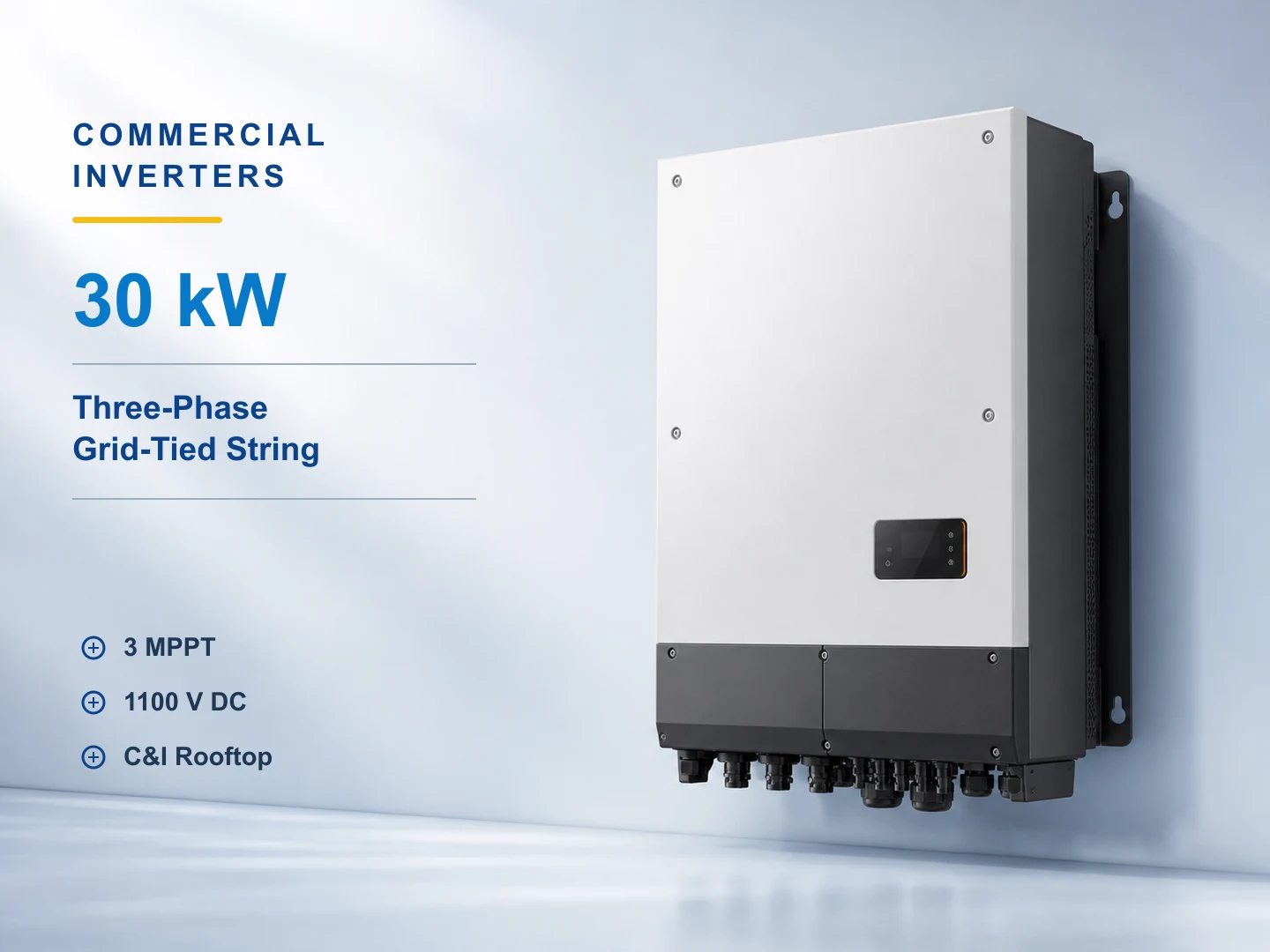
30 kW three-phase grid-tied string inverter for commercial rooftops, workshops and multi-building solar projects.
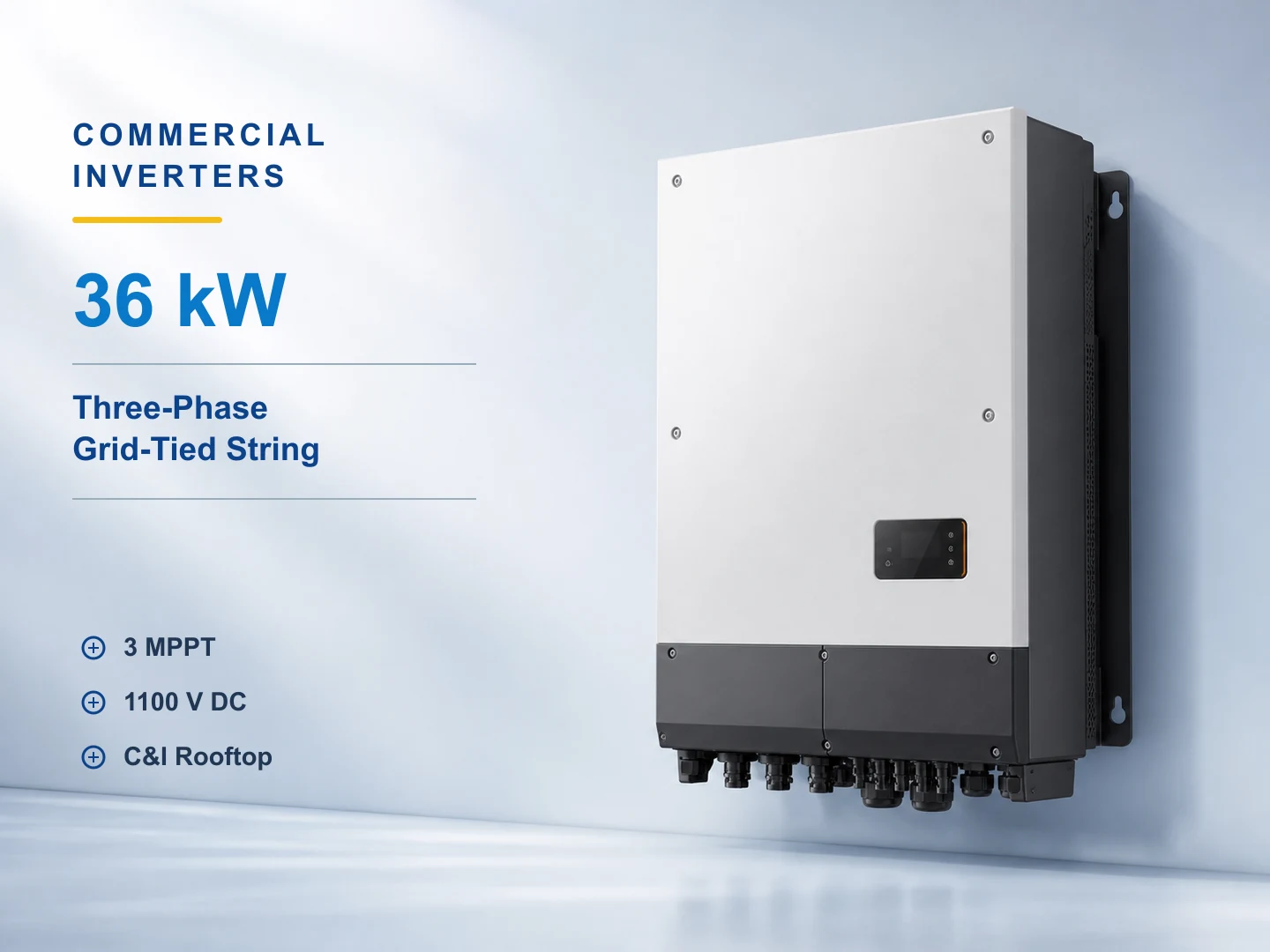
36 kW three-phase grid-tied string inverter for large retail rooftops, cold storage and light-industrial facilities.
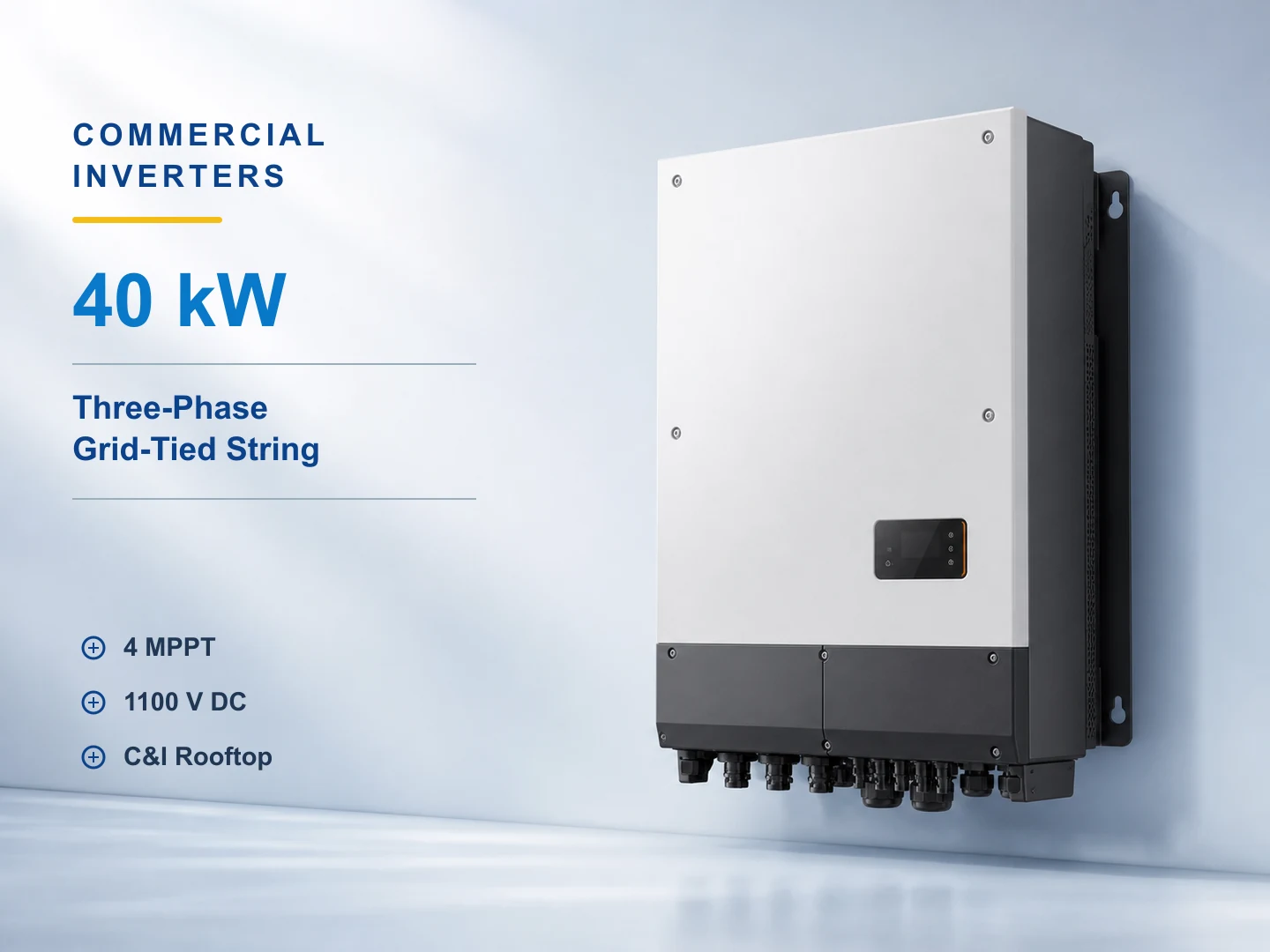
40 kW three-phase grid-tied string inverter for factories, warehouses and multi-orientation C&I rooftop systems.
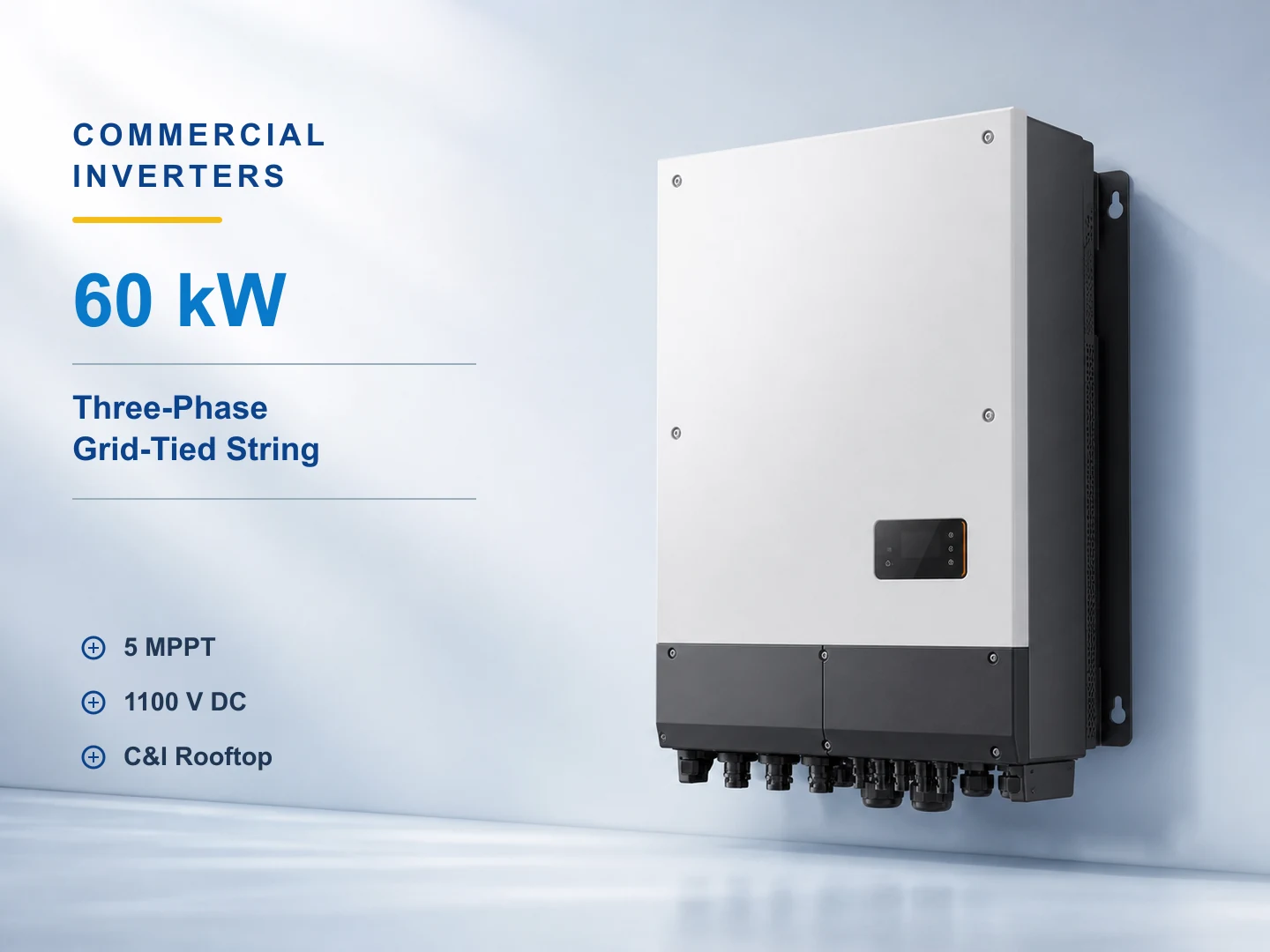
60 kW three-phase grid-tied string inverter for large factory rooftops, commercial parks and agricultural processing sites.
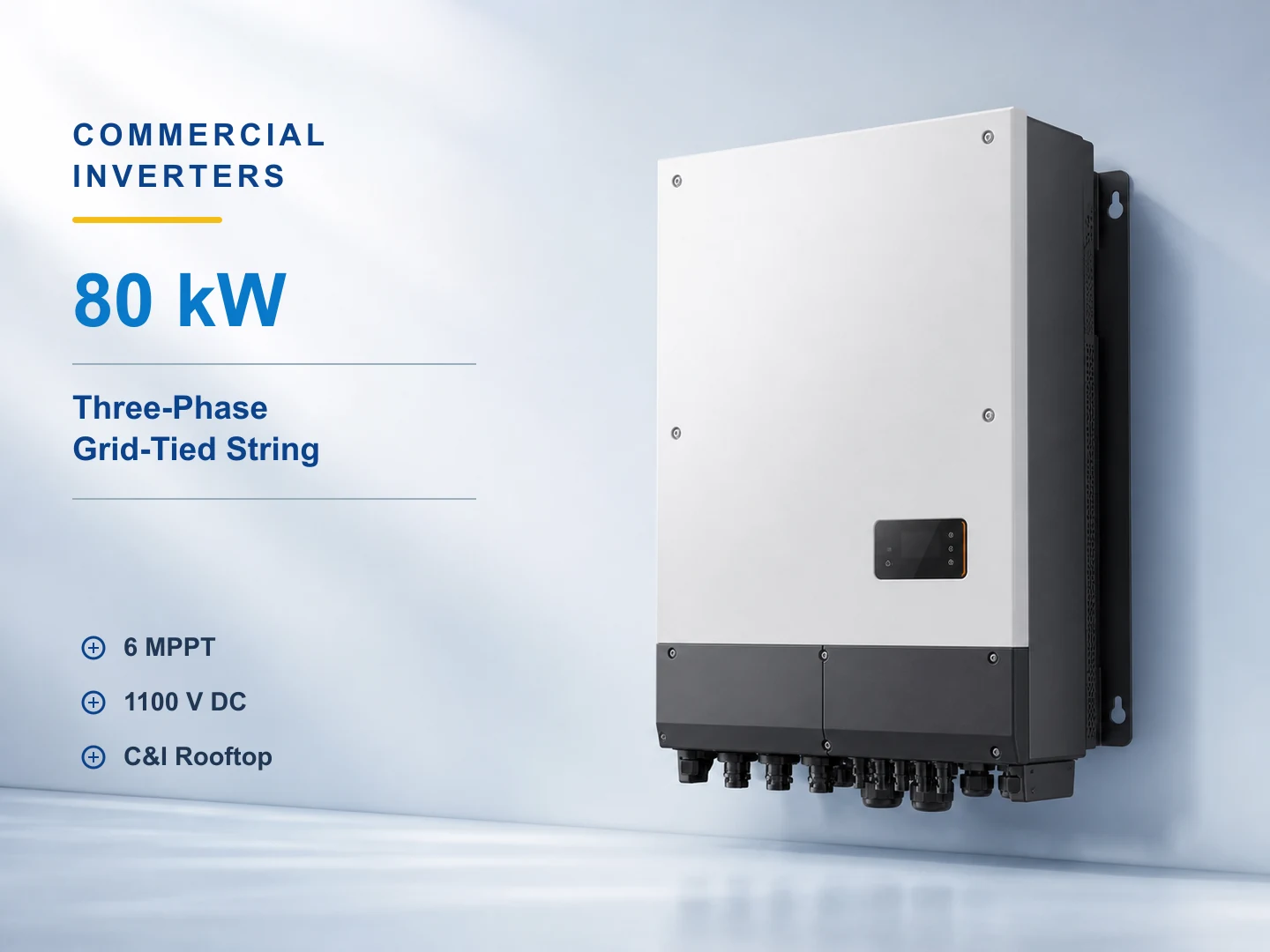
80 kW three-phase grid-tied string inverter for large industrial roofs, commercial parks and distributed ground-mount projects.
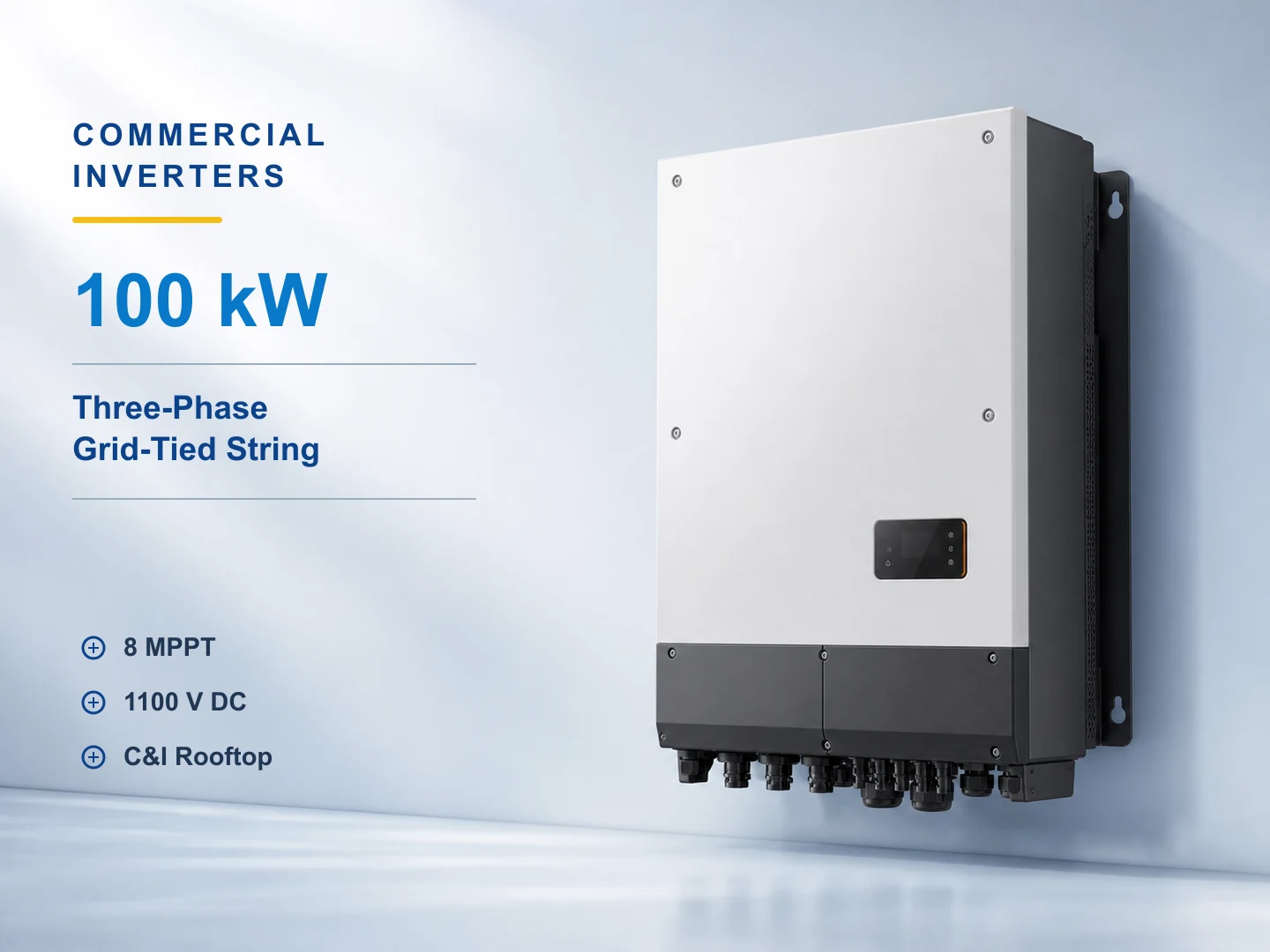
100 kW three-phase grid-tied string inverter for large commercial rooftops, industrial facilities and distributed solar plants.
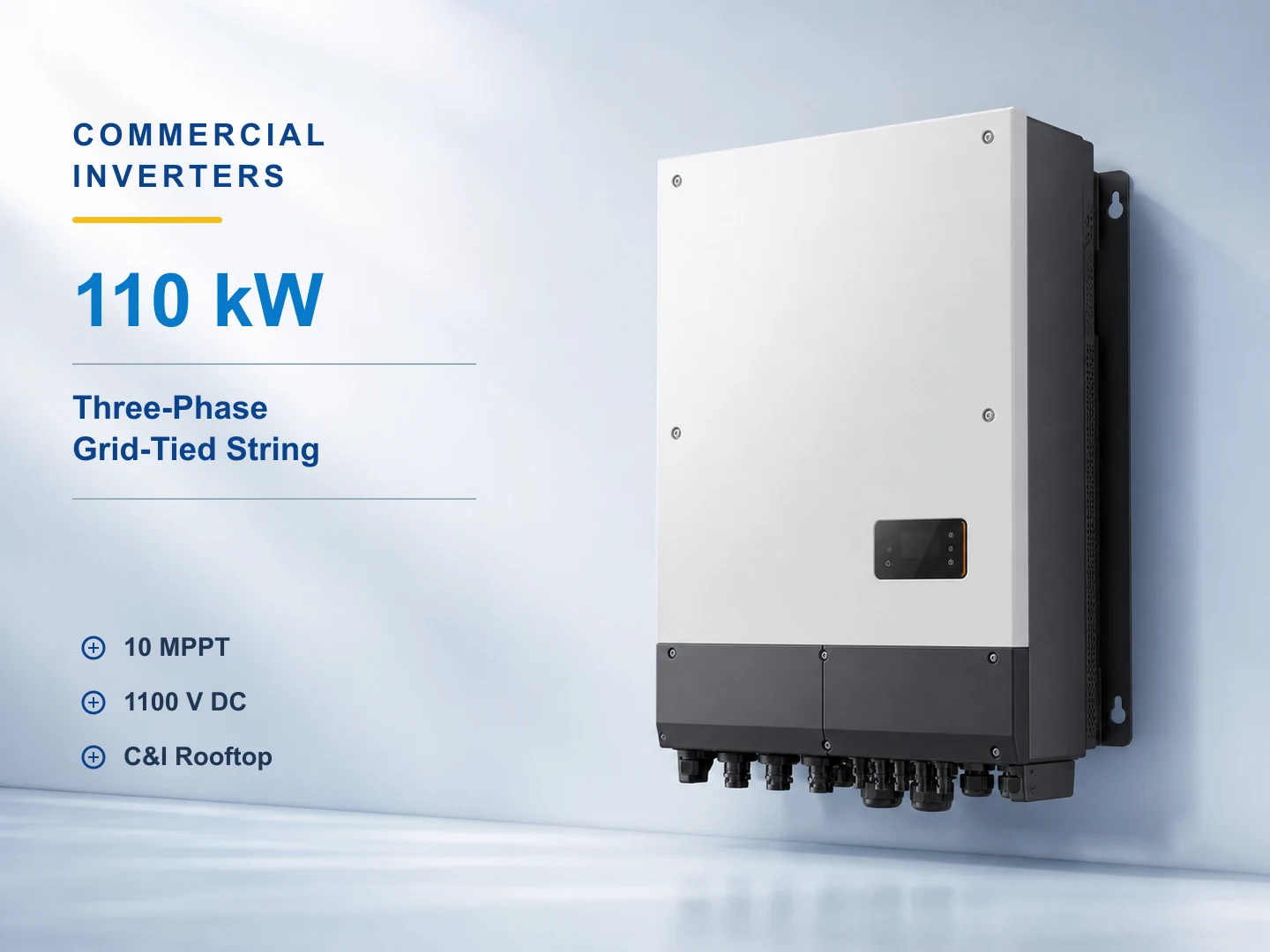
110 kW three-phase grid-tied string inverter for large factories, logistics sites and commercial solar portfolios.
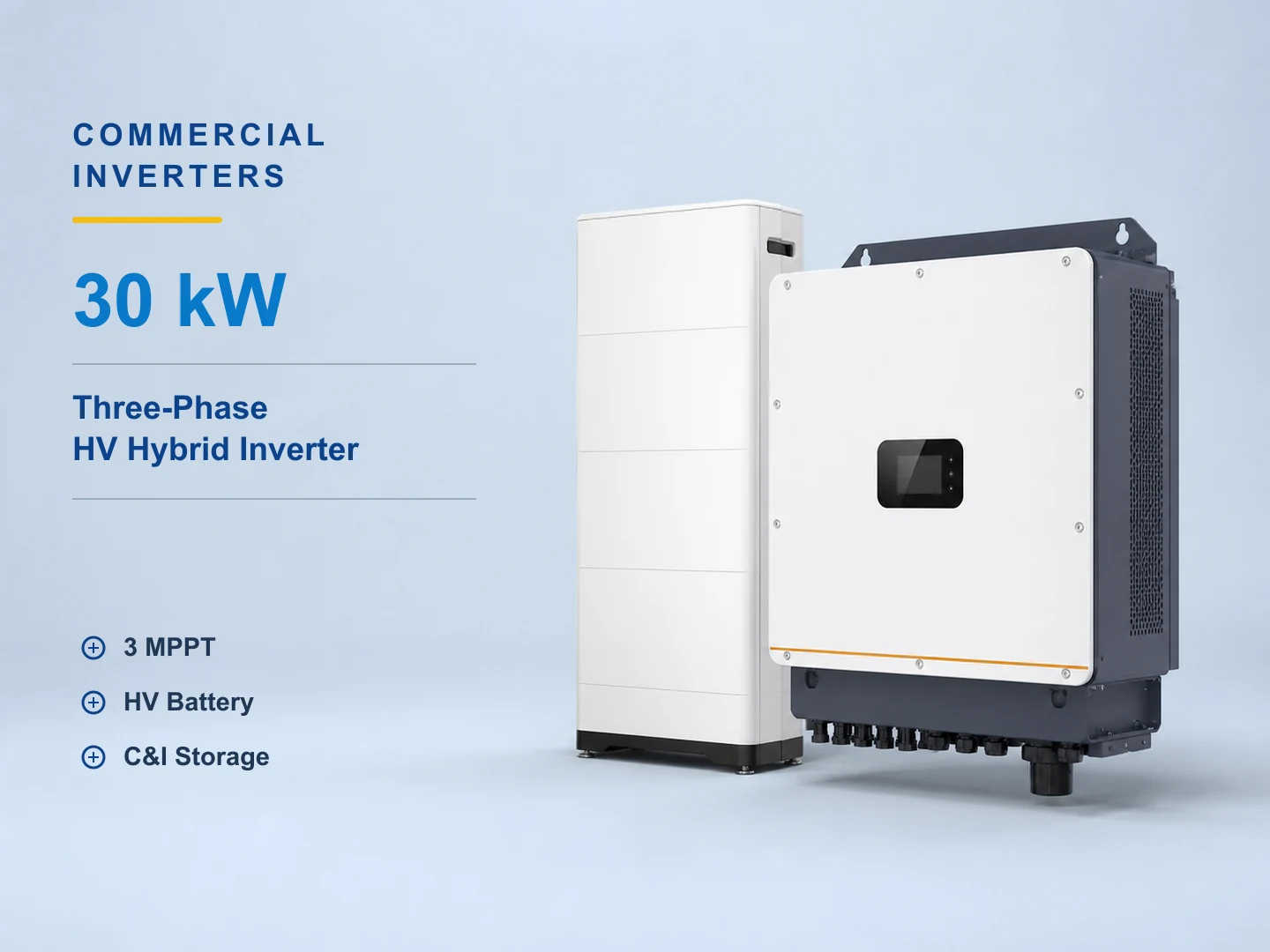
30 kW three-phase high-voltage hybrid inverter for commercial self-consumption, peak shaving and essential-load backup.
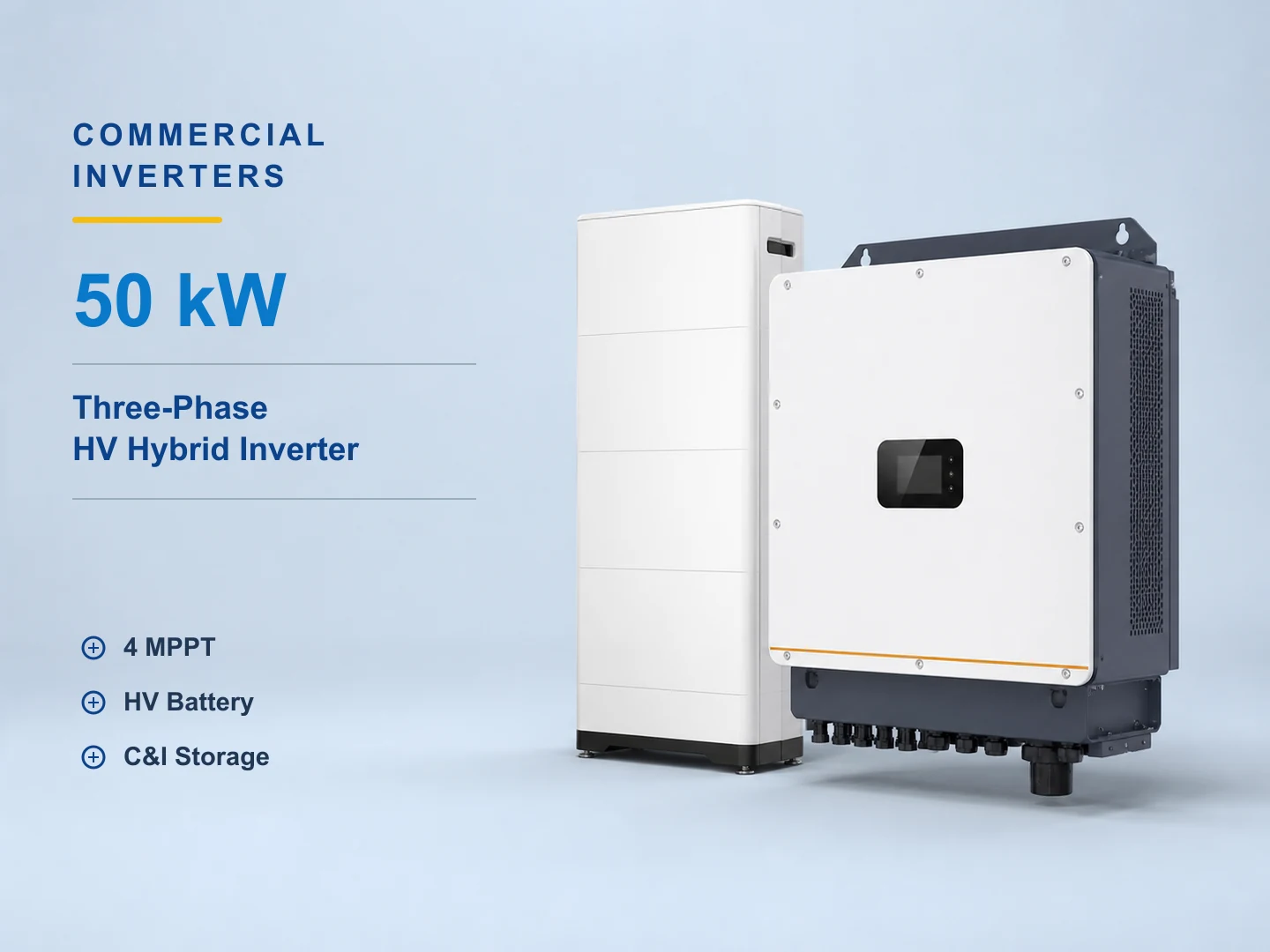
50 kW three-phase high-voltage hybrid inverter for factories, retail facilities and C&I storage projects with PV retrofit needs.
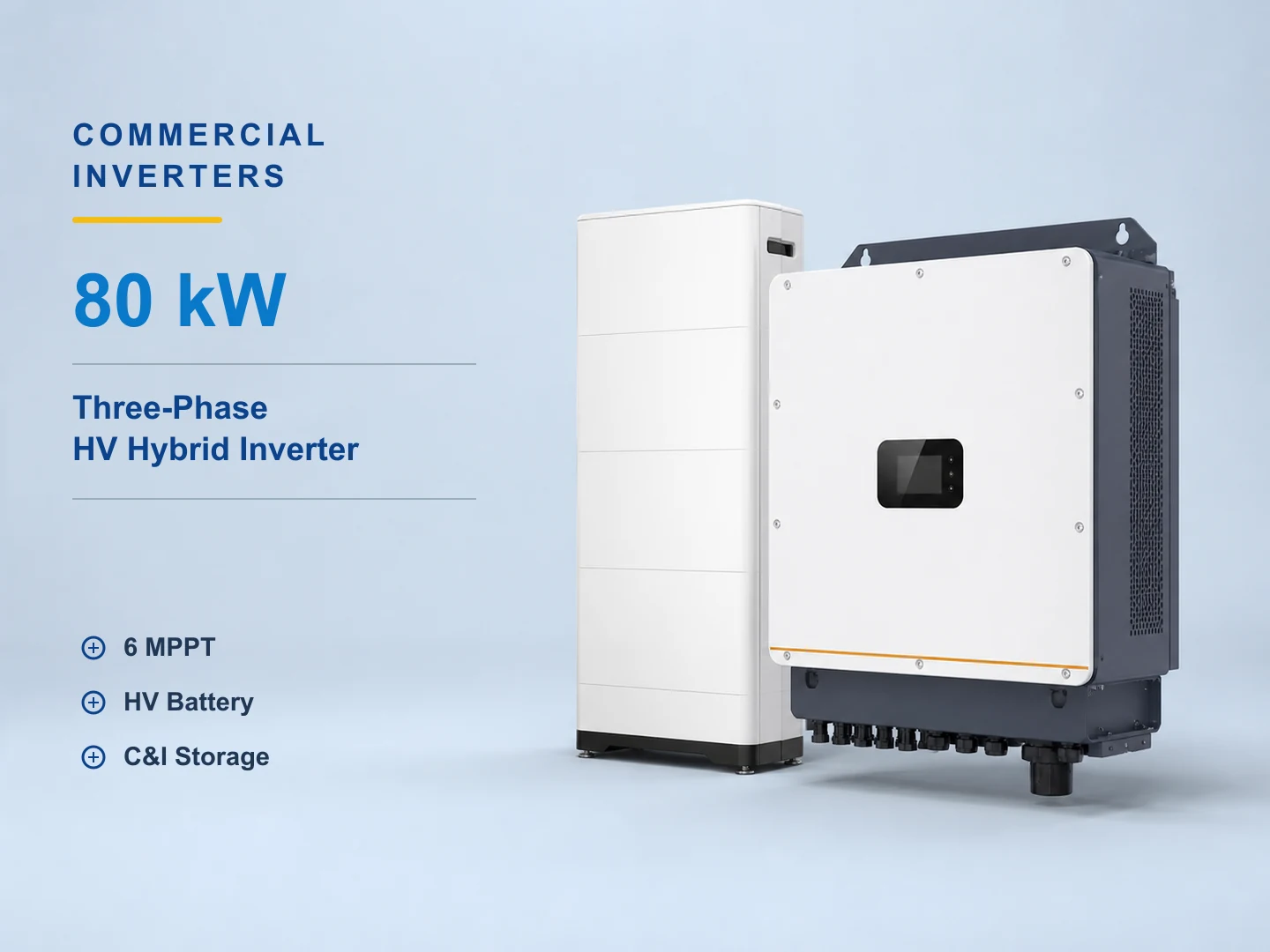
80 kW three-phase high-voltage hybrid inverter for large commercial storage, demand-charge management and microgrid-ready projects.
The current range covers scalable three-phase string platforms and battery-connected hybrid platforms. Power and MPPT count help shortlist a page, but site voltage, roof layout, load objective, grid route, transformer, protection, and storage scope determine the final architecture.
Five pages with two to four MPPTs for shops, schools, carports, workshops, warehouses, and smaller factory roofs. Confirm module current, export control, AC protection, and local grid settings.
Five pages with four to ten MPPTs for larger industrial roofs and distributed plants. AC cable, switchgear, transformer, communications, protection, and commissioning become project interfaces.
Three pages for commercial PV-plus-storage and essential-load objectives. Battery racks, BMS, charge/discharge power, generator, backup switching, parallel scope, and EMS require system confirmation.
A C&I shortlist should begin with the facility objective and electrical single-line concept. The inverter then has to fit the array, AC system, storage or backup scope, protection, monitoring, grid process, and project document register.
Define rooftop or ground-mount, self-consumption, export, storage, peak management, backup, retrofit, grid condition, operating schedule, and the responsible designer and approval parties.
Confirm three-phase voltage, frequency, output current, power factor and reactive-power requirements, breaker and cable sizing, LV bus, transformer or MV interface, and protection coordination.
Calculate maximum Voc, operating voltage, Isc, strings per MPPT, input-current limits, DC/AC ratio, roof orientations, shading, cable loss, isolation, surge protection, and connector scope.
For hybrid projects, match HV battery window, BMS, current and kW/kWh objective, PCS behavior, critical loads, switching or STS, generator, EMS, parallel limits, and commissioning.
Define data logger, Ethernet or cellular path, meter, export controller, plant interface, alarms, remote service, cybersecurity ownership, grid settings, and utility testing.
Confirm enclosure, corrosion and temperature, derating, clearance, AFCI or other options, manuals, certificates, grid-code evidence, warranty, drawings, labels, packing, spares, and training.
The displayed pages are representative sourcing configurations. Final manufacturer model, electrical ratings, optional functions, accessories, certificates, grid settings, integration responsibilities, availability, and commercial terms require project-specific confirmation.
The usable DC/AC ratio depends on module data, climate, orientations, clipping objective, input voltage and current, full-load MPPT range, grid limits, warranty, and the exact inverter.
Battery racks, BMS, EMS, switching or STS, protection, switchgear, transformer, HVAC, fire strategy, enclosure, cables, controls, commissioning, and site works may be separate.
AFCI, PID recovery, I-V scanning, generator input, parallel operation, backup output, export control, monitoring hardware, and grid support cannot be assumed from the power class.
Utility acceptance, certificate scope, transformer fit, final protection, price, stock, MOQ, lead time, warranty, accessories, and shipment readiness remain subject to review and quotation.
Use the rooftop solution for grid-tied context and the hybrid solution where storage or continuity is an objective. Both require exact site, electrical, document, and responsibility inputs.
Frame the roof, array, AC collection, transformer, protection, monitoring, approvals, mounting, documents, logistics, and project ownership around a grid-tied inverter shortlist.
Review rooftop solution
Define load objectives, PV, battery, inverter or PCS, EMS, backup, generator, switchgear, transformer, safety, integration, and delivery boundaries before quoting a hybrid platform.
Review hybrid solution
These answers help prepare a technical and commercial shortlist. Final array design, AC collection, transformer, storage integration, protection, utility approval, commissioning, and site safety remain project responsibilities.
Start with array capacity and layout, module current, string design, MPPT zoning, facility AC voltage, LV collection, transformer or MV interface, export objective, protection, service strategy, and utility process. Inverter kW alone does not determine the number of units or final project architecture.
No. Review module electrical data, climate, orientations, shading, clipping objective, inverter voltage and current limits, full-load MPPT range, grid export constraints, thermal derating, manufacturer design rules, warranty conditions, and the responsible engineer's energy model.
Not automatically. Confirm battery racks, BMS, EMS, charge and discharge limits, backup or STS arrangement, generator interface, protection, switchgear, transformer, cooling, fire strategy, enclosure, cables, communications, commissioning, and site works in the supply boundary.
Include site and destination, project objective, AC voltage and transformer concept, module and string plan, inverter quantity basis, MPPT and current requirements, export and grid route, battery or backup scope, monitoring and controls, environment, protection, documents, accessories, quantity, and delivery schedule.
Compare 13 displayed three-phase commercial inverter sourcing pages from 20 kW to 110 kW, including ten grid-tied string and three high-voltage hybrid platforms. Review the exact page and approved factory model for AC voltage, PV input, MPPT and string-current limits, battery and backup interfaces, transformer or switchgear coordination, export control, monitoring, protection, grid settings, and project documents.
Send the site objective, AC and transformer basis, PV array and strings, inverter role, battery or backup scope, monitoring, protection, grid route, environment, documents, quantity, and schedule. Final model, price, options, availability, and lead time are confirmed in the quotation.