
Solar PV & Energy Storage World Expo 2026 heads to Guangzhou in September
The 18th edition is scheduled for September 16–18 at the Canton Fair Complex. Here is what solar and storage buyers can usefully compare before the brochures pile up.
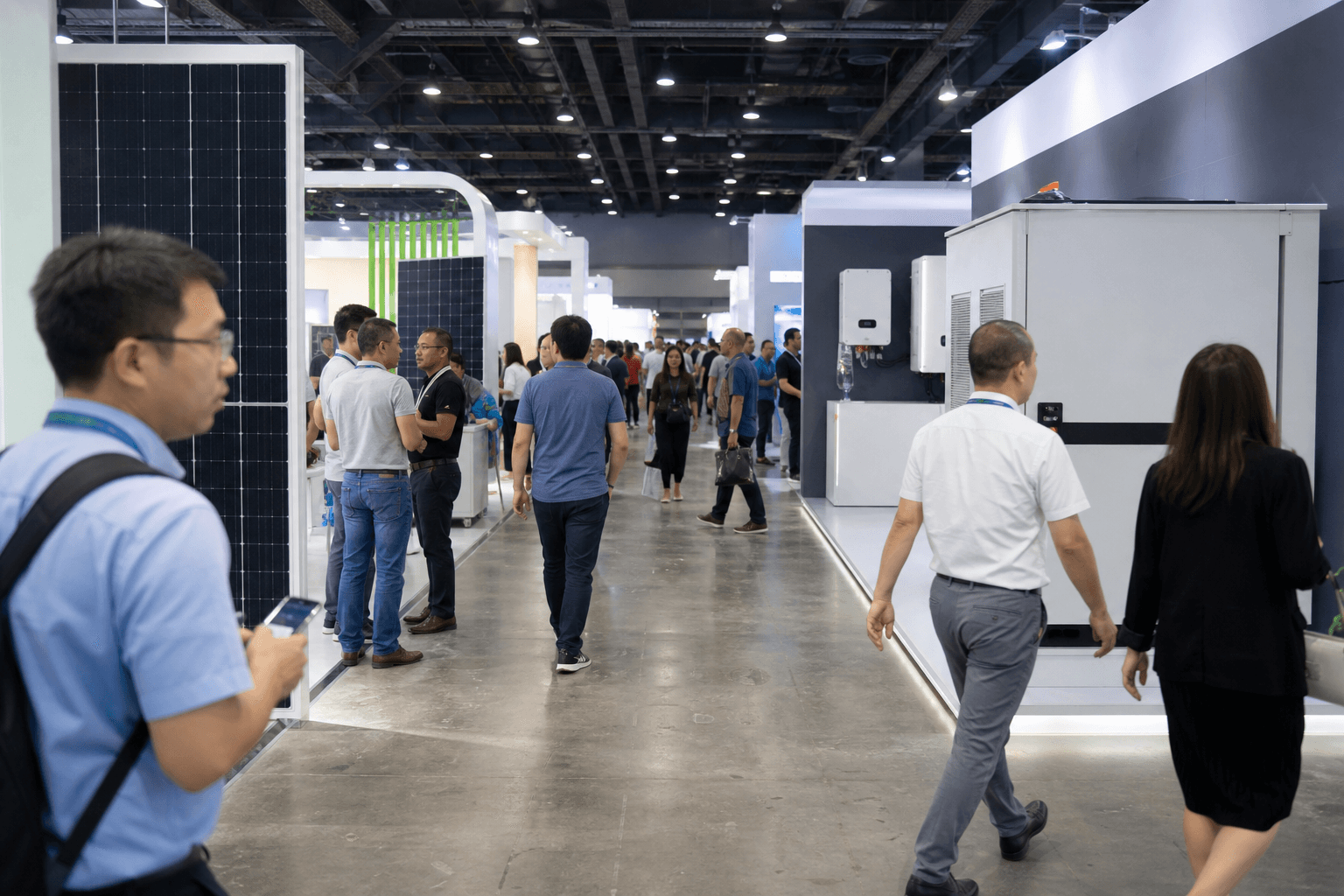
Trade-show announcements tend to lead with floor space and visitor forecasts. Buyers usually need a shorter answer: what can be compared in three days, and what still needs checking after the booth conversation?
The 18th Solar PV & Energy Storage World Expo 2026, also known as PV Guangzhou 2026, is scheduled for September 16–18 at Area B of the China Import and Export Fair Complex in Guangzhou. Guangdong Grandeur International Exhibition Group is the organizer. It says the show is planned around more than 2,000 exhibitors, 180,000 square metres and 200,000 visitors. Those are organizer forecasts for the upcoming event, not final attendance figures.
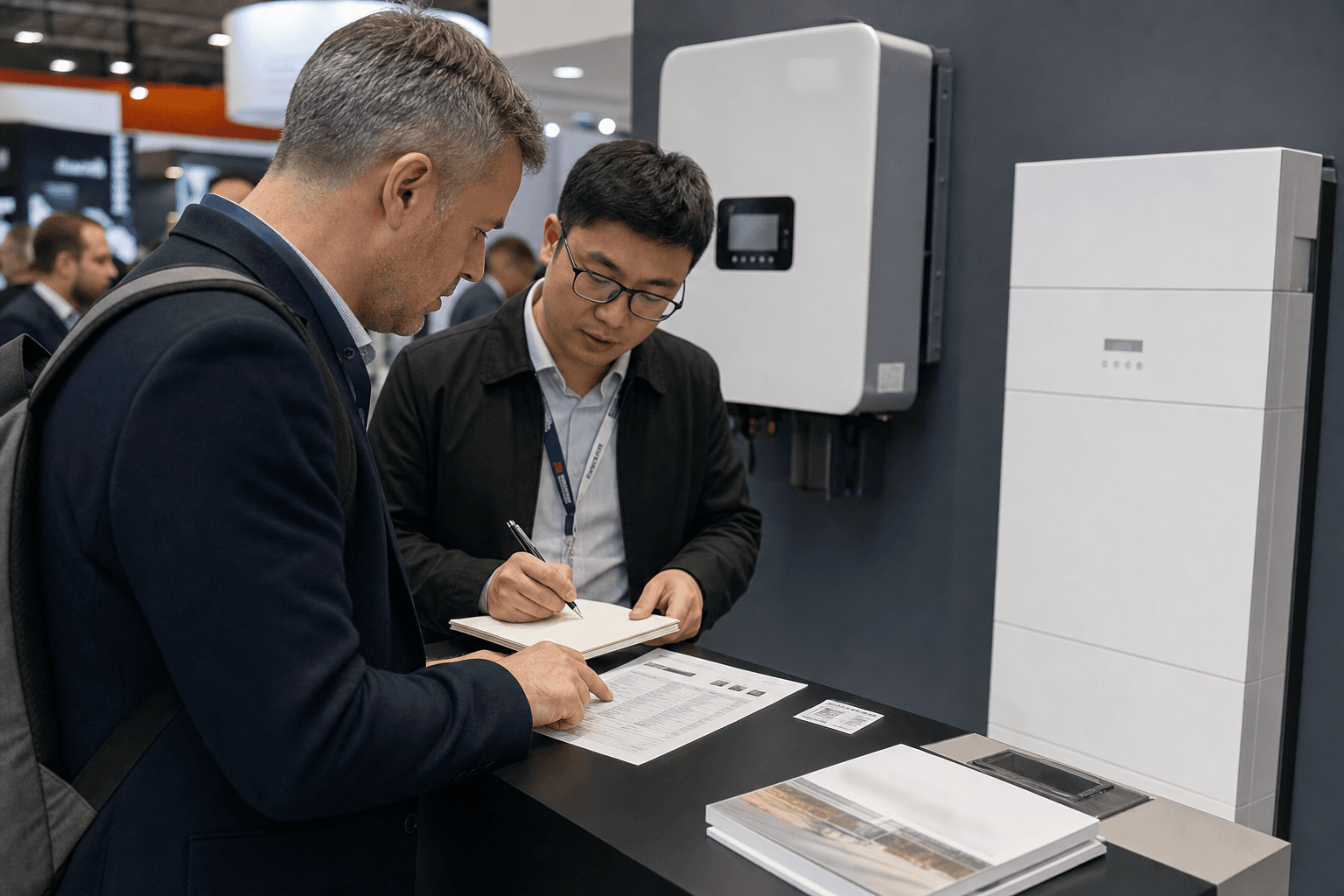
The exhibition brings several product categories relevant to distributors, EPC teams and equipment buyers into one venue. This preview is based on the organizer's published information rather than an on-site report. The two photographs are illustrative editorial images, not pictures from the 2026 event. A crowded exhibition hall can be useful, but only when the buyer arrives with a clear list of products and questions.
The event facts worth saving
The official schedule lists three exhibition days in Guangzhou: September 16 from 09:30 to 17:00, September 17 from 09:00 to 17:00, and September 18 from 09:00 to 14:30. Travel plans should still be checked against the official visitor-registration and event pages before departure, particularly if an appointment depends on a specific hall or exhibitor.
The organizer describes this as the 18th edition, following 17 previous events. Its published scope is wider than finished modules and batteries. It includes photovoltaic manufacturing equipment and materials, cells and modules, PV systems and projects, solar applications, and energy-storage products. The more detailed Chinese event outline also names inverters, mounting and tracking, cables, battery cells and packs, PCS, BMS, EMS, thermal management, fire protection, containers, residential storage and integrated commercial and industrial cabinets.
- Event: 18th Solar PV & Energy Storage World Expo 2026 (PV Guangzhou 2026).
- Dates: September 16–18, 2026.
- Venue: Area B, China Import and Export Fair Complex, Guangzhou, China.
- Status: upcoming event; visitor and exhibitor details should be rechecked on the official website before travel.
- Published scale: more than 2,000 exhibitors, 180,000 square metres and 200,000 visitors are organizer forecasts for the upcoming event.
Are the published exhibitor and visitor numbers final figures?
No. The figures published before the event describe the organizer's planned or expected scale. Final attendance should not be assumed before the exhibition has taken place.
What is actually worth comparing in the hall
A trade show is good for seeing scale, finish, connector layout, cabinet access, packaging samples and the people behind a product. It is less good at proving that a product is suitable for a particular country or project. A booth label may show a product family while the certificate, firmware, warranty and quotation refer to different variants. Record the full model code before treating two offers as comparable.
For modules, note the exact power bin, dimensions, weight, connector, frame and packing quantity rather than photographing the front face alone. For inverters, ask which model and firmware support the required grid, battery and backup functions. For storage, separate cell, module, rack, cabinet and complete-system offers; then ask who supplies the BMS, PCS, EMS, cooling and fire-protection scope. A neat cabinet at a booth does not by itself establish usable energy, output power, communication compatibility, transport status or local acceptance.
The best booth question is often not "What is your price?" but "Which exact model and document set does this quotation cover?" Price becomes meaningful after the configuration, quantity, packing, Incoterm and destination are on the same page.
- Photograph the product label and record the complete model code, not only the series name.
- Collect the current datasheet, manual and model-level document list; note their revision dates.
- For batteries and inverters, ask how compatibility is confirmed and which firmware or communication accessories are required.
- Write down what is included in a rack, cabinet or container offer and what remains for the local EPC or installer.
- Confirm quotation validity, minimum order quantity, packing, production lead time, Incoterm and destination assumptions separately.
Does meeting a supplier at the exhibition confirm product compliance?
No. It gives the buyer a useful starting point and a named contact. Model scope, document validity, compatibility, destination requirements and contractual terms still need a separate review after the meeting.
A simple visit plan beats a long supplier list
Trying to cover modules, inverters, residential batteries, commercial storage, mounting and manufacturing equipment in one pass usually produces a phone full of photographs and very few comparable offers. Divide the day by product decision instead. A distributor may spend one block on product range and packing, while an EPC buyer may focus on an approved bill of materials, system boundaries and the documents needed for a live project.
Take a one-page requirement sheet. It does not need to be a finished engineering package. It should state the destination, application, expected size or quantity, known electrical requirements and the open questions. Leave space beside each supplier for the exact model, contact, promised follow-up and missing evidence. That small discipline makes the post-show work much easier.
After the exhibition, compare written offers rather than memory. Bring every candidate back to the same basis: exact model, included scope, key assumptions, documents, packing and delivery term. If an answer remains verbal, mark it as open. The value of a Guangzhou solar exhibition is the number of relevant conversations it can start; the order still depends on what can be verified afterwards.
- Choose two or three product decisions for each day instead of attempting every hall category.
- Pre-register through the official event page and verify opening hours, hall access and appointments before travel.
- Carry a short requirement sheet and use the same questions with each shortlisted supplier.
- Separate products that are ready to quote from products that still need engineering or destination review.
- Set a post-show deadline for suppliers to send the exact offer and evidence discussed at the booth.
What should an overseas buyer bring to a Guangzhou solar trade show?
Bring a short project or procurement brief, the destination market, target quantity or system size, known model constraints and a list of documents or compatibility questions. It is enough to keep meetings focused without pretending the design is already complete.
Related Articles
Australia's solar and battery value is shifting beyond feed-in tariffs
Australian homeowners are increasingly judging solar and battery systems by energy timing, backup and household electrification—not feed-in income alone.
Read Article→