
Australia's solar and battery value is shifting beyond feed-in tariffs
Australian homeowners are increasingly judging solar and battery systems by energy timing, backup and household electrification—not feed-in income alone.
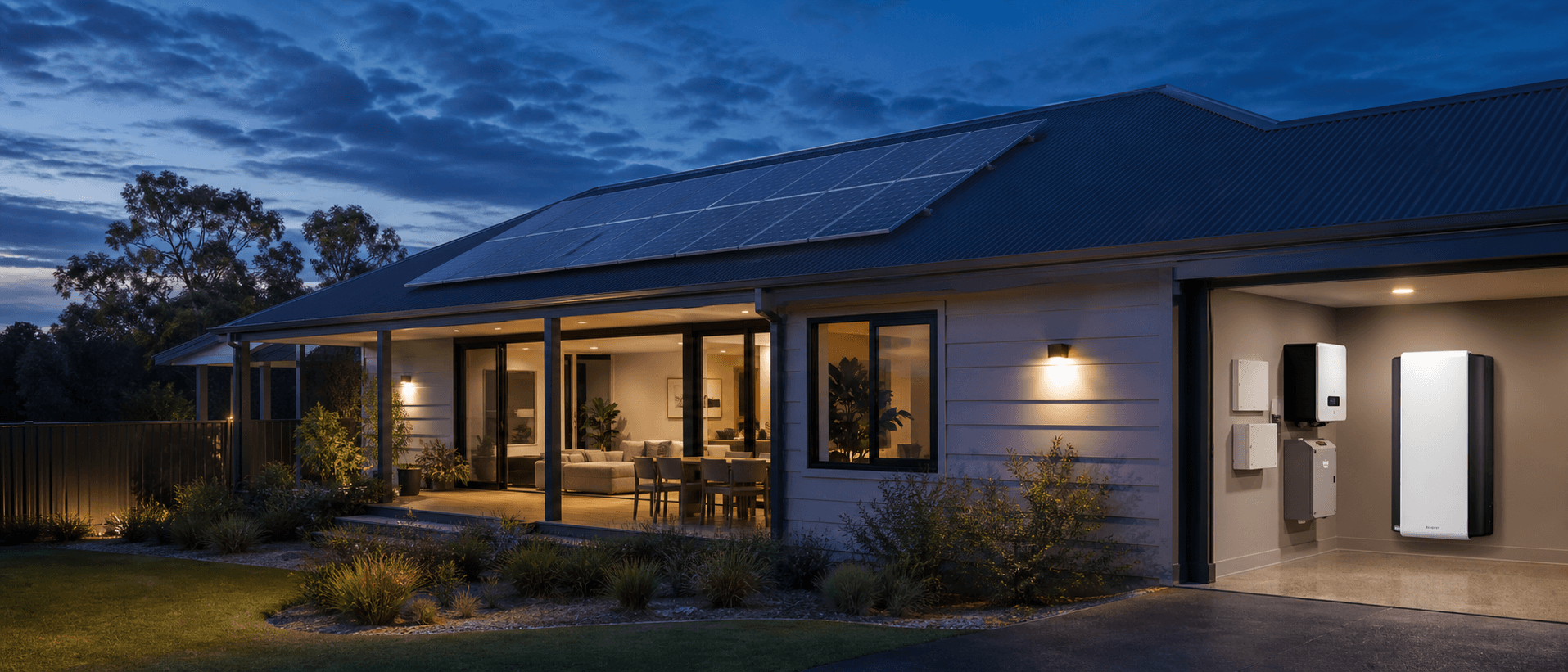
For Australian households considering solar and battery storage, the useful question is increasingly practical: how does a system perform once electricity tariffs, weather, household routines and backup needs are taken into account? The answer is not a single payback figure. It depends on how and when the home uses electricity, the PV output profile, the available tariff, the equipment configuration, the financing route, and the value placed on resilience during an outage.
The main shift is from export income to energy timing. Australian Government guidance notes that feed-in tariffs are generally lower than the price paid to buy electricity from the grid, so using solar energy directly or storing it for later can often create more value than exporting it. A battery may increase self-consumption, support time-of-use tariff strategies, reduce some peak-demand exposure, or enable participation in a virtual power plant. The relevant combination depends on the retailer plan, meter, household load profile, location, export limits, system settings and the exact equipment.
For installers, distributors and project supply teams, this changes the quality of the conversation. A request for a '10 kWh battery' is not yet a solution brief. The useful questions are when electricity is consumed, which loads matter during an outage, whether the customer can shift hot water, HVAC or EV charging, what tariff applies, and whether the proposed inverter and battery pairing supports the intended operating mode. The result is a configuration that can be reviewed—not a generic payback claim.
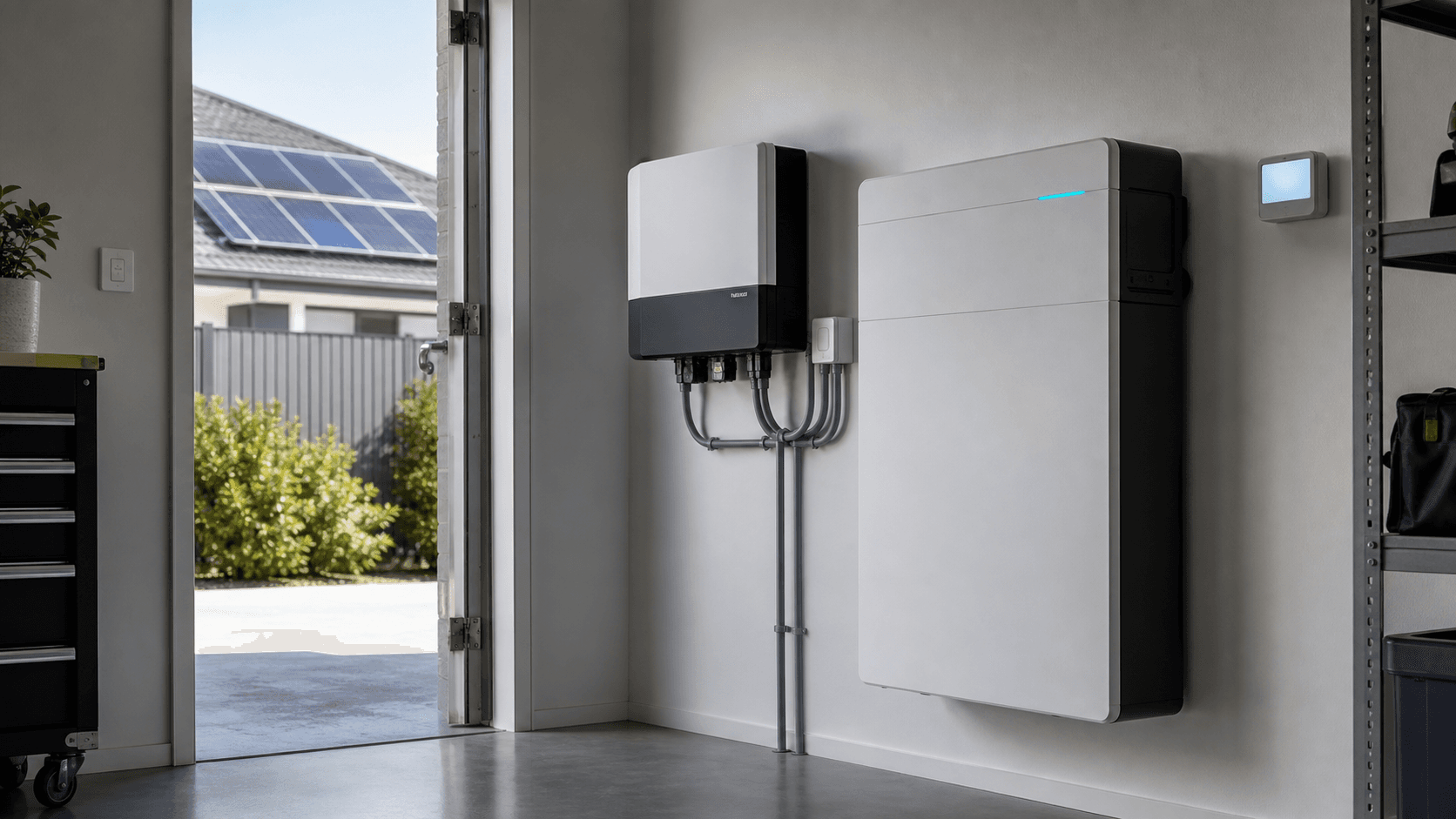
Why solar battery payback differs by household
System size, electricity plans, climate, load timing and operating expectations vary widely. That is why a single bill result cannot be used as a universal solar battery payback figure for Australia. A household with daytime air-conditioning, a pool, electric hot water, EV charging or frequent outages may value a system very differently from a household with low daytime use and limited roof area.
The useful question is not only how many years a system may take to pay back. It is how low feed-in value, self-consumption, evening or peak-period demand, battery control settings and backup capability affect the proposed configuration. The Australian Government also cautions that battery savings may not recover the battery cost within its warrantied lifetime. Any financial assessment should therefore state its tariff, load, system, financing and backup assumptions clearly.
- Treat any savings illustration as an assumption-based scenario, not as a guaranteed outcome.
- Separate solar generation, battery storage, export income, avoided grid purchases, backup value and any VPP revenue in the assessment.
- Check whether the headline result includes system cost, loan cost, rebates, supply charges, seasonal performance, equipment replacement and tariff changes.
- Do not compare two homes until their load timing, location, roof constraints, export conditions and resilience requirement are understood.
Is a low electricity bill proof that one battery size is right for every home?
No. A bill outcome can reflect tariff design, household load timing, weather, export settings, solar-array size, financing, electric appliances and system controls. Size the proposed system against the specific home and operating objective.
Design around load timing, tariff and backup scope
A residential battery is not only an energy-capacity decision. It is also a power, control and operating-mode decision. Capacity affects how much energy can be shifted; inverter and battery power limits affect what loads can run at the same time; and the backup architecture determines whether selected circuits or the wider home remain available during an outage. A larger nominal battery figure does not by itself define usable energy, backup duration or whole-home capability.
Time-of-use plans add another layer. In some Australian areas, electricity prices and feed-in credits vary by time of day. Depending on the plan and system capability, stored solar may be used during expensive periods, or a battery may charge during lower-cost periods. Those strategies should be checked against the customer's actual tariff, meter eligibility, retailer terms and reserve setting before they appear in a proposal. A virtual power plant can also change the operating rules, potential revenue, warranty considerations and the energy reserved for an outage.
- Obtain interval or bill data that shows when electricity is used, not only the annual kWh total.
- List the loads to be supported during an outage and identify their simultaneous and starting-power requirements.
- Confirm PV-array size, inverter AC output, battery usable-energy assumption, charge/discharge limits and exact battery communication pairing.
- Review the retailer tariff, export limit, smart-meter status, VPP option and the household's ability to shift flexible loads.
- State which decision remains with the responsible installer, designer, electrical contractor, retailer or local approval party.
Does a hybrid inverter automatically provide whole-home backup?
No. Backup scope depends on the exact inverter, battery, wiring architecture, output rating, protection design, reserve settings and the loads selected for backup. Confirm this at model and site level before ordering or installation.
A better solar battery RFQ for Australia
For a distributor, installer or procurement team, the practical response to changing household expectations is a better RFQ. It should describe the operating objective before it lists products. For example: reduce evening grid purchases, provide backup for selected circuits, support a future EV, manage a time-of-use plan, or retain a defined reserve for outages. This lets the technical parties evaluate a compatible module, inverter and battery route instead of quoting capacity in isolation.
Keep the commercial and technical record together. The quotation should identify the exact proposed models, known product documents, battery and inverter compatibility basis, included backup scope, assumptions that affect a financial illustration, packing or delivery route where relevant, and decisions that still require local confirmation. This protects the buyer from treating a preliminary configuration as a final engineering design or guaranteed savings outcome.
- Customer location, electricity retailer and tariff type, smart-meter status, and any export limit or VPP requirement.
- Recent interval data or a clear load schedule, including HVAC, electric hot water, pool equipment, EV charging and critical loads.
- Required backup circuits, desired reserve, expected outage behaviour and the party responsible for final electrical design.
- Exact inverter and battery models, communication/firmware compatibility, usable-energy and power assumptions, plus model-level documents.
- A transparent distinction between an initial solution brief, an equipment quotation, final installation design and any savings estimate.
Can a supplier provide a guaranteed solar battery payback period?
A responsible supplier can explain assumptions and provide product or configuration information, but actual savings depend on site conditions, tariffs, use patterns, installation quality, finance, weather and future energy prices. A projection should be treated as an assumption-based illustration, not a guarantee.
Related Articles
Solar PV & Energy Storage World Expo 2026 heads to Guangzhou in September
The 18th edition is scheduled for September 16–18 at the Canton Fair Complex. Here is what solar and storage buyers can usefully compare before the brochures pile up.
Read Article→