
Can you add a battery to a plug-in solar system with a microinverter?
Adding storage to plug-in solar sounds simple, but a battery cannot be treated like another panel. Check the supported power path, real surplus, cold-weather limits and local rules first.
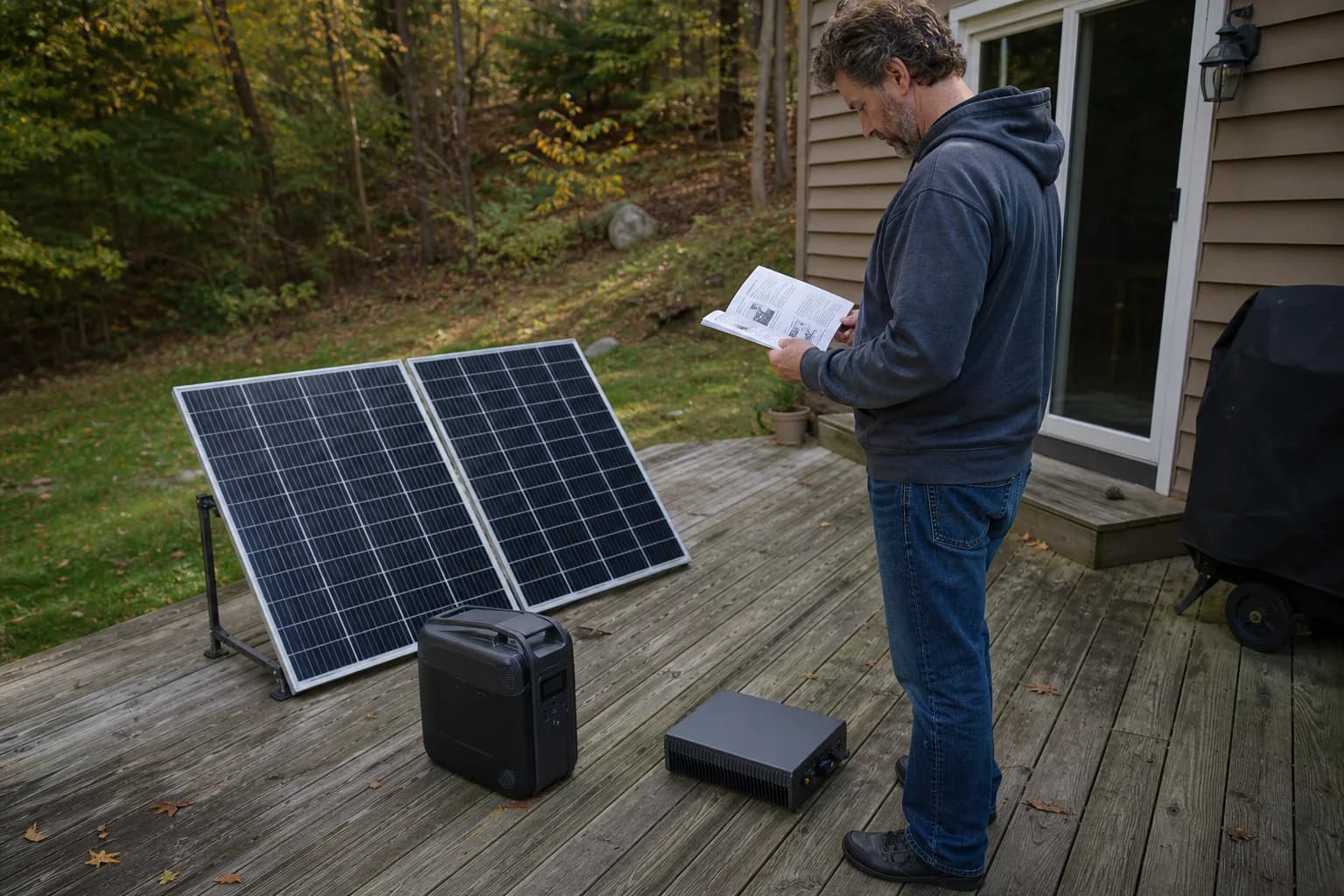
A small plug-in solar kit can cover part of a home's daytime background load. Then evening arrives, the panels slow down, and the owner starts thinking about a battery. The idea makes sense: save some midday solar and use it later.
The tempting shortcut is to put a generic 24V or 48V lithium battery between the panels and the microinverter. That may look reasonable on paper because the voltages seem to fit. It is not a safe compatibility test. A socket made for solar panels should not be treated as a battery input unless the manufacturer clearly supports that use for the exact products.
There are workable ways to combine small solar and storage. Some plug-in product families have their own matching battery or energy hub. A larger home may use a separately installed battery system. The right route depends on what the owner wants to achieve, how much solar is actually left after daytime use, and what local rules allow.
This article helps a non-specialist ask the right questions before buying equipment. It does not provide wiring instructions. The figures are teaching examples rather than household averages or promised performance, and the photographs are illustrative editorial scenes rather than customer installations.
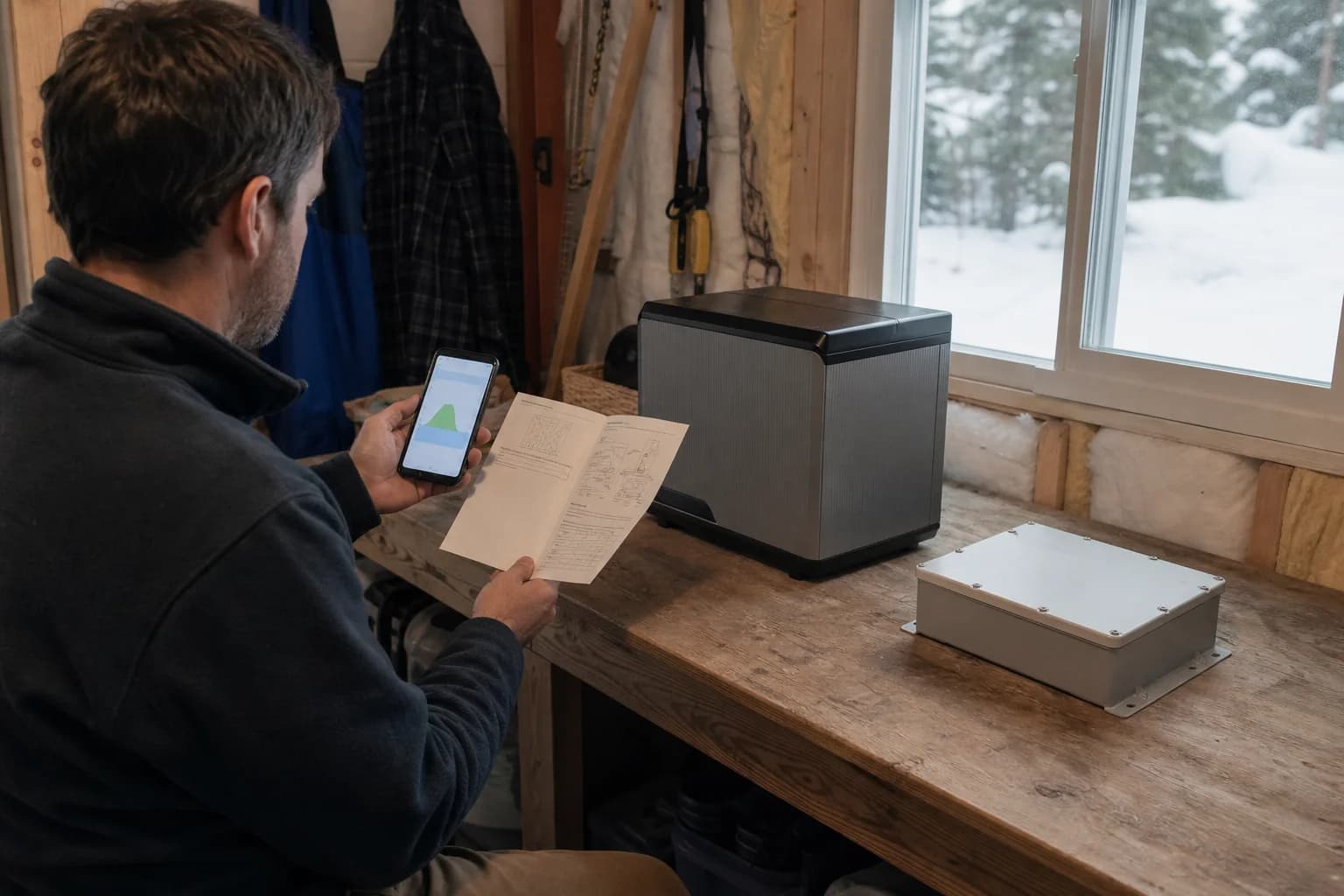
Start with the power path, not the battery size
Before comparing 2kWh and 5kWh batteries, find out how energy is meant to move through the products. Four arrangements can look similar in an online listing while doing very different jobs.
The simplest plug-in system sends panel power to a microinverter and then into the home's electrical system while the sun is available. It has no place to store energy. A manufacturer-supported solar-and-battery family adds a battery controller or energy hub that is designed to work with its named microinverter. A fixed home battery is another route, normally connected through the household wiring by responsible local professionals.
The fourth idea—a generic battery connected to a socket labelled for PV or solar input—should not be assumed to work. Matching one voltage number does not confirm the input behaviour, current limit, controls, protection, product listing or warranty.
- Possible route
- Panels → plug-in microinverter
- What it does
- Offsets part of the live household load while solar is available.
- What to confirm
- Panel input limits, permitted output, product listing and local notification rules.
- Possible route
- Panels → supported battery hub → matching microinverter
- What it does
- Stores solar and releases it through a product family designed to work together.
- What to confirm
- Exact compatible models, cables, software, regional features and output limits.
- Possible route
- Existing solar + separately installed home battery
- What it does
- Adds storage through a designed home-energy system connected through the household wiring.
- What to confirm
- Site design, backup scope, switchboard work, permits, listing and installation responsibility.
- Possible route
- Generic battery → microinverter solar input
- What it does
- An improvised route that may place a battery where the product expects a solar panel.
- What to confirm
- Do not proceed unless the exact manuals and manufacturer support explicitly approve the complete arrangement.
| Possible route | What it does | What to confirm |
|---|---|---|
| Panels → plug-in microinverter | Offsets part of the live household load while solar is available. | Panel input limits, permitted output, product listing and local notification rules. |
| Panels → supported battery hub → matching microinverter | Stores solar and releases it through a product family designed to work together. | Exact compatible models, cables, software, regional features and output limits. |
| Existing solar + separately installed home battery | Adds storage through a designed home-energy system connected through the household wiring. | Site design, backup scope, switchboard work, permits, listing and installation responsibility. |
| Generic battery → microinverter solar input | An improvised route that may place a battery where the product expects a solar panel. | Do not proceed unless the exact manuals and manufacturer support explicitly approve the complete arrangement. |
A product described as 24V, 48V, MPPT or app-controlled is not automatically compatible with another product carrying the same words.
Why a battery is not a solar panel that works at night
A solar panel's output moves with sunlight and temperature. The microinverter's solar input continually looks for a useful operating point; this is the job usually described as MPPT. A battery behaves differently. It holds a much firmer voltage and may be able to supply a large current very quickly.
That difference matters even when both products show overlapping voltage ranges. The microinverter needs to be designed for the source connected to it. Its controls must know what they are managing, and the battery needs its own approved charge and discharge control. A maximum current printed on one page of an app does not prove that every part of an improvised power path is protected.
The same caution applies to a software export limit. A setting that reduces power sent into the home may be useful for its stated purpose. It does not turn a solar input into a universal battery port. EcoFlow's current STREAM microinverter manual, for example, describes two PV inputs, solar-panel configuration and specified connection accessories. Anyone considering a STREAM system should check the exact regional manual and supported battery architecture rather than infer a battery connection from the PV voltage range.
Can a 24V battery be connected to a microinverter's solar input?
Do not assume so. A battery voltage that falls inside a PV-input range is not enough. The exact manufacturer documentation must approve the battery source, controls, current limits and complete connection route. If the manual only describes solar panels on that port, treat it as a solar input.
Can an app limit the battery to 100W or 200W?
Some systems can limit household or grid output, but the setting only does what the manufacturer says it does. It may not control an unsupported battery connected to a PV input or prove that the rest of the equipment is protected.
Work out the small load you actually want to cover
A home's background load is measured in watts. Energy used over time is measured in watt-hours or kilowatt-hours. Saying that a home uses 200 watts per hour mixes the two ideas. If the live load is 200W, it is using 200Wh every hour that the load stays at that level.
Here is a simple teaching example. Suppose the background load averages 180W for seven evening hours. The appliances use about 1,260Wh, or 1.26kWh: 180 multiplied by 7. The battery must deliver more than 1.26kWh internally because conversion uses some energy, the system may keep a reserve, and cold conditions can reduce what is available. A battery with 1.5kWh printed on the box is therefore not a promise of seven hours.
Now check the charging side. An 800W panel array does not produce 800W from morning to evening. Shade, clouds, panel direction, temperature and the household load all change how much is left for charging. If the house is already using nearly all the solar, adding a battery creates storage space without creating energy to fill it.
Use safe monitoring data rather than guesswork. A plug-in monitor can help with suitable individual appliances, while utility interval data or an already installed energy monitor can show the wider household pattern. Do not open a panel or improvise a meter connection. Record several ordinary sunny and cloudy days, then compare daytime surplus with the evening energy you want to move.
No export payment does not automatically make a battery worthwhile
When exported solar earns little or nothing, storing a real midday surplus can be useful. The word real matters. The battery cannot save energy that the panels did not produce or that the home already used.
Look at the daily curve. If solar rises well above the household load for several hours, storage may move some of that difference into the evening. If the panels only cover the background load on good days, the battery may spend much of its life partly charged. Adding more panels could create more surplus, but it may also change the product input limits, physical arrangement and legal output conditions.
The battery has losses and ages with time, so the comparison should use expected shifted energy rather than the battery label multiplied by 365 days. For a small system, simplicity can be valuable too. A supported integrated product may cost more than loose parts while avoiding a chain of adapters, unclear warranties and controls that were never designed to work together.
Maryland plug-in solar users should check the 391W rule
Online discussions about plug-in solar in Maryland may mention 1,200W. The enacted text needs a closer read. As of September 1, 2026, Maryland Chapter 353 defines a portable solar energy generating system as a movable PV device connected through a standard electrical outlet and limited to supplying no more than 391W back to the building's electrical system. It must be certified by UL or an equivalent nationally recognized testing laboratory.
The 391W figure describes the maximum power supplied back to the building, not automatically the total nameplate wattage printed on the panels. A system may use controls that change its output, but the complete product still has to satisfy the law and its certification. The same section limits residential use to one portable system per electric meter. It also requires the customer to notify the electric company after installation and provide certification of the safety features and maximum generating capacity.
This is an easy place for a buyer to follow an older bill version, a retailer's summary or a rule from another state. Check the current Maryland text, the utility's process and the exact listed product before ordering. A loose battery, controller and microinverter assembled from separate listings should not be assumed to become one certified plug-in system.
Does Maryland allow a 1,200W plug-in solar system?
Do not plan from that number. The final Chapter 353 text reviewed on September 1, 2026 defines the covered portable system by a maximum of 391W supplied back to the building's electrical system. Check current law, utility information and the exact product before purchase because online discussions may refer to earlier wording.
Cold weather affects the panels and the battery in different ways
Cold sunshine can raise a solar panel's open-circuit voltage. A string that stays below a controller's voltage limit in mild weather may rise higher on a very cold morning. The check needs the exact panel data, the number of panels connected together and a realistic local minimum temperature. It cannot be settled by adding the room-temperature voltage printed in an online listing.
The battery has a different cold-weather problem. Many lithium iron phosphate batteries restrict charging when the cells are cold. The exact threshold varies by product. Some batteries have approved internal heating; others rely on their control system to stop charging until the cells warm up. A self-heating label is useful only when the manual explains when the heater starts, where its energy comes from and what temperatures the battery is approved to handle.
Bringing a battery indoors for winter is not a universal answer. The product still needs an allowed location, suitable clearances and an installation that follows its instructions and local requirements. Choose the site and battery together instead of buying an outdoor battery and solving the temperature problem later.
Is a self-heating LiFePO4 battery worth buying?
It can help when the battery must remain in a cold approved location, but the label alone is not enough. Check the heater's start conditions, power source, temperature range and the battery's normal low-temperature charge protection. It does not make every outdoor or indoor location acceptable.
A battery does not automatically make plug-in solar work in an outage
An ordinary grid-connected microinverter normally stops supplying the home when the grid is down. That protects utility workers and prevents an uncontrolled part of the house from staying live. Putting a battery on the solar side does not remove this behaviour.
Outage power needs a system designed to operate separately from the grid. Depending on the product, that may be a dedicated outlet on a portable battery, a named backup circuit or a larger home battery system with approved switching and controls. These options are not interchangeable. Ask what remains powered, how much power is available, how long the stored energy may last and whether solar can recharge the battery while the grid is absent.
If the aim is only to move midday solar into the evening, a plug-in solar-and-storage system may be enough. If refrigeration, a well pump or home circuits must stay available through an outage, treat that as a backup project from the beginning rather than expecting an add-on battery to create the function later.
Will plug-in solar keep working during a blackout after a battery is added?
Usually not unless the complete product is specifically designed for outage operation. A normal grid-connected microinverter shuts down with the grid. Backup needs a supported isolated output or a properly designed home backup system.
A short buying brief prevents an expensive experiment
The first message to a seller does not need electrical drawings. It should describe the products already owned, the small load to be covered and the reason for adding storage. Ask the seller to show the supported power path in the current manufacturer documents.
Include the country, state and utility because plug-in limits and product versions vary by region. If the home is in a cold area, state the lowest normal winter temperature and where the battery would be kept. If outage power matters, say which appliances must run instead of using the broad phrase whole-home backup.
This information is enough to separate a supported product match from a collection of parts that happen to share a voltage number. Final electrical design, installation, product acceptance and local compliance remain with the responsible manufacturer channel and qualified local parties.
- Exact solar panel and microinverter model codes, quantities and current manuals.
- Existing panel arrangement and any planned expansion, without assuming it is already permitted.
- Measured background load, evening energy target and recent solar-surplus information.
- Storage goal: evening self-use, portable appliance power or household outage backup.
- Country, state, utility, installation location and winter temperature range.
- Requested battery, controller and accessories, with written model-level compatibility evidence.
Related Articles
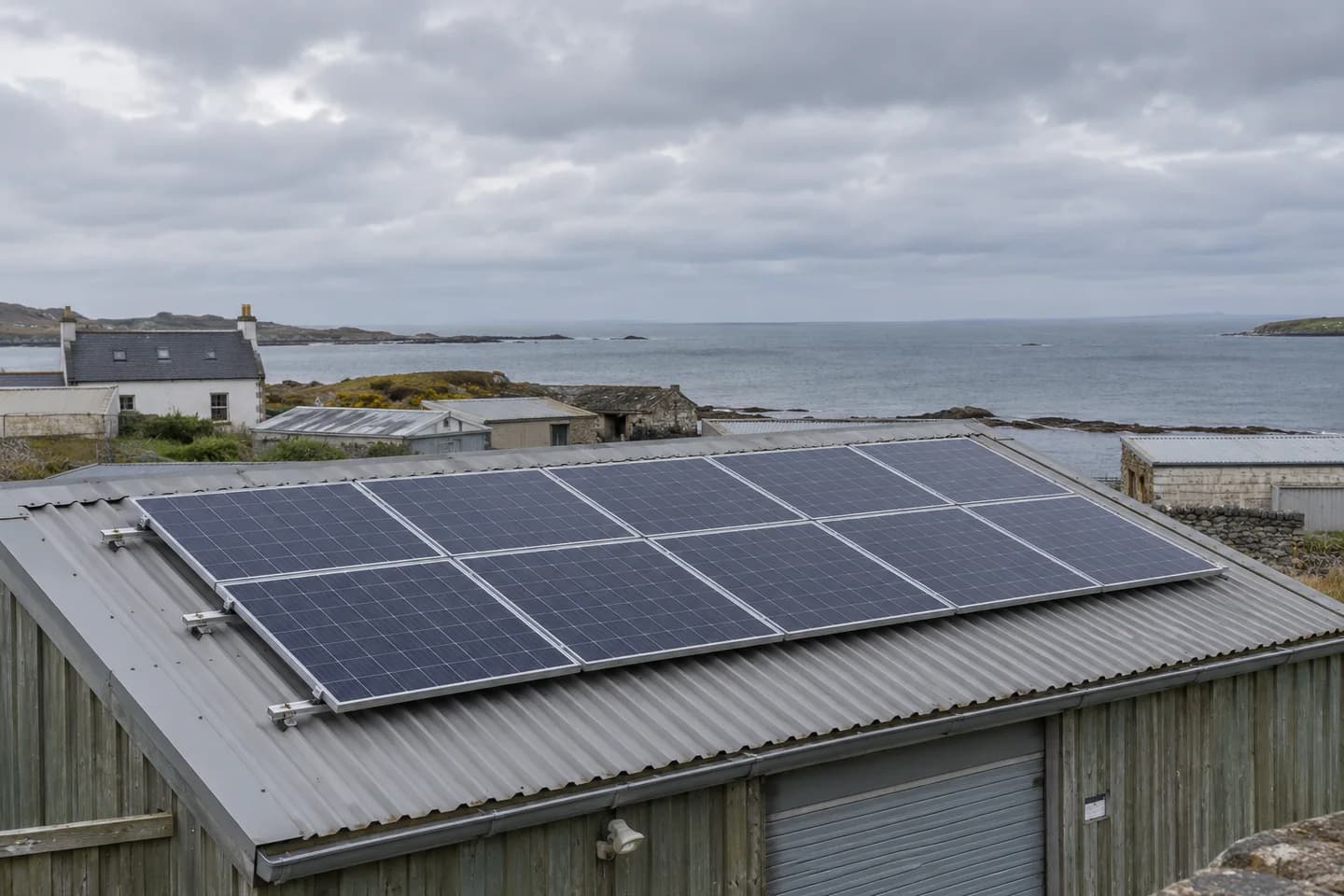
How do solar panels perform in clouds, heat, salt air and dust?
A panel's watt rating cannot describe every site. Learn what changes in cloudy, hot, coastal and dusty locations, and which details belong in a supply quote.
Read Article→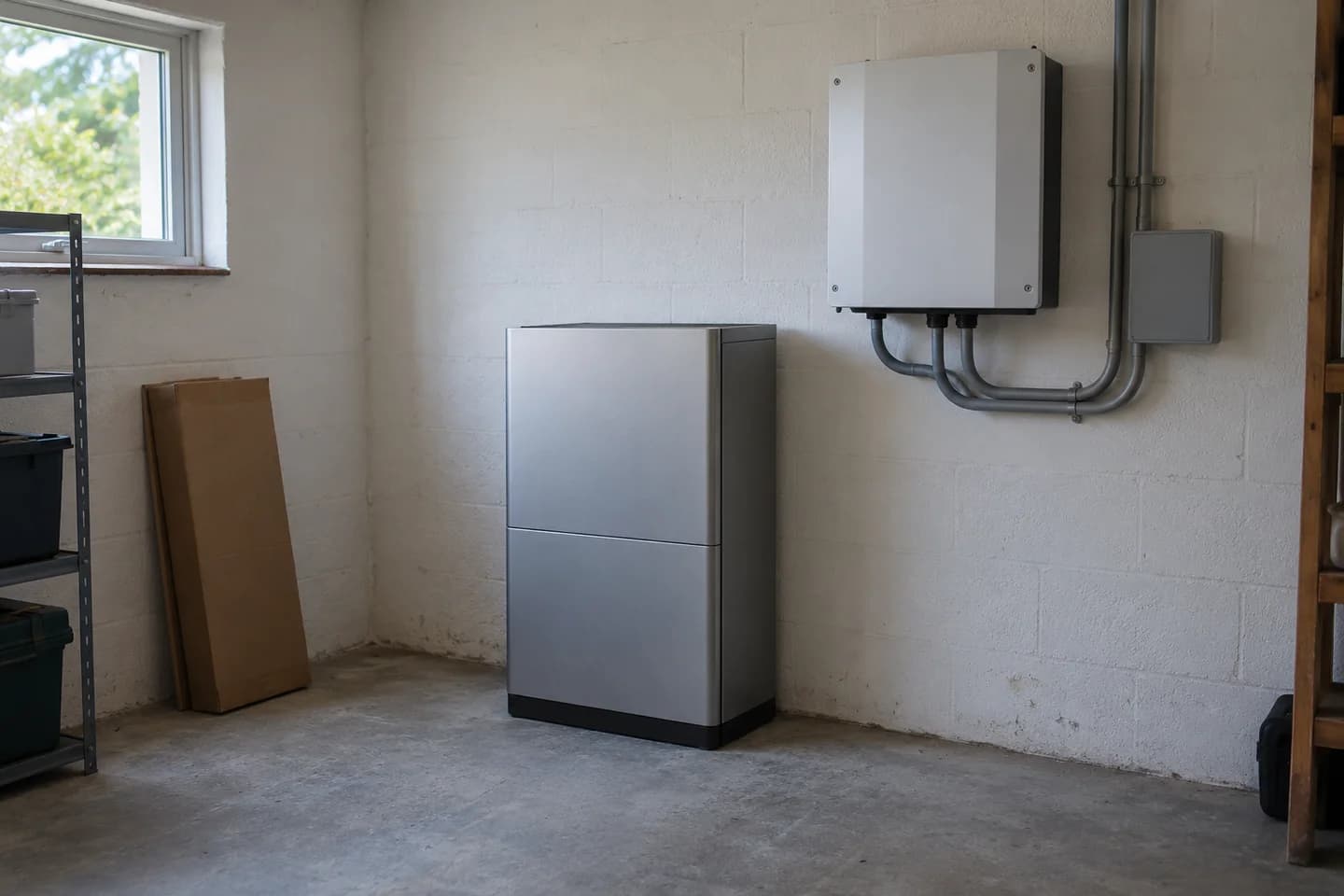
How to compare solar battery specifications before buying
Two batteries with the same kWh label can do different jobs. Here is how to read the numbers, check the missing details and compare like-for-like quotes.
Read Article→
Solar self-consumption and grid export: what equipment do you need?
For project buyers, installers and distributors: what to source as an equipment package, what to arrange locally, and what a useful supply quote should include.
Read Article→