Great Power rechargeable consumer-battery OEM evidence review
Great Power Ni-MH Consumer Battery Family Review
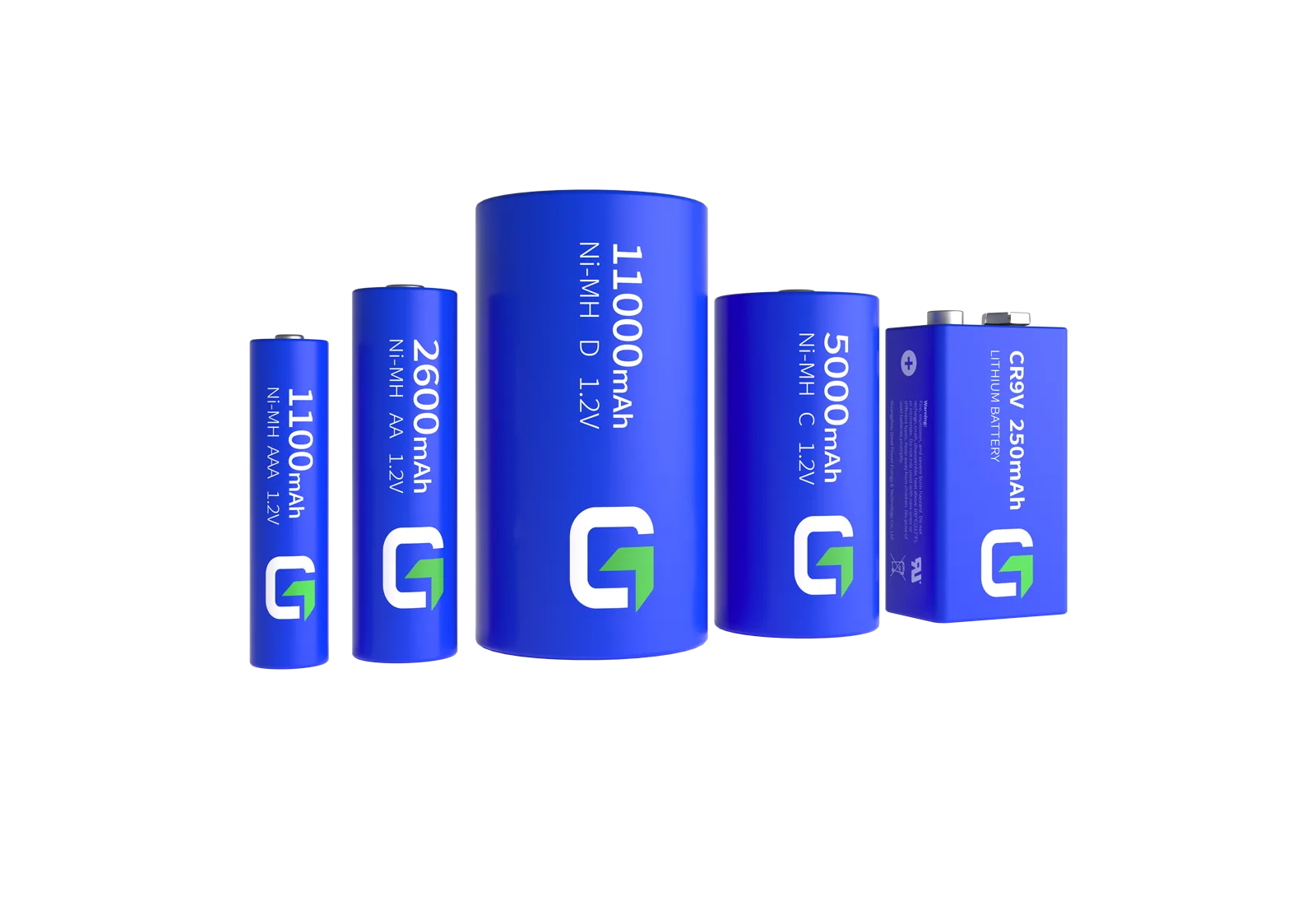
The current Great Power consumer-battery catalogue identifies the Ni-MH Batteries chemistry route for instruments, health devices, lights, models, remote-control vehicles and tools. It presents high-capacity, low-self-discharge, ultra-low-self-discharge and long-cycle-life variants, including 3-year ≥70%, 5-year ≥75% storage and IEC ≥1000-cycle headlines. The 3-year, 5-year and 1000-cycle statements describe different types and cannot be combined into one cell. Size, capacity, charge method, storage temperature, cycle regime and IEC report are absent. The page is therefore structured for OEM discovery and qualification: an exact cell/pack code, device duty, mechanical and electrical interface, test scope, production status and commercial controls must be confirmed before selection.
Current source identity: Great Power's English consumer-battery record for the Ni-MH Batteries chemistry route for instruments, health devices, lights, models, remote-control vehicles and tools. Chemistry/status boundary: Rechargeable nickel-metal-hydride family with multiple performance types; exact cell code and format are not stated..
Current document status
Before quotation, obtain the exact released cell/pack code and revision, signed electrical/mechanical specification, charge or discharge curves, temperature and life/storage basis, protection and device interfaces, configuration-matched safety/transport reports, production/change-control evidence, packing, warranty, MOQ and lead time. The 3-year, 5-year and 1000-cycle statements describe different types and cannot be combined into one cell. Size, capacity, charge method, storage temperature, cycle regime and IEC report are absent.
Current consumer-battery evidence
Resolve the application or chemistry route to one orderable OEM code
The public page identifies a use case or chemistry family, not a complete interchangeable model list.
Published identity
the Ni-MH Batteries chemistry route for instruments, health devices, lights, models, remote-control vehicles and tools
Chemistry or status
Rechargeable nickel-metal-hydride family with multiple performance types; exact cell code and format are not stated.
Published positioning
high-capacity, low-self-discharge, ultra-low-self-discharge and long-cycle-life variants, including 3-year ≥70%, 5-year ≥75% storage and IEC ≥1000-cycle headlines
Evidence quality
The 3-year, 5-year and 1000-cycle statements describe different types and cannot be combined into one cell. Size, capacity, charge method, storage temperature, cycle regime and IEC report are absent.
rechargeable consumer-battery OEM RFQ inputs
Six checks before sample approval and production nomination
Device duty, exact battery code, interfaces, qualification and supply controls must use the same revision.
Exact cell or pack code
Request the released code, chemistry, construction, capacity/energy, voltage window, charge/discharge limits, production revision and whether the offer is a bare cell, protected cell or finished pack.
Device load and runtime
Provide average/peak current, pulse or audio/tool duty, runtime target, standby current, cutoff voltage, charging time, simultaneous charge/use behavior and end-of-life capacity requirement.
Charging and protection
Define charger IC/profile, maximum voltage/current, fast-charge temperature limits, pack protection/BMS, fuse/NTC, balancing where relevant, connector pinout and host-device communications.
Mechanical and thermal interface
Confirm shape, dimensions/tolerances, weight, tabs/leads/connector, enclosure space, compression or swelling allowance, heat path, ingress exposure, vibration/drop and assembly process.
Safety and device qualification
Request exact-model safety, EMC where relevant and transport reports; map GB/IEC/UL references to the quoted cell/pack and allocate final-device certification and abuse testing.
OEM and commercial controls
Define samples, validation build, mold/tooling ownership, forecast, MOQ, lot traceability, quality limits, production/change notification, packing, warranty, lead time and approved substitutions.
Application, rating and qualification boundaries
Do not turn a consumer-battery category page into a universal model specification
A use case, chemistry or headline performance value does not prove every format, device pairing or compliance route.
Exact code controls every rating
The 3-year, 5-year and 1000-cycle statements describe different types and cannot be combined into one cell. Size, capacity, charge method, storage temperature, cycle regime and IEC report are absent.
Fast charge, rate and cycle life need conditions
high-capacity, low-self-discharge, ultra-low-self-discharge and long-cycle-life variants, including 3-year ≥70%, 5-year ≥75% storage and IEC ≥1000-cycle headlines Retain the exact code, current/rate, duration, voltage cutoff, temperature, storage or SOC/DoD window and end-point for every comparison.
A battery cell is not final-device approval
Ni-MH device suitability depends on cell size/count, load, charge termination, trickle charge, temperature, storage and holder/pack design; lithium or primary-battery chargers are not interchangeable.
Standards and supply are model-specific
A category list, generic UL reference, patent, automated-line or global-use statement does not prove the exact report scope, final-device approval, current production status, unchanged BOM, warranty, MOQ or delivery date.
Continue the Great Power rechargeable consumer-battery OEM review
Connect the battery route to exact device and OEM controls
Use the consumer-battery category and BOM guide to align chemistry, code, interfaces, validation and production responsibilities.
Great Power consumer battery routes
Compare rechargeable applications and primary chemistries without transferring ratings, qualification or compatibility across product records.
Review consumer battery routes →OEM battery BOM review
Freeze exact codes, interfaces, test evidence, tooling, quantities, packing, change control and exclusions before comparing quotations.
Build the OEM BOM →Great Power Ni-MH Consumer Battery Family Review FAQ
Questions to close before OEM battery approval
Each answer should be supported by one exact production code and device validation package.
What does the public catalogue confirm?
It identifies the Ni-MH Batteries chemistry route for instruments, health devices, lights, models, remote-control vehicles and tools and presents high-capacity, low-self-discharge, ultra-low-self-discharge and long-cycle-life variants, including 3-year ≥70%, 5-year ≥75% storage and IEC ≥1000-cycle headlines.
Does this page identify one orderable model?
No. The 3-year, 5-year and 1000-cycle statements describe different types and cannot be combined into one cell. Size, capacity, charge method, storage temperature, cycle regime and IEC report are absent.
Can the battery be assumed compatible with any listed device?
No. Ni-MH device suitability depends on cell size/count, load, charge termination, trickle charge, temperature, storage and holder/pack design; lithium or primary-battery chargers are not interchangeable.
What should the OEM RFQ include?
Include device duty and runtime, exact cell/pack code, charge/discharge and protection interfaces, dimensions/terminals/thermal inputs, safety and transport evidence, sample validation, forecast, tooling, MOQ, change control and warranty.
Prepare an exact Great Power Ni-MH Consumer Battery Family Review OEM RFQ
Send the device duty, required cell/pack format and ratings, charger/protection/mechanical interfaces, qualification plan, samples, forecast, destination, tooling and change-control needs.
Start with the product, application or project information you have. We can help identify the remaining configuration, document or delivery questions before a final quotation.
Verify the Consumer Battery