
Solar export documentation checklist: certificates, shipping files, and traceability
Build the document pack from the exact model, destination, and trade term—not from a generic folder of certificates.
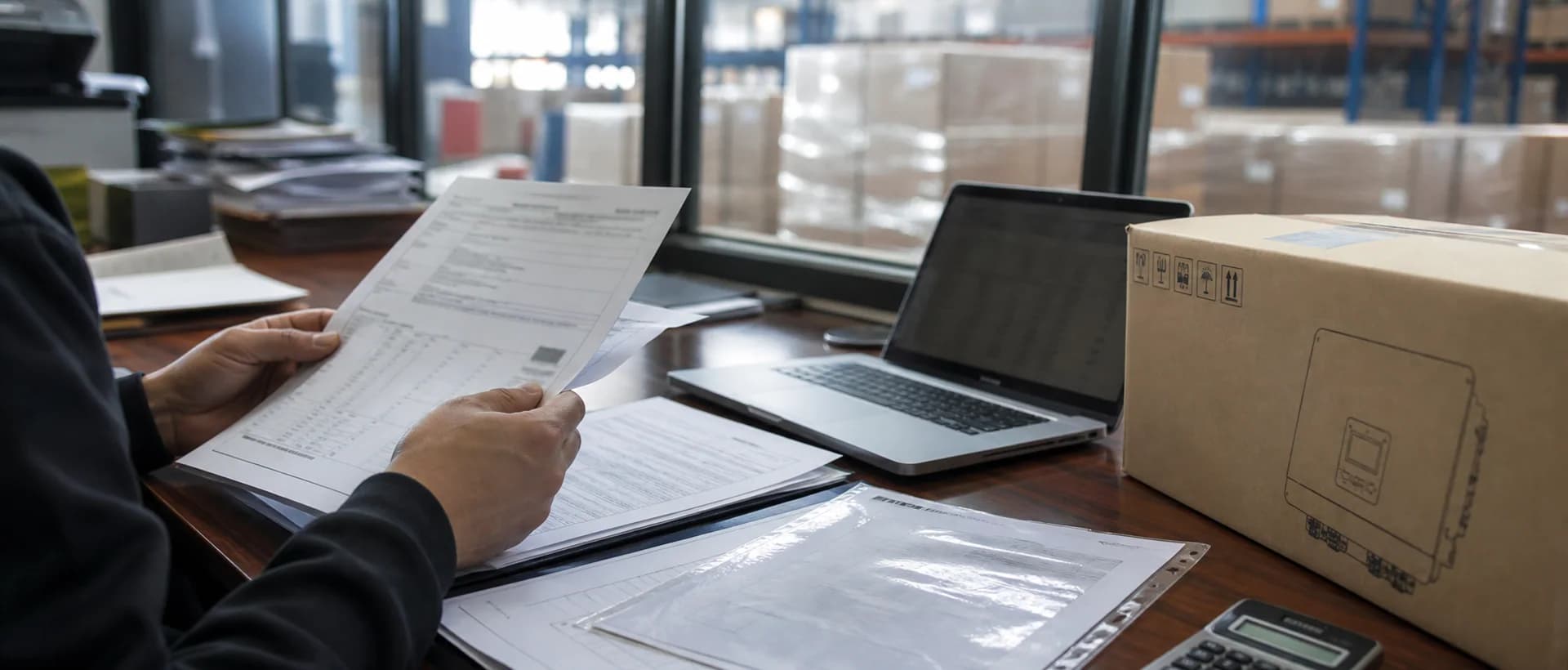
Start every export document review with three facts: the exact product model, the destination market, and the agreed trade term. A datasheet, certificate, packing list, commercial invoice, and transport document may all be needed, but the required package varies with the product, destination, buyer, carrier, and contract. Do not assume that a document used for one model or country applies to another.
For PV modules, keep design-qualification and safety references tied to the precise model and construction. For battery products, identify the chemistry, nominal voltage, watt-hours or capacity, configuration, and transport classification early. The UN transport framework requires lithium cell and battery test summaries to be made available by manufacturers and subsequent distributors, and carriers may require additional declarations, packing, labeling, and booking information. Confirm those requirements with the carrier or freight forwarder for the planned mode of transport.
Traceability requests should be treated as a document-control exercise, not a last-minute customs attachment. SEIA's current supply-chain traceability standard describes evidence, data collection, and management practices used to trace material inputs and movement through the supply chain. If a customer has a project-specific or regulatory requirement, map it against the available supplier documents before accepting the order.
Finally, write the named port or place beside the Incoterms® rule in the quotation and purchase order. Incoterms® 2020 allocates costs, risks, and obligations, but it does not replace a complete contract, product compliance review, or import clearance planning.
Build one controlled export file
A document pack should tell the same story from quotation to shipment: what is being supplied, where it is going, who is importing it, and how it is being delivered. Start with a document register rather than collecting files at the end. Mark each file as product evidence, commercial document, transport file, origin/traceability evidence, or destination-specific requirement.
The highest-risk errors are usually mismatches: a certificate for a related model, a packing list with changed package counts, a battery document that does not match the booked configuration, or a trade term written without a precise named place. Have the buyer or appointed project party review the required package before final release, especially where local import or project acceptance is involved.
- Exact models, configurations, destination, importer of record, shipment mode, and agreed Incoterms® rule with named place or port.
- Datasheets, model-specific certificate references, manuals, warranty files, labels, and customer-requested project evidence.
- Commercial invoice, packing list, purchase order references, quantities, package counts, weights, and descriptions aligned to final goods.
- Battery test-summary and carrier/forwarder instructions where energy storage is shipped; check the exact shipped model.
- Origin, traceability, customs, or customer files with source, revision, scope, reviewer, and unresolved status recorded.
Can a generic certificate folder be sent as the export package?
Not safely. The package should be selected and checked against the exact model, destination, buyer requirement, transport plan, and commercial documents.
Related Articles

How do solar panels perform in clouds, heat, salt air and dust?
A panel's watt rating cannot describe every site. Learn what changes in cloudy, hot, coastal and dusty locations, and which details belong in a supply quote.
Read Article→
How to compare solar battery specifications before buying
Two batteries with the same kWh label can do different jobs. Here is how to read the numbers, check the missing details and compare like-for-like quotes.
Read Article→
Solar self-consumption and grid export: what equipment do you need?
For project buyers, installers and distributors: what to source as an equipment package, what to arrange locally, and what a useful supply quote should include.
Read Article→